
For six years now, Absences in the Video Archive has offered a glimpse into the audiovisual art collection of the VVP AVU Video Archive, which was created between 2007 and 2018 and is now being cataloged and expanded by the National Film Archive. Invited guests from non-artistic disciplines reflect on its content and the gaps in the collection, which they reveal through selected themes.
The selection for 2025 was curated by psychotherapist and psychologist Adam Táborský, who organized the films into four blocks focused on the author’s statement (“I Say It Out Loud”), a reflection on family ties (“Me and My Blood Ties”), and relational dynamics (“Us and Them”). The final film block, titled “Places that Hold Firm”, outlines a path toward regaining a sense of security. The selected films offer a glimpse into a space where mental health becomes a source of inspiration, exposed vulnerability, an acknowledged weapon, and a place of confession and relief.
A screening of selected works with accompanying commentary was presented in collaboration with the NFA at the Ponrepo Cinema on November 25, 2025. Based on this program, a text was created that reflects on the selection of audiovisual works.
The screened works:
“I Say It Out Loud”
Apparition (Janek Rous, 2015)
The Confession (Bystrík Klčo, 2022)
Turbo Shut Up Armageddon (Jakub Adamec, 2007)
Night of the World (Zbyněk Baladrán, 2011)
In a Nutshell (Pavel Kučera, 2010)
“Me and My Blood Ties”
Copying the Mother (Kateřina Šedá, 2004)
Copying the Father (Kateřina Šedá, 2004)
Copying the Child (Kateřina Šedá, 2004)
Confession (Tereza Velíková, 2008)
I Have It All Here (Jiří Žák, 2013)
“Us and Them”
The Language of Flowers (Alžběta Bačíková, 2013)
Forgive Me (Tereza Chovancová, 2023)
“Places that Hold Firm”
Are you afraid of the dark? (Pavla Dundálková, 2015)
When I grow up, I want to be a little boy (Bystrík Klčo, 2023)
Muránska Zdychava (Janka Vidová Žáčková, 1992)
I Say It Out Loud: Seeking Paths to Balance
I first sit down to write this essay in my spare moments while on duty at the Crisis Intervention Center at the Bohnice Psychiatric Hospital. It is apropos for today’s oversaturated and accelerated times that when something or someone is absent, we can do other things. This also holds true for me now, as I make use of the time without patients to write essays. When we speak of mental health in art, we find ourselves on a border - the border between form and contact with the inner world, between personal testimony and sharing, between an image or sound and an inner experience. In a reflection at a recent psychotherapy research conference in Birmingham, someone said: “The key is trusting that a person knows when they need help.” And it is this borderland that is now opening up in art, often expressed through an abrupt or subtle gesture.
Audiovisual creation, by its very nature, has a special power and intensity: image and sound, temporal progression, rhythm, editing. Psychologically, this kind of work can function as an “externalization” of the inner world: That which was isolated in the mind or body is rendered visible, audible. And here we are touching on the broader scope, where film and video therapy (cinematherapy, video modeling) can help us to “express, recognize, and change” mental states. The work of students and artists - which was our starting point - may not necessarily be therapeutic intervention in the classical sense, but it can often turn into a therapeutic process. For a psychologist, therapist, reader, or viewer, it can be interesting to see what kind of inner space opens up, what risks or possibilities are hidden in the short audiovisual invitations, and how they can be approached not only as artistic gestures but also as internal maps. Out of more than fifty films, thirteen made it into the final selection. What differentiates or connects the works in this cross-section spanning thirty-one years, from 1992 to 2023?
The aim of this text is to pause and reflect on the perception of the space on the border between the inner and outer worlds, where mental health becomes a source of inspiration, an exposed vulnerability, an acknowledged weapon, and a place of confession and relief. The framing of the collection of the VVP AVU Video Archive, administered by the National Film Archive, has allowed us to discover various contacts, stopovers, and inspirations that we would like to share. At the same time, this is not a random outburst but rather a reflection of the present, a bubbling field that brazenly commands attention.
For me, it was interesting to trace the paths of the individual artists. For example, when my wife and I said about a particular work, “Wow, that’s great!” we were then curious to find out what the author is doing now, what else they had created. But then, for instance, we learned that they were no longer involved in art and artistic creation, that their path had taken them elsewhere - for example, to a job at a marketing agency.
Before we dive into the individual blocks, I would like to pause and consider the question of what we say out loud. We were aware of the fragility and vulnerability that we were dealing with when selecting the works, as one of the artists who we included in the selection, Janka Vidová Žáčková, recently passed away. In discussions with the curatorial team, we sensitively explored the boundaries of when yes and when no, what yes and what no… I believe that by commemorating the enduring legacy of Janka Vidová Žáčková, we not only honor the artist herself but also underscore the importance and meaning of video art and artistic creation in general.
“I Say It Out Loud”: An Authorial Testimony
As the Italian Gestalt therapist Gianni Francesetti (2025) says, psychotherapy is a cultural expression of a particular historical era. It is a reaction to the cultural and social needs of the time. But the world is constantly changing, and so psychotherapy must change at the same pace. Because when the world changes, so does the way that people suffer. And this means that our ways of supporting and healing must change as well. The mid-twentieth-century perception of human suffering was strongly influenced by an era in which society was repressive, restricting individual freedom of expression. It was a time of increasing efforts to support and frame the rights of minorities, women, different nationalities, people of different sexual orientations, students, and young people. It was a time of support for subjective expression. It was thus primarily about expressing subjectivity, and that in itself was in many respects curative. In the 1980s, however, a new need arose, because when we prioritize individuality, we run the risk of creating isolated individuals who are disconnected from others. This led to a turn toward relationality. It was a response to a narcissistic society where “I am, I exist,” but “I’m incapable of meeting you/others.” We needed therapy that would focus on connection, on dialogue, which was successful and sufficient for the given era. Today, however, we find ourselves in a world that, according to various sociologists, is split, fragmented, accelerated, or “fluid.” This means that we lack not only one-on-one relationships but also a coherent world as such. And when we do not have an anchored world, we cannot feel like complete individuals. The contemporary world hinders the process of assimilation; we are overwhelmed by stimuli that we cannot process. This also complicates the process of personality formation. This is one of the reasons why young people often suffer and ask difficult questions: “Who am I? What is my place in the world?” I believe they are looking for a way to absorb the experience of being and existing, a way to take root, to feel connected to the world. We are seeing the emergence of feelings of emptiness and the phenomenon of amorphous “personalities.” That is why we need psychotherapy that supports growth and sometimes even the kind that helps to give birth to an individual - a personality.
I personally live in a bubble of people who go to psychotherapy. All of the sociologists, doctors, political scientists, lawyers, chemists, data analysts, psychologists, and psychotherapists that I know tend to seek out their space in psychotherapy. I live in the bubble that is psychotherapy. Of course, there are other ways to deal with one’s own suffering or the suffering of the world. One of them is artistic creation - an authorial testimony. Uncovering an authorial testimony, a literal or figurative voice, or intimacy reveals a space where a creator speaks about their inner world, about fear, confessions, secrets, about what was previously silenced. At the same time, more and more people are saying out loud that they are not well. That is one reason why I found it interesting to connect my bubble and the media bubble with the artistic bubble.
This block can be read as an act of courage and self-revelation by artists. What was previously unspoken becomes visible and audible. At the same time, we are given the opportunity to observe not only what is said but also what is hidden in the seconds, in the images between the words, in the silence, or in the sprawling compositions. Let us imagine the inner world as a dark cave where the echo of our words reverberates long after we have uttered them. These audiovisual works are like a lantern that we bring into the cave; the light reveals contours, shadows, old inscriptions on the walls, and even if they remain partly in the dark, the light allows for new contact. The act of “speaking out loud” becomes a moment of questioning the isolation and loneliness that can be so typical of the world today. Audiovisual works can help both creators and viewers as a means of regulation, alleviating the effects of anxiety, depression, and various psychosomatic symptoms. It can help people negotiate their relationship with themselves and the world around them (Cohen et al., 2015).
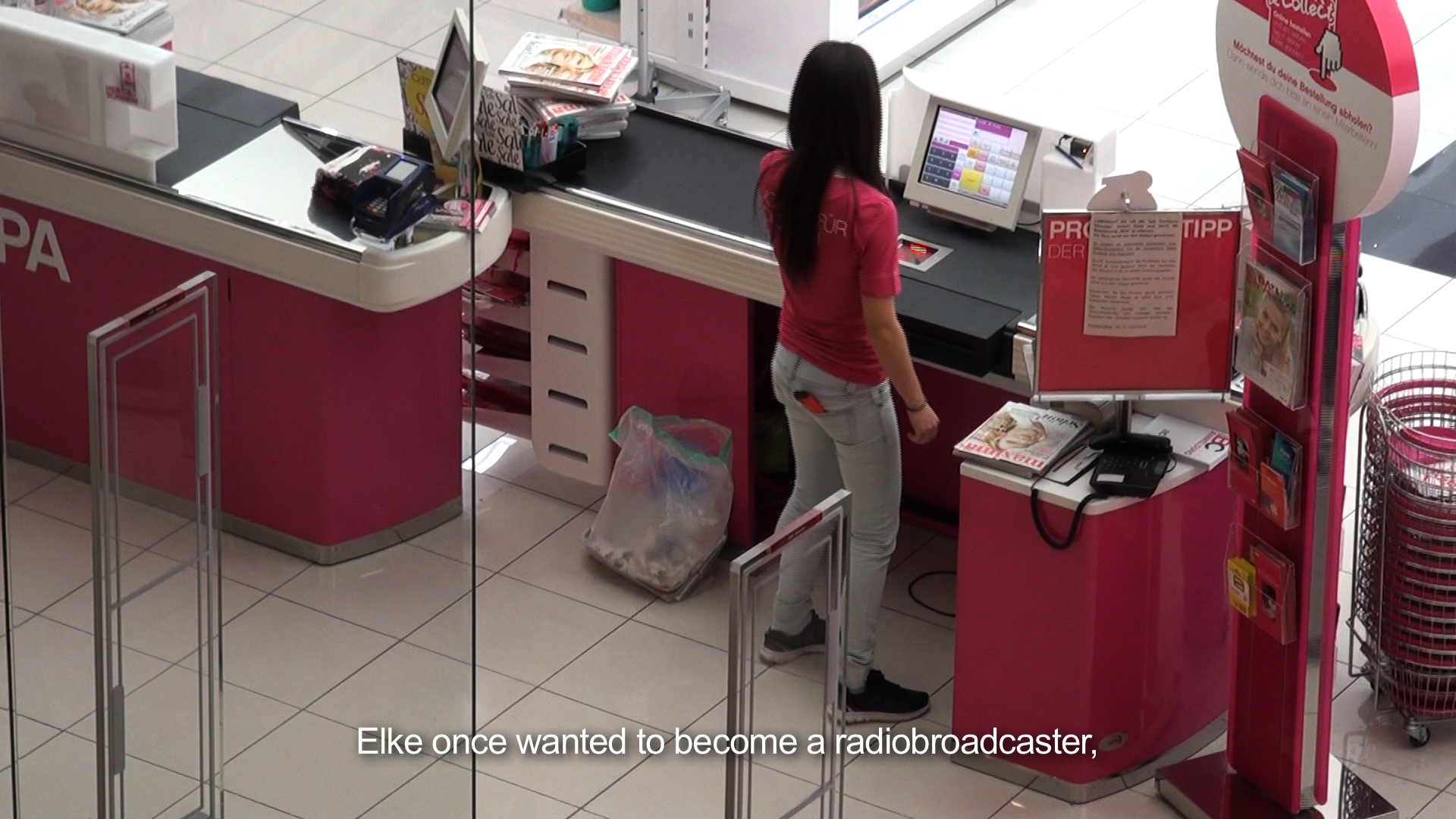
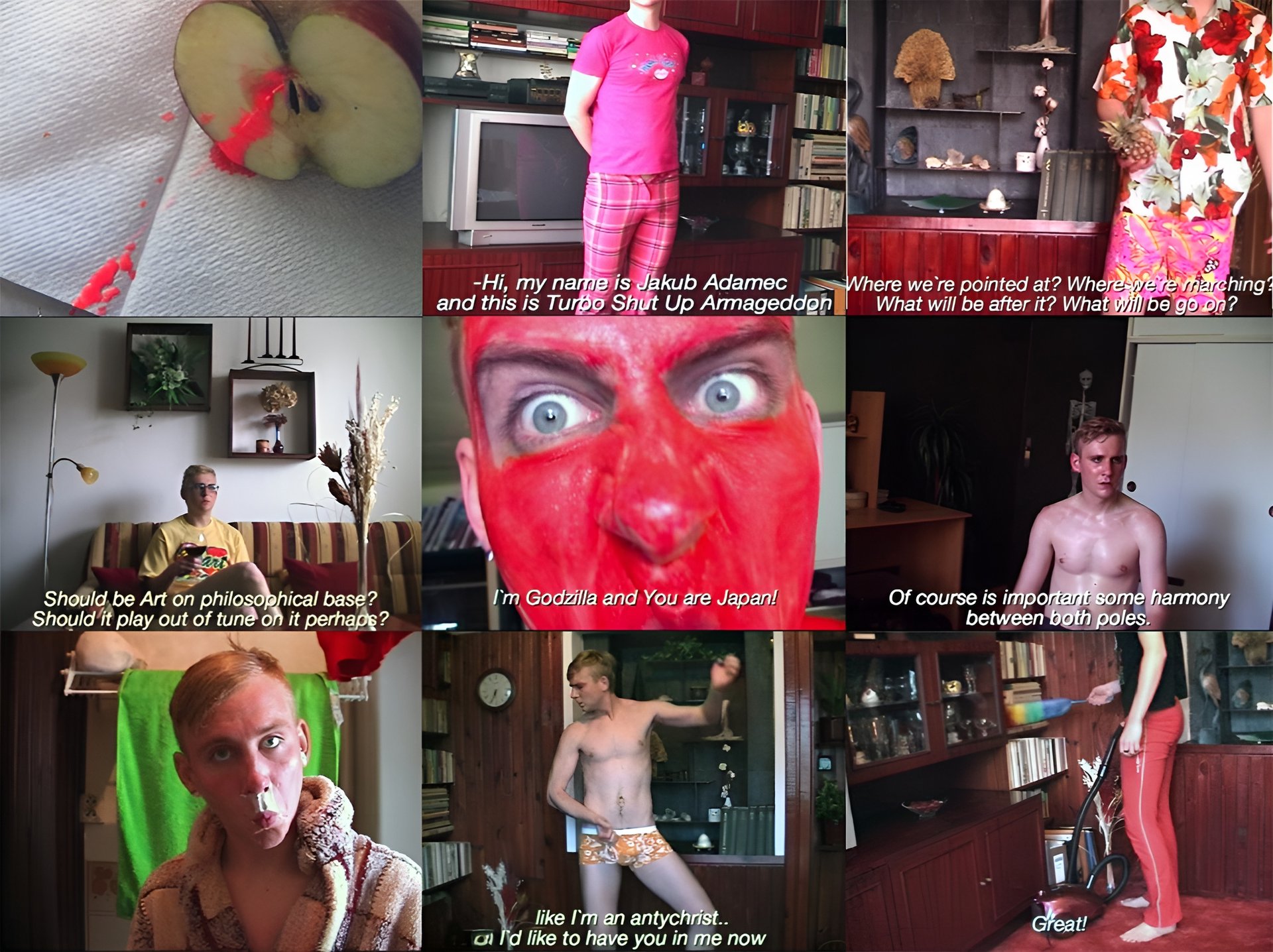
In the selection for this section, the following works “speak out loud” together: a) Apparition (Janek Rous, 2015); b) The Confession (Bystrík Klčo, 2022); c) Turbo Shut Up Armageddon (Jakub Adamec, 2007); Night of the World (Zbyněk Baladrán, 2011); In a Nutshell (Pavel Kučera, 2010).
Janek Rous invites us into a world of unfulfilled expectations and desires. The film represents the tension between the participants’ current and dream occupations. The strain between imaginary snooping and daydreaming draws us into a fantastical world of what if…
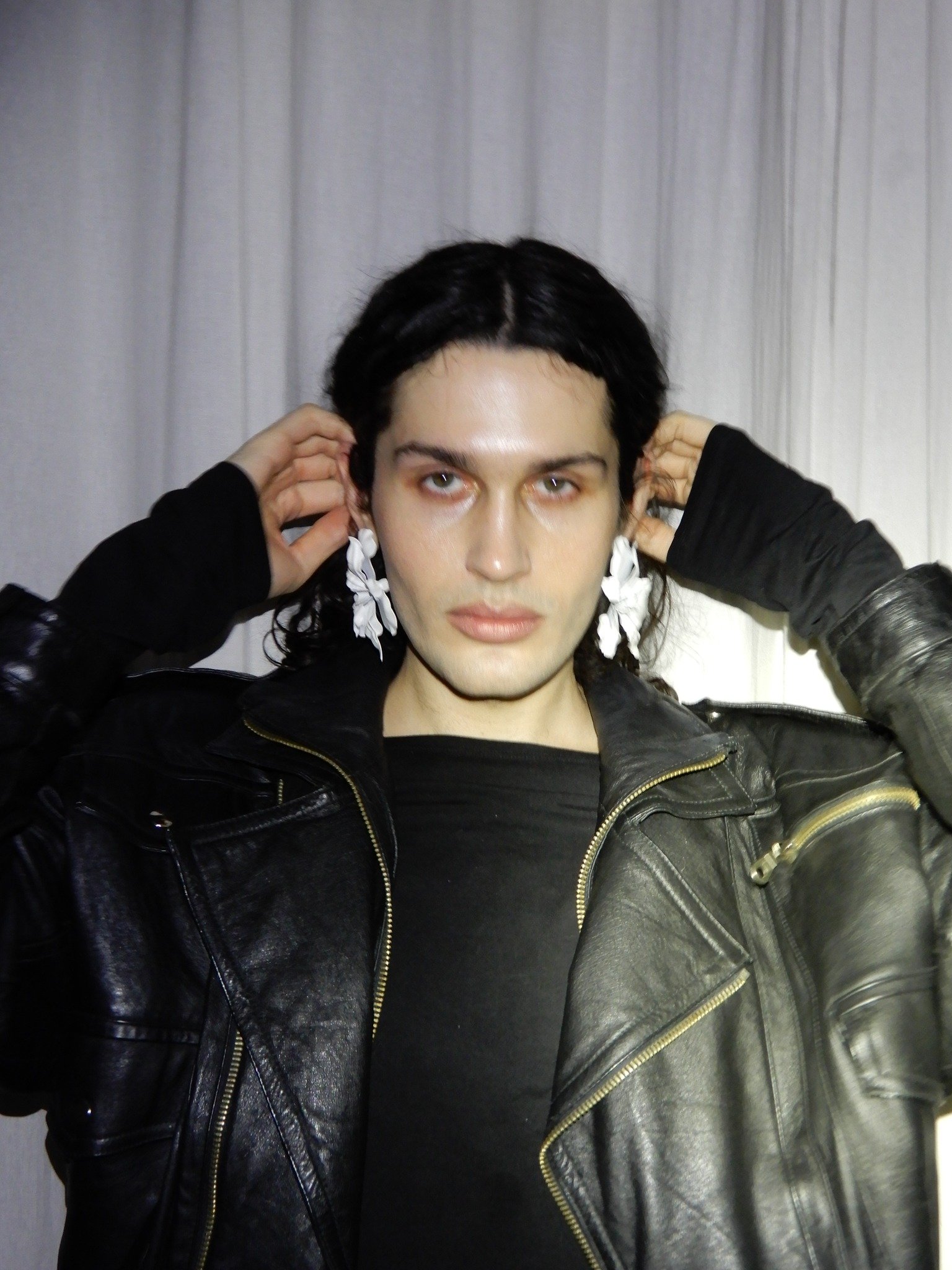
In his avowal or confession, which he recorded live on social media, Bystrík Klčo describes a whirlwind of experienced introjections - meaning internalized beliefs about who we should be and how we should live, regardless of our needs, desires, and convictions - revealing how they permeate his everyday life.
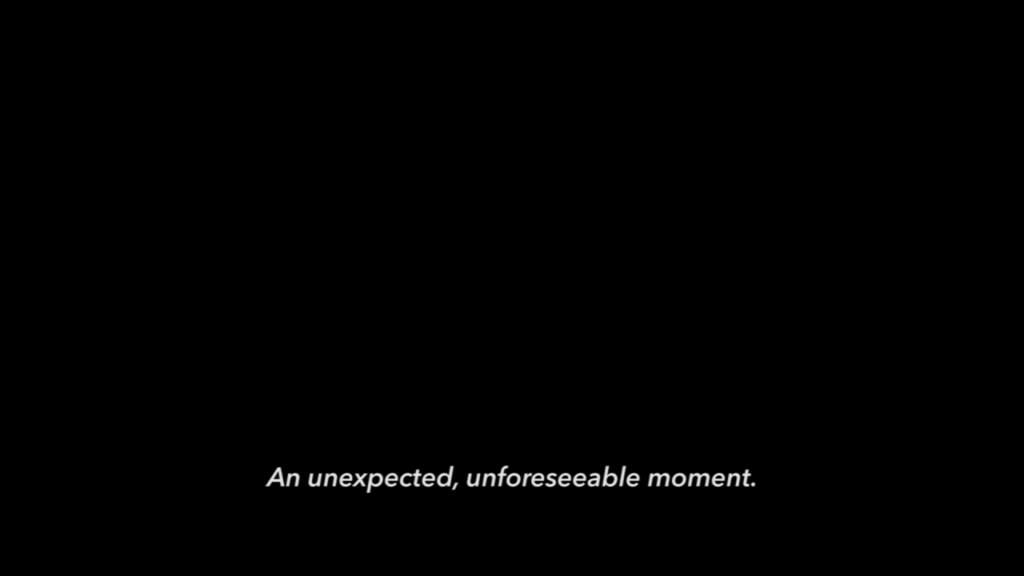
It is as if Zbyněk Baladrán’s dark Night of the World keeps a glimmer of hope alive in us… Will anything appear on the screen? How do we deal with creative crises, resistance, and reluctance? How do we actually search for and discover what is right, what we want, and what will work?
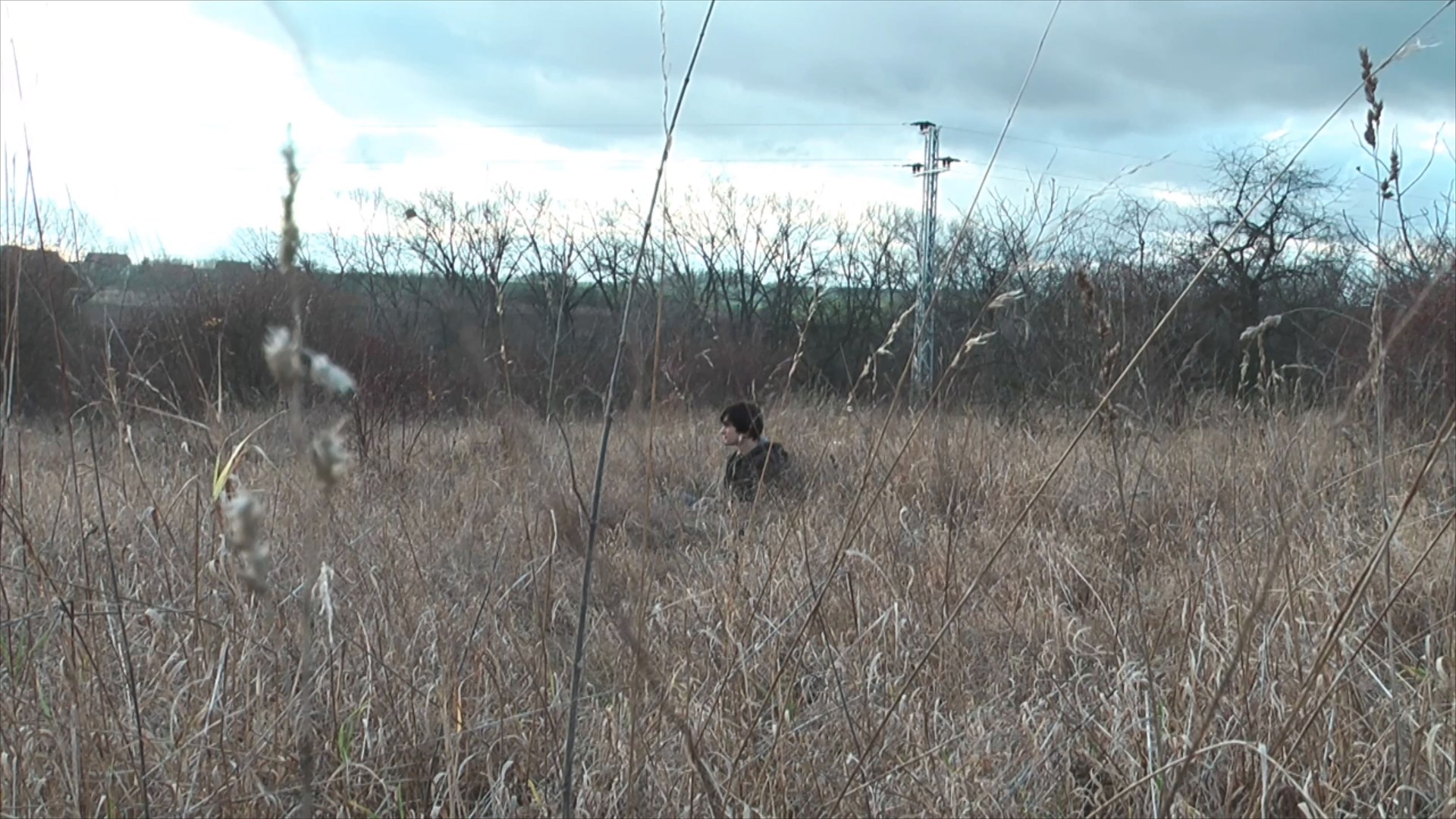
The works of Jakub Adamec and Pavel Kučera seem to have the same assignment, but their execution differs considerably: one is intellectually brooding, the other extravagantly exhibitionistic. In other words, it is an authorial confession about the meaning of creation, uncertainty, the competitive environment at the Academy of Fine Arts, and the parodic personal revelation of an artist. I found it interesting that one of the gentlemen no longer works mainly in art but rather in marketing, while the other still primarily creates and curates. Can you guess which is which?
“Me and My Blood Ties”: Reflections on Family Bonds
How can we take seriously the claim that family is fundamental - or even the very foundation of the state - without it becoming a cliché, trite, or nauseating phrase? How do people who have never had a family relate to families? Is it through that very lack? The theme of family ties, identity, genetics, or the metaphorical “threads” that connect or bind us can help us understand how we came to be in the world, how we are doing, and what we are like. In this block, the creators explore who we are in relation to our family - be it our biological, “blood,” or social family - and how these ties shape our psyche and mental health.
Family is often a source of support and comfort but also of conflict, trauma, and harm. Family ties and early relationships (attachment) are increasingly occupying the public sphere as well as significantly influencing mental health in adulthood. For example, a dysfunctional family environment is a risk factor for the development of anxiety, depression, or identity disorders. In the context of audiovisual artworks, family ties are a thematic field in which artists come to terms with “heritage,” “repetition,” and “bloodlines.” For example, in Kateřina Šedá’s series Copying, we see how she mimics her mother, father, and child, searching for identity through role models and across generations.
Video art can enable the “externalization of the family system.” The artists set up the camera, the frame, and the time. In this section, they then bring family dynamics to life in film, and the audience can observe how family ties are manifested. Metaphorically, the family can be seen as a network of delicate fibers, some strong and supportive, others frayed and weak. When a current passes through the fibers - a current of love, conflict, or expectation - they can heat up or overheat, causing them to break.
Through family ties, we touch upon identity as a continuum, where the “self” is not an isolated island but a tangle of family threads and social relations. Repetition acts as a source of awareness. It is possible to change family patterns once they become visible; the artistic form helps to render them present, bringing to the fore the family’s closeness and its influence on one’s inner world, sense of security, feelings of guilt, expectations, and background - or the absence thereof.
In the selection for this section, the following works are connected with the artist’s oeuvre by “blood ties”: Copying the Mother (Kateřina Šedá, 2004); Copying the Father (Kateřina Šedá, 2004); Copying the Child (Kateřina Šedá, 2004); Confession (Tereza Velíková, 2008); I Have It All Here (Jiří Žák, 2013).
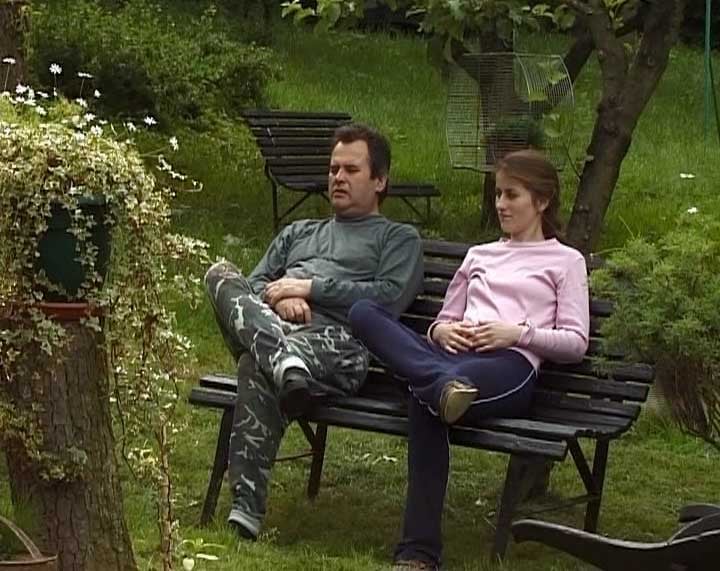
I found Kateřina Šedá’s work refreshing, inspiring, and encouraging - not so much because of its content but because of the artist’s journey and transformation. It seems to me that while her work conveys a fundamental idea, it does so without being flashy or standing out from the other works. It is a piece of the journey of one of the most highly regarded Czech artists, which may give many others the courage to set out on a similar path. In this work parents and their adult children voluntarily move in sync, performing their usual activities in parallel with their counterpart and getting to know the character and rhythm of their life up close.
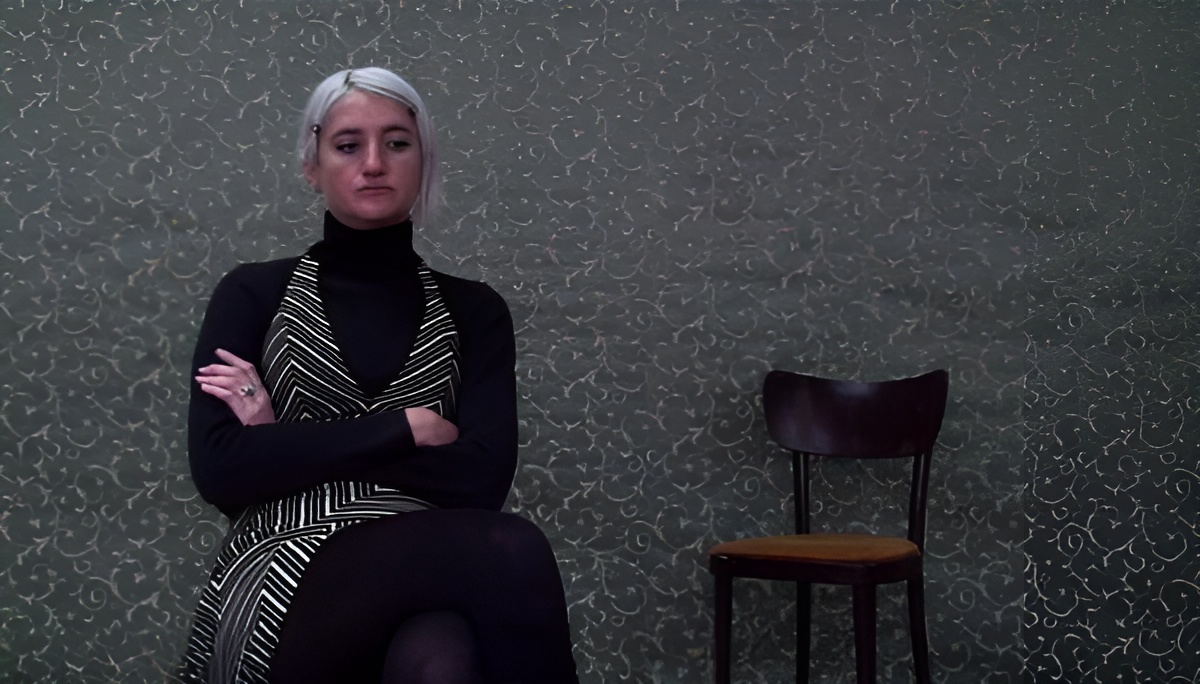
In Confession daughters reflect on their parents’ relationship and how it has affected them. What would it be like if we spoke for our parents? Or rather, with what voices do our parents speak through us? Of all the experiences we have had with them and the things they have told us, what remains within us and what has faded away?

Jiří Žák draws his grandparents into his work, which charts the obsessive documentation of family life. At the same time, creative work can be something that remains after our loved ones have passed away, filling the void they leave behind.
“Us and Them”: Reflections on Relationship Dynamics
The broad theme of relationships, social reflection, “us” versus “them,” collective identity, and otherness is addressed in selected works in both subtle and distinctive ways. How do we communicate with each other? Sometimes we are unable to communicate directly, and so we choose an intermediary; sometimes children become the intermediary, sometimes technology, sometimes memes, sometimes couples therapists, sometimes mediators, sometimes lawyers, sometimes social services, sometimes the courts, and sometimes flowers and plants.
Relationships with “others” are essential for our mental health. Social isolation - being trapped in the “self” without others - is often a risk factor for mental health problems; conversely, support, acceptance, and a sense of belonging are beneficial. Relationships are also a protective factor for the individual. In audiovisual artworks, the relationship with “others” can manifest as tension - acceptance or rejection, connection or isolation. From a psychological perspective, this theme is also connected with a sense of belonging, with the introjections of others, with the social mirror: “how they see me and how I see them.” Creating or sharing videos about one’s own experiences with others promotes a sense of connection and shared experience (Liu et al., 2025).
Relationships are like bridges between islands: When the bridge is intact, people can cross, communicate, and share; when the bridge is broken or weakened, there is a risk of isolation. It is then somewhat paradoxical that we spend the majority of our lives and time in relationships, yet only two works about relationships are represented in our selection.
In the selection for this section we are together with the following “others” and their work: a) The Language of Flowers (Alžběta Bačíková, 2013); Forgive Me (Tereza Chovancová, 2023).
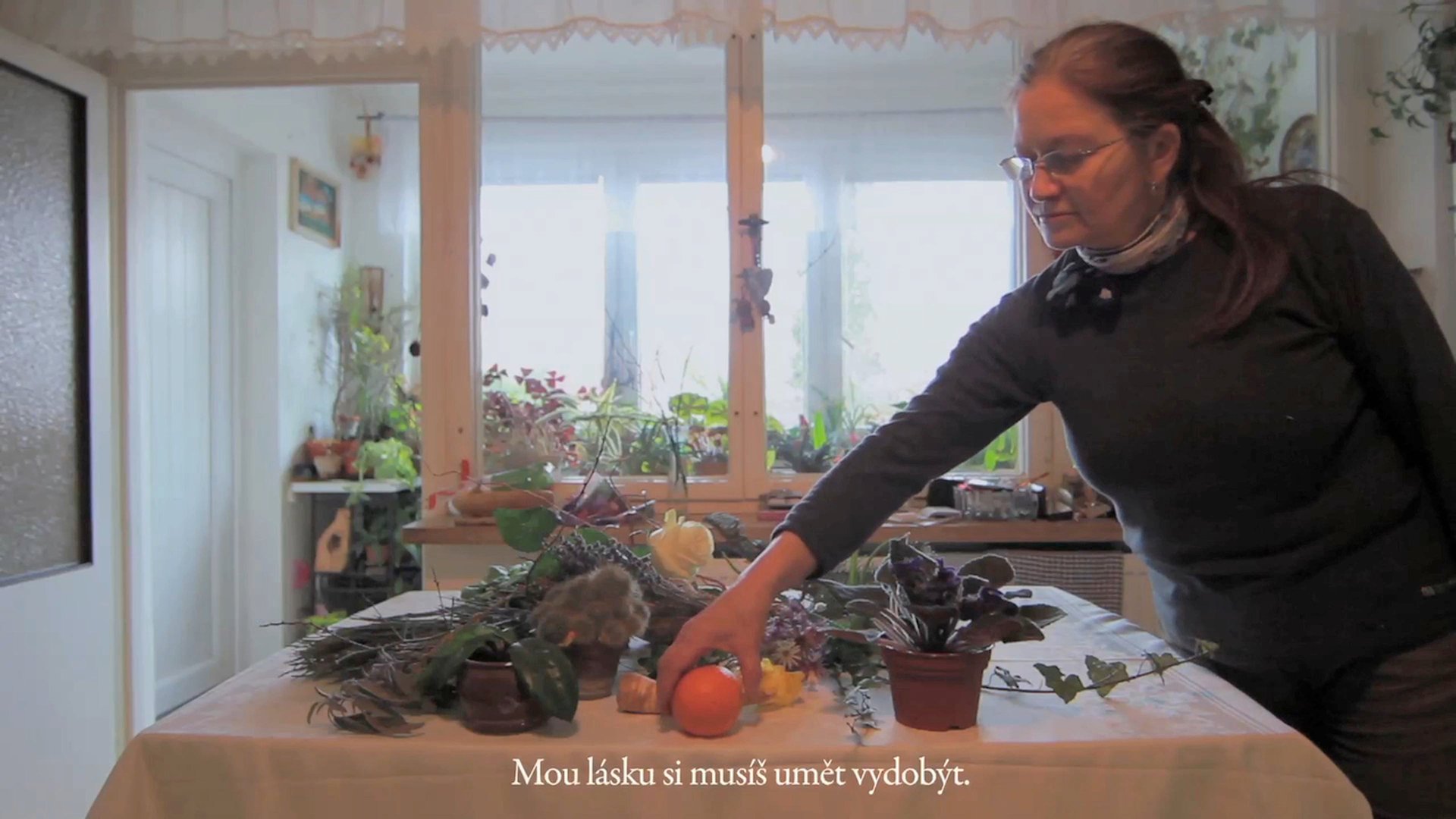
The Language of Flowers captures a silent conversation between a woman and a man who take turns entering a static shot and placing various types of flowers on a table. The dialogue between the two characters unfolds in the form of subtitles that reproduce the symbolic meanings of the plants from a folk book about the language of flowers. At the same time, the film touches on the misunderstanding that arises when two people look at the same thing and see it differently. What is the tension between the moment when we apologize and ask for forgiveness and the moment when we lose interest and it ends?
Tereza Chovancová’s film captures the inner monologue of a woman overcome by fear of an unresolved conflict. When do we owe others an apology, and when is the apology owed to us? How much of the given apologizing is our obligation - or rather, how much is the onus for apologizing actually on us, and how much has it been imposed on us by our surroundings and upbringing? The audio component is complemented by detailed close-ups of a body and its surroundings, which the artist manifests and transplants from the abstract world into the substance of physicality and space.
“Places that Hold Firm”: The Path to Regaining a Sense of Security
How can we reach a space of safety, regain stability, and heal? The final block reflects on the fact that mental health is not only about fragments of trauma or conflict but also about “places that hold firm” - both internal and external - where we can find support, heal, and “anchor” ourselves. “Places that hold firm” offer a visually metaphorical as well as a literal dimension; they can be specific locations, architecture, a landscape, a home, or an internal place, state, or relationship where a person feels “safe.” Psychologically, this dimension is critical: After a period of dysfunction, loss, grief, or chaos, “anchoring” is one of the key themes for restoring mental health. Without the certainty that “something is holding firm,” it is very difficult to build stability.
In biology, we have the concept of homeostasis. It refers to the ability of an organism to maintain its internal stability, body temperature, blood sugar levels, and fluid balance. At first glance, this may seem like a state of calm, where nothing is happening. In reality, however, it is a dynamic process of balancing, constantly fine-tuning, and reacting to changes. The organism is continually adapting, equalizing, reacting. It is similar with the psyche. Balance is not the calm surface a lake but rather the rhythm of the waves. In life we encounter emotions, conflicts, and challenges that throw us out of kilter. Our mind and body react in order to approach a new balance, but this is never the final goal. Balance cannot be achieved once and for all; it is a movement, not a state. Perhaps this is why music fascinates us so much. Its beauty lies in the rhythm, in the pulse, in the movement between tension and release. Silence and sound, harmony and dissonance - everything is a part of the whole. The same is true in life: Balance is not the absence of conflict but the ability to move between polarities and find your own melody.
When the anchor holds firm, the ship does not sway; when the anchor line slackens, the ship floats freely and can be struck by a wave. A “place that holds firm” is an anchor for the mental world. In audiovisual works, these “anchors” can be visible: a house, a landscape, a relationship, an abandoned or rediscovered place. From the point of view of therapy, this block is essential: It offers the possibility of optimism, of opening up to a future that is not gloomy. In therapy, it is often necessary to construct a new narrative - not just “what happened,” but “where I can go.”
In the selection for this section, the following artists “hold firm” together through their work: a) Are you afraid of the dark? (Pavla Dundálková, 2015); b) When I grow up, I want to be a little boy (Bystrík Klčo, 2023); c) Muránska Zdychava (Janka Vidová Žáčková, 1992).
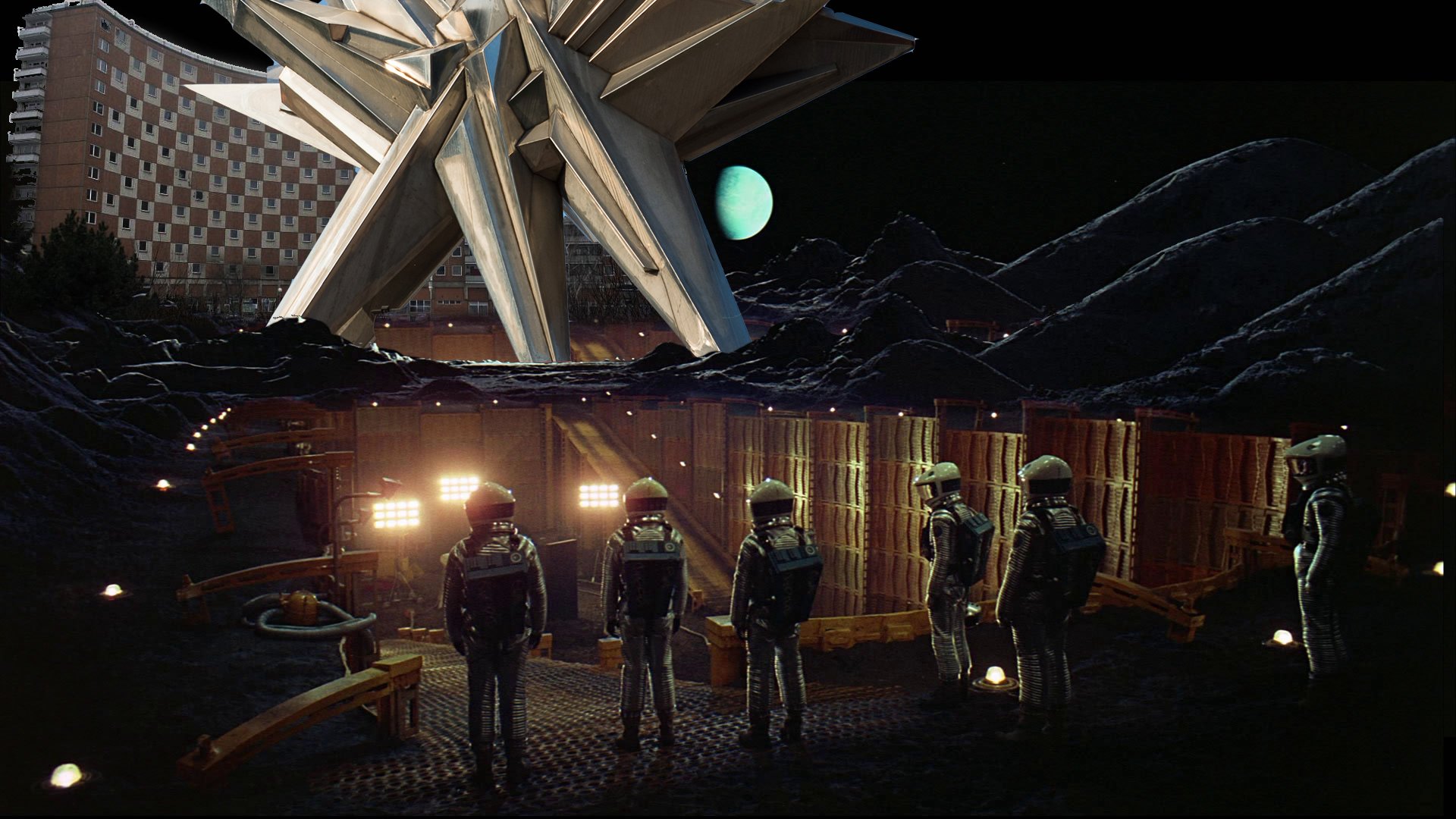
Are you afraid of the dark? ties in with the place where we grew up, which is connected with childhood memories as an idyllic little coop of everyday life. Upon closer examination of these memories, the reassuring words “It’s just like…” spring to mind, at which our heart flutters like a hummingbird’s wings. The times, the era, and we ourselves are changing, but hopefully we will be able to hold on to the playfulness presented here.

At the end of a drama, usually after a catastrophe, when the plot reaches its denouement, the viewer experiences emotional release, sadness, relief, compassion, sometimes even a lesson learned - catharsis ensues. Bystrík Klčo offers acceptance, purification, a safe distance, openness, and permission to desire.
Muránska Zdychava, or a visit to the artist’s native region in Slovakia. This poetic film captures the dreamlike atmosphere of the snowy countryside. Muránska Zdychava embodies the perspective of suspension. Janka Vidová Žáčková said of the film: “Impressions, a walk through the landscape of my childhood, where the universe becomes an infinite, beautiful space - I’m happy there. Back then, I borrowed the studio’s only camera for Christmas. It was an analog S-VHS that weighed probably ten kilos and had to be carried on the shoulder. The editing was done in analog, from cassette to cassette, using a mixing console to create various effects. VHS suited me because it prevented me from constantly reworking things - it kept my obsessiveness in check. I’m always repainting my pictures, but with analog video, I didn’t have the urge to make improvements.”
Absences
Even though we rightly hear in the media that there are not enough clinical psychologists, psychiatrists, and psychotherapists, this does not mean that nothing is happening in this field. In an interview with Catalin Zaharia, the president of the European Association for Psychotherapy, which brings together over one hundred twenty thousand psychotherapists from forty-two countries and counting, he mentioned that the demand for psychotherapy is increasing, meaning that people’s need to cope with their own suffering - as well as social or global suffering - is growing (Zaharia, 2025). However, we do not have to contend with the hardships we experience through psychotherapy alone; we can also cope, for example, through artistic means of expression, as we have seen in this year’s Absences.
Willingness is essential, both in creative work and in psychotherapy. You cannot change people who are not ready to change. One of many pieces of evidence to support this was an experimental study in Australia in which one thousand adolescents were enrolled in an eight-week program of dialectical behavior therapy, an otherwise rigorously validated approach (Harvey et al., 2023). To simplify somewhat, we can say that the interventions did not necessarily benefit the participants and that the mental health of a significant number of them deteriorated. In other words, it was concluded that teenagers may make poor decisions, but they are smart and know themselves to a certain extent. Alleviating the mental health crisis among young people might require something that adults may not find entirely comfortable: trusting that teenagers themselves know when they need help. We may need to ensure that treatment is available but not mandatory; teenagers already have enough responsibilities as it is (Khazan, 2023). I am trying to point out the blind spots that exist not only in politics and society, as mentioned by sociologist Daniel Prokop (2019), but also in excessive psychotherapy. We have also touched on various blind spots in our work this year.
So, what might be lacking or absent from the video archive? I obviously failed to notice any pure ode to joy or hope for a better tomorrow… However, the screening left me with a surprisingly satisfying feeling that the creators had no shortage of ingenious motivations and commentary and that they are also well-read and have considerable knowledge.
The Czech “video art” in the selected films, produced by the VVP AVU Video Archive in collaboration with Artyčok.TV, offers a glimpse into a space where mental health becomes a source of inspiration, an exposed vulnerability, an acknowledged weapon, and a place of confession and relief. The works that I viewed gave me the impression that they reflect the transformation of human suffering, psychotherapeutic anchoring, and their position in the public space. Over the past thirty years, the themes and approaches have become more intimate, courageous, and daring, with the authors exposing themselves more - not necessarily in an eccentric way but in a confession that says out loud: “This is me. This is what I feel. This is our time.” The movement thus takes place on several levels - the social and the artistic but also the personal. From my experience with Absences, I take away a reminder of the importance of pausing, returning - not only to one’s home but to activities, notes, works - which is something that may be more common for artists than for other segments of the population. Through this repeated returning, I realized that Absences - but also life - is not about checking things off, about having done something, about having a look and that’s it. And that is something we can all take away with us.
Adam Táborský
Literature:
- Bowlby, J. (1979). The Bowlby-Ainsworth attachment theory. Behavioral and Brain Sciences, 2 (4), 637–638.
- Cohen, J. L., Johnson, J. L., & Orr, P. P. (2015). Video and Filmmaking as Psychotherapy. Taylor & Francis.
- Francesetti, G. (2025). Krása v psychoterapii. An interview for the magazine Psychologie dnes.
- Harvey, L. J., White, F. A., Hunt, C., & Abbott, M. (2023). Investigating the efficacy of a Dialectical behaviour therapy-based universal intervention on adolescent social and emotional well-being outcomes. Behaviour Research and Therapy, 169, 104408.
- Khazan, O. (2023). These Teens Got Therapy. Then They Got Worse. The Atlantic.
- Liu, J., Wang, Y., Jue, A., Lyu, Y., Su, Y., Niu, S., & Zhang, Y. (2025). Displaying Fear, Sadness, and Joy in Public: Schizophrenia Vloggers’ Video Narration of Emotion and Online Care-Seeking. arXiv preprint arXiv:2502.20658.
- Prokop, D. (2019). Slepé skvrny. Nakladatelství Host.
- Rosa, H. (2013). Social Acceleration: A New Theory of Modernity. Columbia University Press.
- Sacilotto, E., Salvato, G., Villa, F., Salvi, F., & Bottini, G. (2022). Through the Looking Glass: A Scoping Review of Cinema and Video Therapy. Frontiers in Psychology, 12, 732246.
- Sedláček, M. (2025). Psychologie v kině. Nakladatelství Portál.
- Zaharia, C. (2025). Life in Psychotherapy. Časopis Psychologie dnes: IN PRESS.
BIO Adam Táborský
Adam Táborský is a psychologist and psychotherapist. He works in the healthcare sector, in private practice, and with various organizations. He founded the "Therapy Among the Trees" project, through which he brings psychotherapy into natural settings. He publishes professional articles, leads training sessions, and serves as a professional advisor to organizations focused on mental health. He is a member of the board of the Czech Association for Psychotherapy.
Cooperation
Program Implementation Team: Lujza Kotočová and Sylva Poláková
Text Editing: Tereza Špinková, Sylva Poláková
Proofreading: Jan Kovanda
Translation: Brian D. Vondrak
Publication: April 17, 2026