Online Exhibitions

New Feminism: Letters

“We have expanded. We have filled an emptiness in ourselves by creating one in somebody else.” Simone Weil, Gravity and Grace

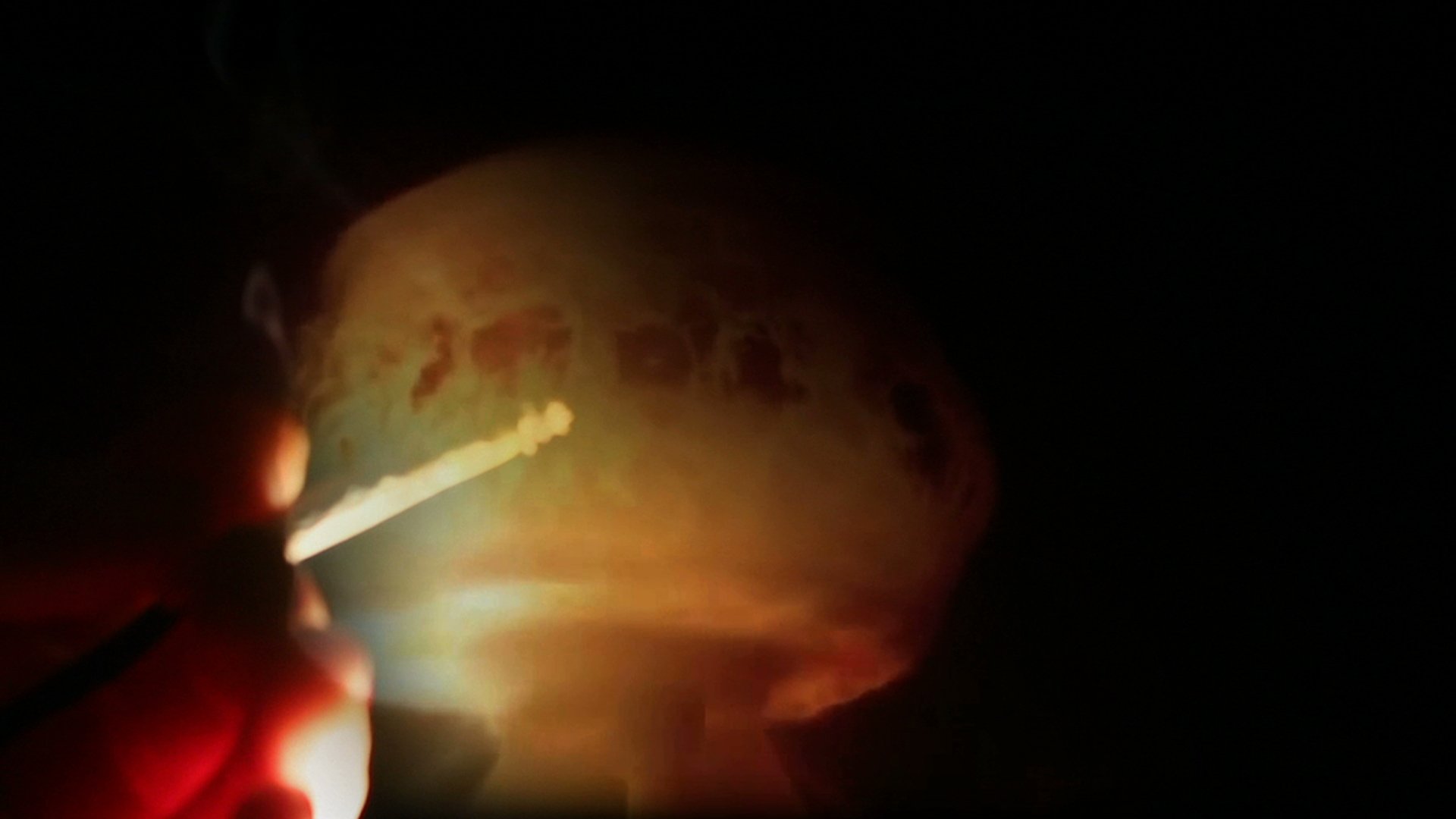
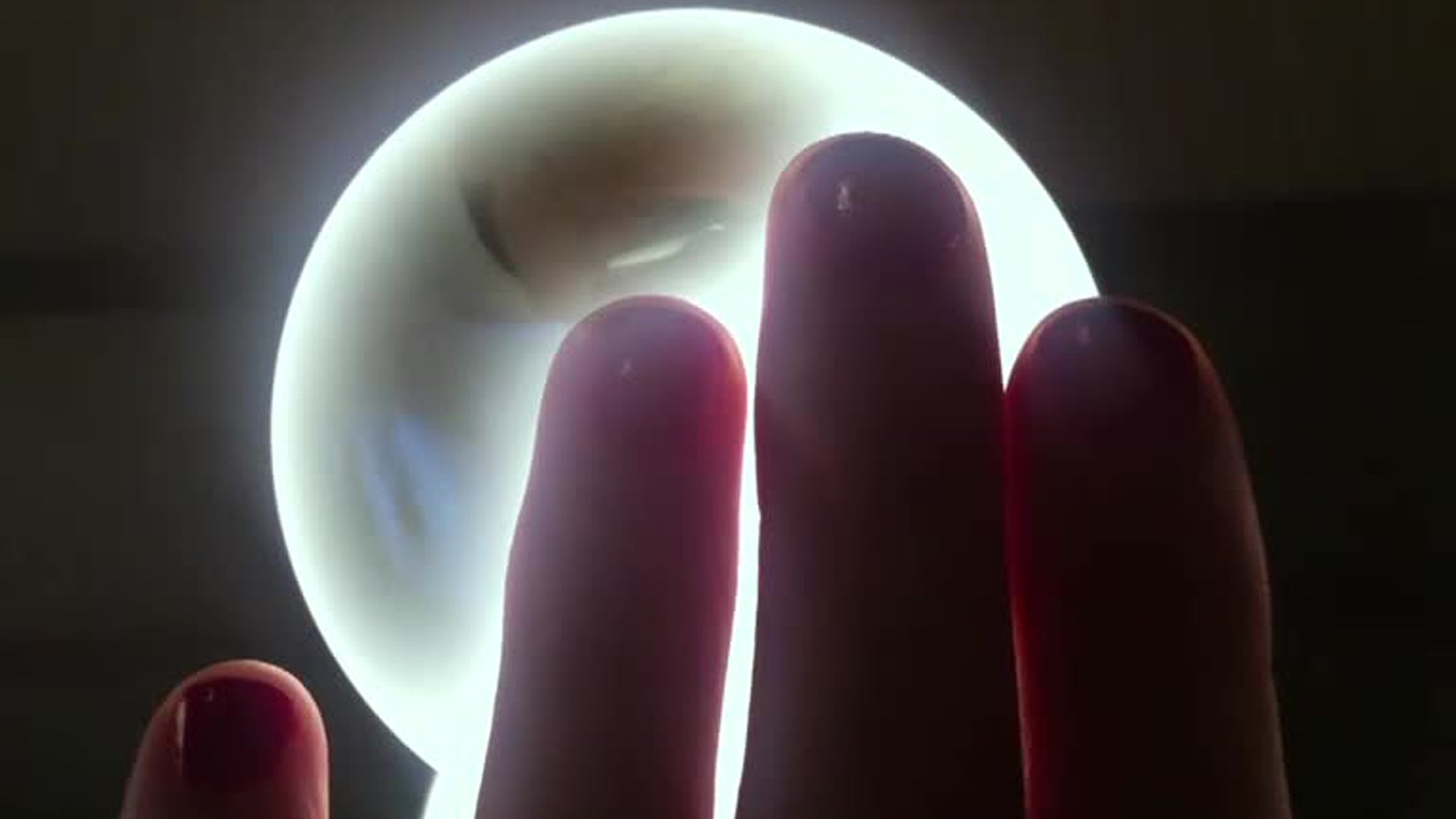
Women, letters, their histories and writing are mapping our future. To you, Grandma Jenna says and a yellow glowing sphere is traced by fingertips. Under the touch the sphere’s opacity decreases: inside an old woman struggles reading a list with a magnifying glass in her kitchen. For a short moment the voiceover stops to let her address Jenna frailly: ‘How can you help me?’ It is a splinter of the closeness between girls and their Grandmas and the unexpected moment of familiar intimacy overtakes us.

Letters was conceived out of anger and distance from New York where Occupy was in full force, at the grave of the French philosopher Simone Weilin Kent. A series of five videos about closeness and distance, it addresses the contradictions of the people who influence us most: our fathers believing they resolved the Mystery of Women, grandmothers who embody woman’s physical decline and the women, like Weil, who we admire but who, unlike the men, weren’t just allowed to be. In Letters, relationships between image and voiceover break, narratives collapse, but the voice envelopes and directs its content – underscored by disco soundtracks and Phil Collins.

Eileen Myleen’s introduction to Chris Kraus’s epistolary autobiographical novel entitled I Love Dick begins with her resentment of unwillingly identifying with the female protagonist of Francois Truffaut’s Woman Next Door – the predictable fate of a woman who ruins herself for a man. But these are the stories that made us, as we are drawn to them, as we are repulsed by them. ‘Hold me!’ Jenna whispers with us when we speak. We don’t know how to distinguish between external and internal voices or how to recognize the one that’s truly ours.

‘Woman ought to find herself, among other things, through images of herself already deposited in history and the conditions of production of the work of man, not on basis of his work , his genealogy’ Luce Irigaray writes in An Ethics of Sexual Difference. Chris Kraus does exactly the opposite; she writes hundreds of unrequited love letters to a man called Dick she meets for one evening only with her then husband philosopher Sylvere Lotringer. The man in question, art critic Dick Hebditch, responds once, in writing, to her husband.

It’s arguable whether Chris Kraus succeeds in escaping of the central figure of an elusive man in charge of female identity but her defilement causes a gender norm to transform into contradictory and unsettling power dynamics. In Carl Dreyer’s words she creates ‘the artifice to stop artifice from artifice’; female abjection taken to its extreme – it weaponises ‘femaleness’ into something where its meaning is emptied, reversed and reinstated by the writer.

‘Writing to you is, like, the worst thing I can do,’ Jenna says in Letter to Osama Bin Laden while we watch a pair of (our) legs clad in jeans rubbing against each other – the shot is composed from the eye level, unfocused, pixelated. The voice punctuates the footage, which becomes skin-like, resembling Hannah Wilke’s thumbs carefully pressing chewing gum sculptures on her barren upper body to distract from her nipples; they become targets, bullet holes or a shield. Unlike Chris Kraus, Jenna translates her fantasy into a role reversal. Behind a microphone her voice becomes the Other, the voice of the Enemy of the State. Animated twin towers swirl together to disclose as a couple; geopolitical strategies and heteronormative intimacy are shown as intrinsically intertwined.

Julia Heyward in her ritualistic performance Shake Daddy Shake, part of Three Evenings on a Revolving Stage at New York’s Judson Memorial Church in 1976, spoke in an exaggerated southern drawl about her father, her voice lending the character a hypnotism which suggest it may inhabit her. Jenna removes herself from the stage and allows images to enter her voice and in the reverse her voice morphs with moving image, re-defining her bodily presence. Even though we get a glimpse of the artist several times in the series, it is her voice that embodies and is the bearer of her presence, where identity is mutable through character adoption and technology.

This mutability is in the conflation. In the speech of her Freudian psychoanalyst father, who ‘talks, talks, talks and talks’ about the century of the self, we decipher imagined polytonal dialogue about the intergenerational conflict, ideology, American power, patriarchy and paternal love. From the conflation emerges a polyphonic voice, which Jenna ultimately remains in control of. ‘I don’t want to be silent’ they repeat together in a disharmonic duet. Jenna Bliss’s presence multiplies yet again, reinforcing the obfuscating nature of the screen and camera and the fluid identity play they facilitate.

 Hana Janečková 

The videos in this online exhibition were accessible/playable only for the first 3 months after its launch.
Jenna Bliss: Dear dad the analyst


Picking yourself up like a boogie
You self-made-up man
But that’s all talk
All voices with no mouths
Just speakers, what a joke.
Nothing is harder than the closeness between two people.
I’m a pervert!
Perversion, because I want more.
My perversions define myself in this century of the self.
Ah, but broken hearts still persist
No matter how much I talk, talk, talk, talk, talk talk
Sexual liberation didn’t free me from being stuck in the sexy immobility of social change.
Smoking cigarettes instead of masturbation and the quick fixations of retail therapy
Oh, we watched you fail
Warping through generations
Nuclear bombings making families
Exploding bodies apart
Keeping it together for the century
Fully saturated selves falling like shelves at a disco
Spiralling, they got pouty lips and daring eyes
And I keep dancing on my own
But now here me out like you always do
Marks and scars jumping out of the cars on the highway.
Fears, tears and fantasies
This text, my voice, what would I do without you
The clamour of this stuff never seems to go quiet.
I don't want to be silent.

Jenna Bliss: To you, grandma

To you
You smell good: purifying pink grapefruit, gel, lotion, vibrant vanilla, nourishing shea butter whip, intensive mists
What do you have? Jenna?
Prime Minister Margaret Thatcher is dead at age 87
.…to be continued…
Grandma, I keep my tv on just to hear some voices
Otherwise it’s too quiet
Talk show hosts are friends with first names: Oprah, Martha, Regis
Jesus, the droning murmurs and startling advertisements
Surround
Around
Hoping the cycle
Around
Surround me
Revolting with the ages
I remind you of your father who died when you were three
Talk about ghosts
You ran off one afternoon, I looked for your body, but you came back an hour later with your friend giggling
What do you have to do to feel something, when you reach out your hand?
Homesickness follows me except when I’m in your home
I didn’t understand any of that?
How can you help me?
Just tell me what to do!
And up next!
But they say: what is it with girls and their grandmothers?
We all want smooth skin but old slows.
You walk so slow.
These TV voices make you know about me.
These voices surround
Around Our quiet evenings.
Driving toward you I sing so loud.
I can feel it
Letting go
Grandma: I keep my TV on just to hear some voices
Otherwise it’s too quiet. I keep touching, touching bodies, ambiguous bodies, and it’s all a void. All technologized voices and I feel nothing
But….

Jenna Bliss: A letter to Osama Bin Laden

A Letter to Osama Bin Laden,
Writing to you is like the worst thing I could do.
As time continues the reality of our bodies entangled is no longer indelible.
Traces evaporate.
I should be angry
But the past feels more like fantasy
Cannot shake the fantasy
Full of hope and hopeful
Like wishing for more scars
But lately my body has been lonely
I miss your mouth on the back of my neck.
You are a nation that exploits women like consumer products or advertising tools
Calling upon customers to purchase them
You use women to serve passengers, visitors, and strangers to increase your profit margins.
You then rant that you support the liberation of women?
You are a nation that practices the trade of sex in all its forms, directly and indirectly
Giant corporations and establishments are established on this
Under the name of art, entertainment, tourism, freedom and other deceptive names you attribute to it.
The payphone was free but my call didn’t go through Invigorated by confusion
Chaos I cycle to school looking for your bike I think of you and hope you can feel it I get lost Get lost!
My bed has no imprint anymore
The weak springs never took to your form I feel the coldness of your barriers so much
Two towers with shadows
We didn’t touch till the end
Unearthed
My heart dropped I should know better than to respond I should know better
You keep tearing my heart to shreds and seem to be giving yourself a hard time in the process
Anyway, blah blah blah
There really isn’t much to say
Light beams spread
Despite the popped champagne
There is still a gaping whole
How many bombs can we throw until some shrapnel gets under our skins?
Lower Manhattan and its barricades
Evacuated protests
Crumbled building basements
Cradering destruction
Hold me hold me hold me Hold me hold me hold me
Hold me hold me hold me
I want to call you on the phone
But you won’t hold me
I want to call you on the phone but you won’t hold me
Hold me
I turn my phone off so I won’t call you on the phone
Hold me I turn my phone off so I won’t call you on the phone
You won’t hold me
Hold me
My phone is off.

Letters

Letters (2013) was conceived out of anger and distance from New York where Occupy was in full force, at the grave of the French philosopher Simone Weil in Kent.

A series of five videos about closeness and distance, Jenna Bliss mediates her experience of the people who influence us most. Letters are addressed to fathers believing they resolved the Mystery of Women, grandmothers who embody woman’s physical decline and to the women, like Weil, who we admire but who, unlike the men, weren’t just allowed to be.

Artyčok TV presents three videos from a series of five, the other two are titled ‘Dear Carlos the Jackal’ and ‘To CK‘ inspired by American writer Chris Kraus.

Jenna Bliss: Biography

Now Is Night (2014) blackout.It

Jenna Bliss is an artist and filmmaker currently based in New York. She graduated from the Slade School of Fine Art in 2013 and has recently been included in Anti-Know in Flat Time House, London; Locomotion, Store London and she went on Scrimpy Summer Farm Tour, initiated by Elise Duryee-Browner and Damon Sfetsios to perform on a few farms in Upstate New York.

Another ongoing project with curator Alex Davidson can be found on an open-late website: www.blackout.lt with screenings and performances in Vilnius and New York. Jenna’s upcoming exhibitions include a group show at W139 in Amsterdam, March 2015 and a performance at South London Gallery in April 2015.

New Feminism – I turn the images of my voice in my head

”New Feminism – I turn the images of my voice in my head” is a regular online presentation of work by a generation of artists responding to the on going fourth wave of feminism. Author of the project is Hana Janečková. Screenings of artists’ moving image will be accompanied by commissioned texts from curators, critics and theoreticians writing about the influence of feminism, technology and new media on contemporary culture.

What has happened recently to your body? Are you proud to be male or female? Can you be a feminist if your avatar enjoys wearing pink? Do you think gender is a capitalist concept? If so, do you think it existed in the former Eastern Block?

Exhibition credits

Author of the Project / Curator: Hana Janečková 

Author of Texts: Hana Janečková 

Online Exhibition Concept: Hana Janečková and Lenka Střeláková

Editing and Realization: Lenka Střeláková

Translated into Czech: Zuzana Rousová