Josef Holý: Absences in the Video Archive – Artificial Intelligence
We are living in an age when digital technologies are not only reshaping the landscape of our daily lives but also radically changing the paradigm of human creativity, social interaction, and even our perception of reality.
The aim of the series Absences in the Video Archive: Artificial Intelligence was to present a curated selection of films that offer insight into the relationship between humans and technology through the art of film. Divided into three thematic chapters—The Past, The Present, and The Future—this collection serves as a reflection on different aspects of technological progress and its impacts on society.
The Past takes us into recent history, when the dawn of the digital era and the first interactions with technology were shaping new narratives and modes of storytelling. The Present explores the current state of affairs, in which technology is becoming an essential part of our lives, bringing unprecedented possibilities in the automated management of global socioeconomic systems as well as new forms of alienation. The Future then looks to a possible tomorrow where a never-ending conflict between technological progress and human creativity awaits us.
Each of the films presents a distinctive view of how artists perceive and interpret technological changes. Through their work, they reflect not only on technological innovation but also on the social, ethical, and philosophical questions that these innovations raise.
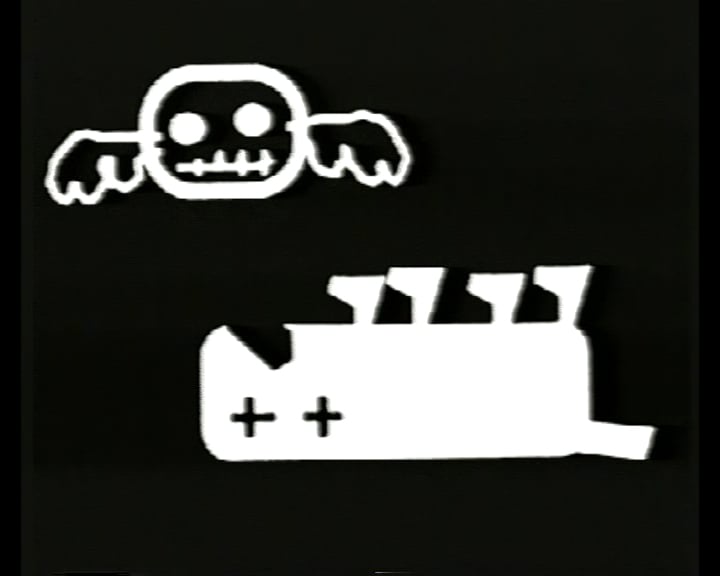
Tamagotchi – Tomáš Mašín, 1994
The Past – Rushing toward a Likable Future
The films in the chapter The Past reflect on the early stages of our relationship with digital technologies and explore how these early interactions shaped the foundations of today’s digitally saturated society. The films Polednice (The Noonday Witch, 1999) and Tamagotchi (2018) reveal both the promises and pitfalls of the new era.
Polednice prophetically reinterprets the classic ballad by Karel Jaromír Erben in the context of modern digital addiction, depicting a mother lost in a virtual world, indulging in digital distractions to the detriment of her maternal duties.
The film reflects the deep ambivalence many feel toward technology: on the one hand, fascination, entertainment, and convenience, and on the other, a growing awareness of its potential to isolate us from our immediate human surroundings. The film’s visual and audio aesthetics, including electronic music by Jan P. Muchow, reinforce this sense of alienation that the digital world can evoke.
Tamagotchi highlights the irony of our attachment to digital objects and provides a metaphor for the contemporary culture of notifications that forces us to constantly check our devices. It reflects on our growing dependence on digital technologies and their impact on our social and emotional lives, while also pointing out the paradox that, despite our ability to keep virtual beings alive, we often neglect our own interpersonal relationships.
The chapter The Past is thus a reflection on the early days of our digital era, when the impending significant impacts of technology on our lives were just beginning to emerge.
Polednice (The Noonday Witch) – Niké Papadopulosová, 1999, 6 min
The Present – The Schism between Techno-optimistic Visions and Scaled-up Global Supply Chains
The works in the chapter The Present reflect on our current relationship with technology, in which digital platforms keep global production and logistics systems running and, in the context of media, shape our everyday perception of reality. The films Blind Bidding (2017), Incomprehensible Labour by Specific Means (2022), and Zalando War Machine (2021) reveal the complexity and double-edged nature of technological progress, which brings unprecedented possibilities as well as new forms of alienation and control.
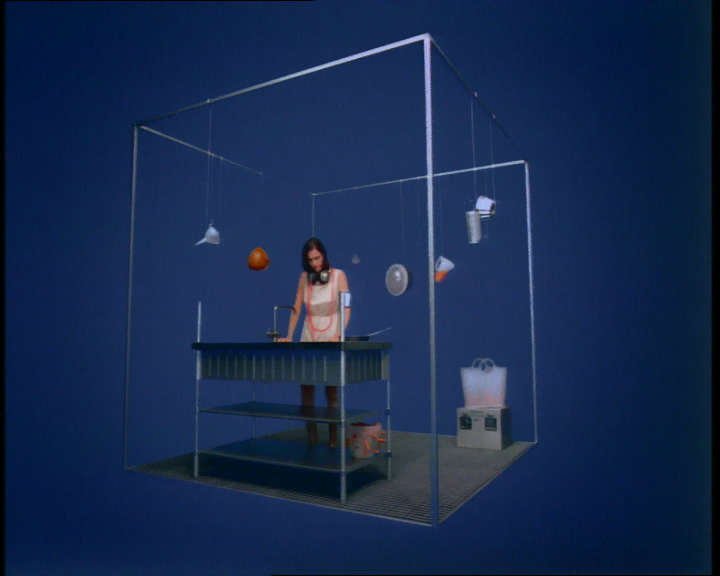
Blind Bidding reflects on the until recently ubiquitous technological optimism and approach to innovation inherent in Silicon Valley’s “start-up” culture. If the viewer accepts the satirical interpretation of a “TED talk” by Peter Davis, the fictional CEO of a fictional company, then they will logically glimpse the foolishness and risks of the “anything that is technically possible must be realized” approach that often ignores the ethical, social, and cultural implications of technological progress. This film therefore serves as an important reminder that technological advances should be accompanied by consideration for the broader context and impacts on society.
It is also interesting how the film anticipates the current mass trend of using generative artificial intelligence. It points out that treating human creativity as a mere source of data for machine learning that can be recombined into “new value” is a reductive and potentially harmful view of art and creativity. This view ignores the uniqueness of human expression and the potential ethical dilemma associated with “mining” human creativity for profit.
Incomprehensible Labour by Specific Means is a fascinating look at today’s increasingly digitized and automated work culture and economy. By depicting the endless flow of “packets” (and it makes no difference whether they are matter or information), it reflects the depersonalization and complexity of modern global processes. The transactional nature of these flows, expressed through acts of “approval” and incomprehensible forms, points to the removal of the human element from many aspects of work, which is increasingly being carried out automatically with the help of technology.
This approach can lead the viewer to think about how digitization and automation are transforming not only work processes but also the very nature of work and its perception in society. In this way, the film opens up a space to discuss the value and visibility of work in an era when many traditional work tasks may be replaced or significantly altered by technology.
At the same time, this abstraction and depersonalization can raise questions about how society perceives and values work that is increasingly less “tangible” and more dependent on complex data and logistics systems. How is our understanding of productivity, success, and effort changing when so much work is hidden behind digital processes that are incomprehensible to most people?
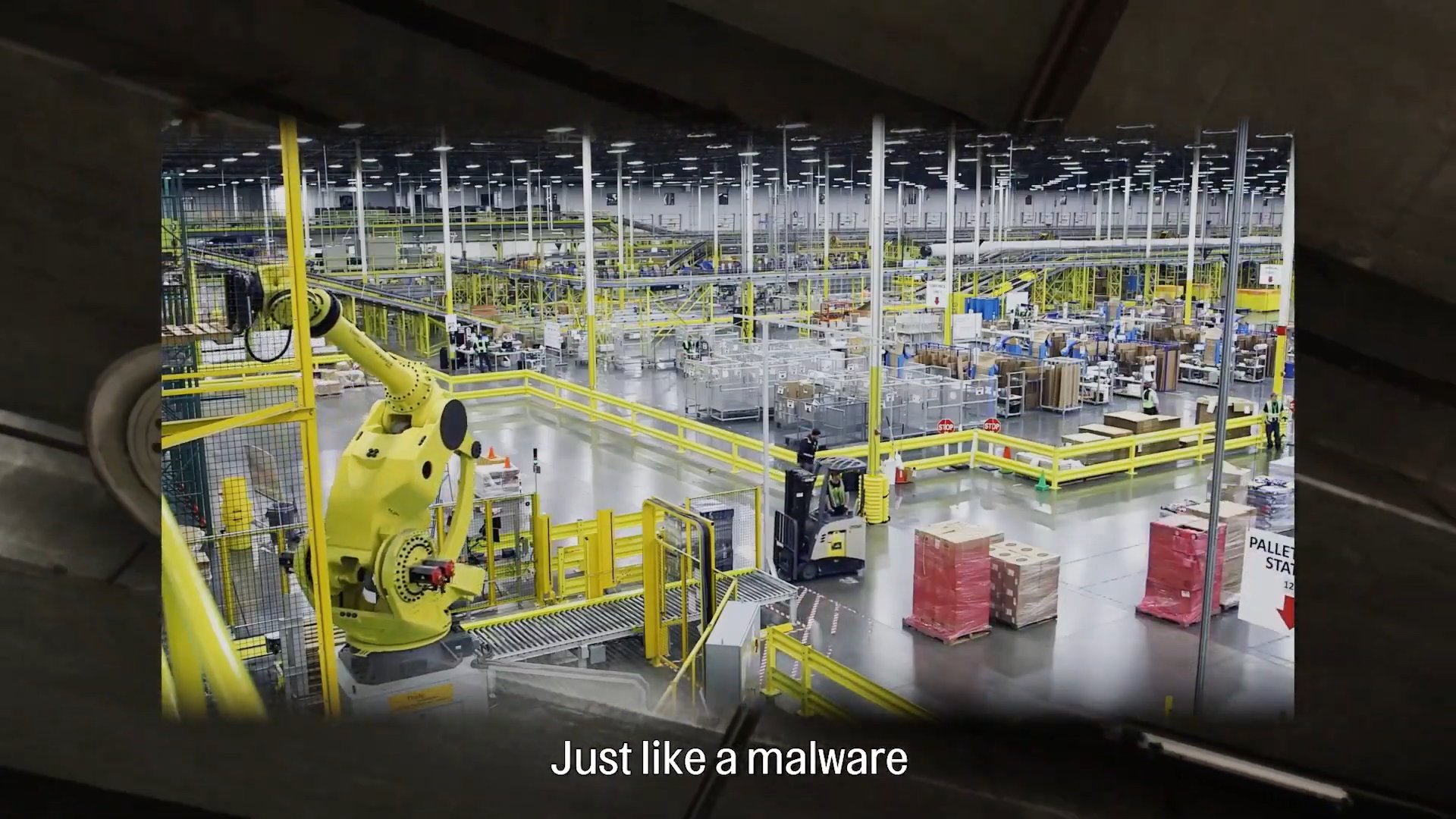
Zalando War Machine is a critique of the digital industry and its quest for efficiency, which often leads to the dehumanization of workers and customers. The film uses the metaphor of a heavy metal song to convey the irony and dehumanizing aspect of the logistics industry, which strives for perfection and precision in delivery, exposing its impersonal and brutal nature.
The films in the chapter The Present thus reflect the complex reality of the contemporary relationship between humans and technology, where technological advances bring both unprecedented opportunities and new challenges.
Blind Bidding – David Přílučík, 2017
The Future – Resisting Solidified Power Structures through Improvised Subversion
The final section, The Future, opens with a visionary look at a dystopian future in which we may see a clash between technological progress and human creativity. The film No Blade of Grass (2021) is an artistic speculation not only about future socioeconomic and power systems but also about the possibilities of resistance and subversion in the context of a postmodern technological society.
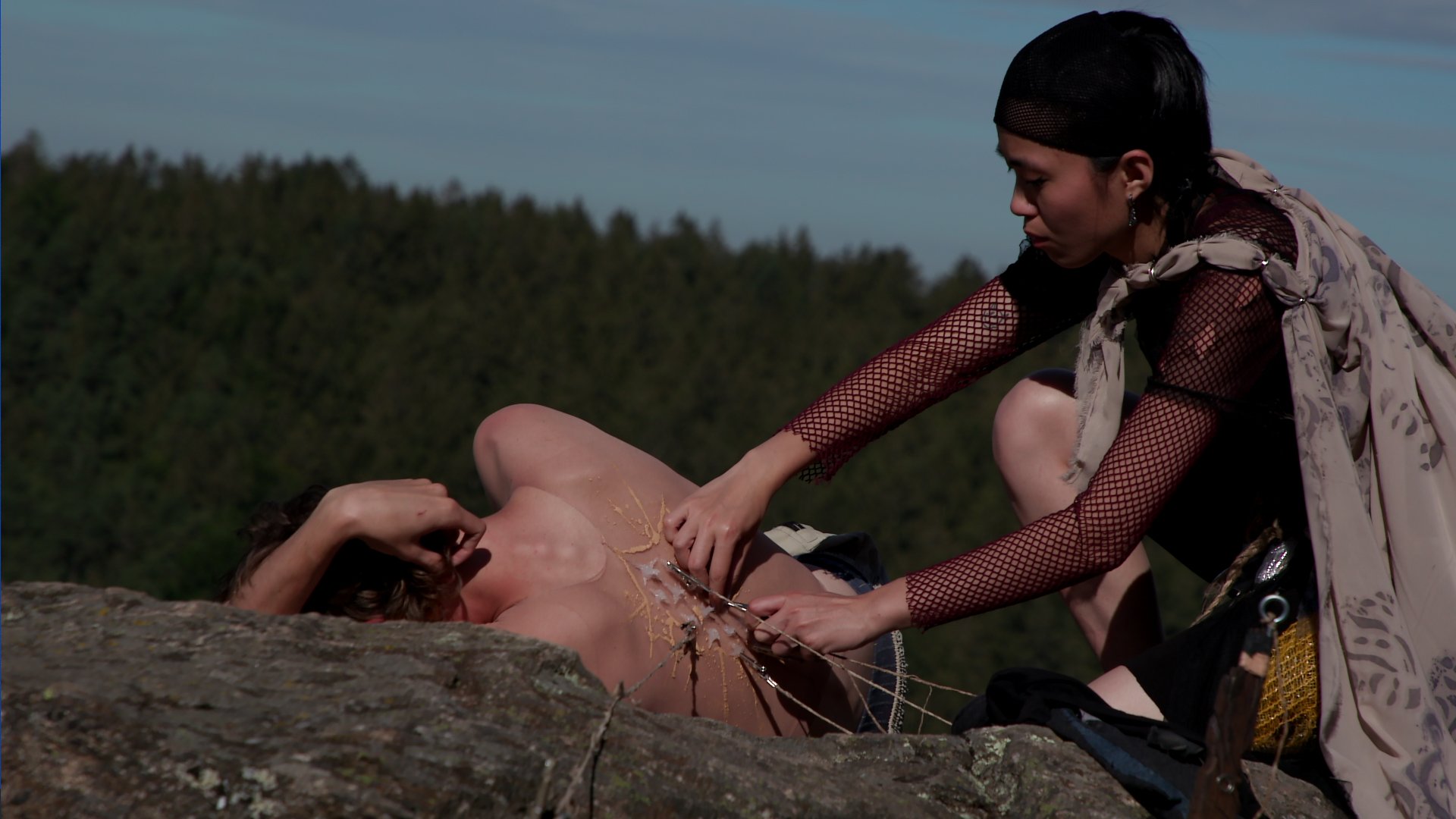
No Blade of Grass boldly delves into themes of political sabotage and the creative repurposing of everyday objects as tools for fighting repressive power structures. Set in the context of a live-action role-playing game (LARP), the film offers an alternative view of a future in which creativity, innovation, and improvisation play a key role in resisting technocratic dystopias. The film emphasizes that even in a technologically advanced society there must be a place for human creativity and subversion and highlights the importance of active participation in shaping the future.
This film is an inspiring look at the possibilities of future activism, where individuals and collectives use technology not as a means of repressive control but as a tool for subversion and change. It thus opens up a discussion about the potential of technology as a catalyst for social and political change rather than simply as a tool of power structures.
The chapter The Future brings fundamental questions to the series regarding the direction our society should take in the digital age. We need to constantly reflect on our role in a technologically saturated world and the ways in which we can use technology for positive social and political change—on the fact that the future is not a foregone conclusion and that we have the opportunity to play an active role in shaping it.
No Blade of Grass – BCAA, 2021
Common Themes across Chapters
One of the main themes running through each of the chapters is the issue of human autonomy in the context of the increasing dominance of technology. Essentially, all of the films mentioned show how technology is transforming our understanding of interpersonal relationships, work, and social structures. Through their works, the artists reflect on the paradox of modern existence, wherein technological advances are bringing unprecedented possibilities as well as new forms of alienation and potentially even absolute control over various aspects of our lives.
Artists and the Natural Fear of Technology
Artists, as people who often have a natural fear of technology, use their work to express skepticism about the uncritical acceptance of technological progress. In the films Polednice and Tamagotchi, we see how digital technology affects personal relationships and family life. Blind Bidding and Zalando War Machine critique corporate techno-optimism and its effects on the workplace and consumer culture. Incomprehensible Labour by Specific Means reflects on the abstraction and invisibility of labor in the digital age, while No Blade of Grass presents a future where creative resistance to power structures is essential.
Incomprehensible Labour by Specific Means – Matěj Martinec, 2022
Perceptions of the Individual, Society, and Power Structures
The films also express a deep understanding of how digital technologies are redefining the individual and society. They perceive individuals as often isolated in a digital media environment where traditional forms of social cohesion and solidarity are disrupted. Society is portrayed as a network of nodes connected by global networks of matter and data flows that promise efficiency and convenience but also create new forms of control and manipulation.
Power structures are often criticized for using technology to consolidate their position and further expand their influence, as we can see in Blind Bidding and Zalando War Machine. The film No Blade of Grass then offers a radical solution where individuals and groups use technology as a tool for subversion and resistance against repressive systems.
Zalando War Machine – Jozef Mrva ml., 2021
The series Absences in the Video Archive: Artificial Intelligence presents a complex and multilayered view of the relationship between technology and society, revealing both the promises and pitfalls of the digital era. The films selected for this survey not only offer a critical look at the digital era but also remind us of the importance of artistic expression as a means of exploring, understanding, and potentially overcoming the challenges posed by modern technology.
Through their works, the artists invite us to think deeply about how technology shapes our lives and remind us that even in an era of technological determinism, it is important to reserve space for human uniqueness, creativity, and imagination. Absences in the Video Archive: Artificial Intelligence thus stands as a reminder that even in the digital age, it is important to keep humanity and critical thinking at the center of our interest.
Collaboration
Production team: Lujza Kotočová, Markéta Mansfieldová a Sylva Poláková
Text editing: Tereza Špinková, Sylva Poláková
Text proofreading: Jan Kovanda
Translation: Brian D. Vondrak
Publication: November 28th 2024