technology 127 results

technology

We hope that by combining a number of various artworks and projects, hints of possibility will begin to emerge, from which a way out of today’s situation, that is oppressive on many levels, can slowly be carved. When it seems there is nowhere to run, we can try running into the future – and from there, start to reshape the present.
‘Next Time, Baby I’ll be #Bulletproof’ is a collision of the live body and its technological mediations by Web 2.0 artist Jennifer Chan, accompanied by ‘Gyre’, a commissioned essay by London based art historian Cadence Kinsey.
The key significance of the accelerating development of artificial intelligence and other digital systems lies in the fact that they allow us to newly recognize the plurality of other forms of non-human intelligence that we have been “secretly” surrounded by all along. We needed to invent thinking machines to notice that everything around us is thinking.
What is shared, what is private and what are the possibilities of self-presentation in contemporary screen based culture? Adopting conventions of a YouTube vlog, Magdalena’s teenage diary entries surface raw and seemingly unedited. Stored in a number of disused mobile phones; songs, gifs, low-fi images and movies weave into and trail off in unfinished stories, anecdotes, soundbites and faces from childhood, where experience of mental illness is quickly interrupted by pop lyrics.
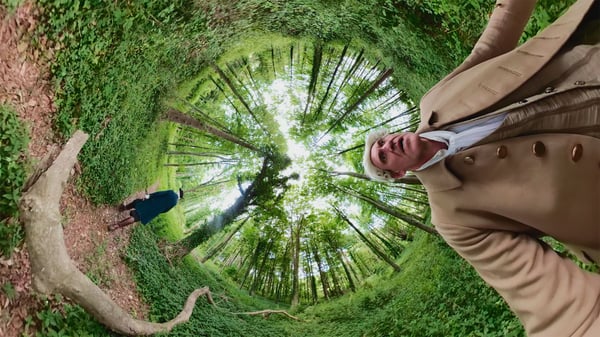
David Přílučík takes the viewer to a situation of a generic TED Talk presentation full of techno-optimistic rhetorics, an endless potetial and right decisions. Peter Davis, a creative professional, a manager and a bureaucrat from Silicon Valley is a mere fictional figure from the no longer existent corporation Worldwide Motion Pictures Group, established by Přílučík to be able to relativise utopian commitments of similar companies.
The international exhibition Beyond the Sound presents a contemporary approach to the specific and lively artistic field of sound art. Sound is presented not as an independent aesthetic form, but as a medium used to explore and reveal phenomena that are often unrecognisable to the eye.
At BC architects & studies we believe that, in order to have a positive impact on society through the discipline of architecture, we not only need to focus on the design of its infrastructure, but also on redesigning the process of generating infrastructure. We’ll need to experiment with the role that each member of a community plays in the act of building. For us, a narrow definition of the professional architect no longer suffices
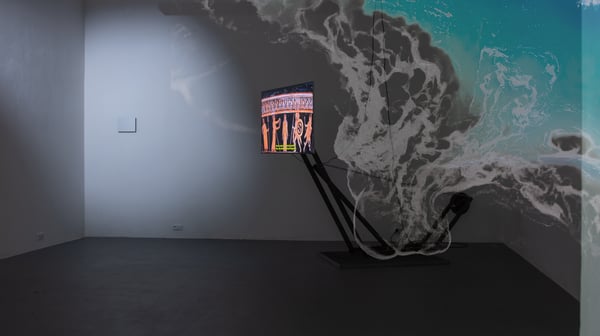
The 35m2 gallery presents two monumental works, two different environments. Both spaces are based on the same material context, the same material language. Yet each of these realizations appeals to different senses using different techniques and materials. These new spatial configurations, structures, and installations, which shape our spatial orientation and navigation through space, primarily appeal to our basic senses, our sensory memory, and our individual/private memory.
We know and repeatedly analyze a host of issues with commercial social media and digital labour, but little attention is paid to efforts at building alternatives, such as community-run social media and other forms of de-platformization.
Against the totality of networks and corporately owned social media, what are workable strategies and ethical approaches that allow for alternative ways for our social life to emerge?
The mini-symposium “Bauhaus and Functionalism” examines the reception and interpretation of the emergence of Functionalism in Czechoslovakia in the interwar period and connections with Bauhaus in Germany. The leading theorist of the modernist avant-garde Karel Teige and his teaching at the Bauhaus are ideal examples of networking between these countries.
Zach Blas, an American artist, writer and filmmaker, deals with topics such as politics, contemporary technologies, or queer theories. As part of his artistic work, he moves from theoretical research to conceptualism to science fiction. He has been working on Internet and Information Technology for a long time and on how these resources are used to track or manage individuals and companies.
Sex, Sickness and Videotape’ is a tribute to video as a medium which empowered women to make and break the rules of self-image, instead of reproducing the images that had been handed to them. Similar to Vanalyne Green’s engagement with video, the artists and writers who contributed to this project deconstruct and rebuild their practice in the response to challenges and possibilities of the current technologically mediated society.
Josef Holý focuses on the topics of information warfare, disinformation and the influence of algorithms of technological giants on our lives. How are and have these themes been reflected among artists working with moving image? The depiction of artificial intelligence or artificial humans has a fairly firm place in the history of visual art and is associated with many ethical issues that have realistically impacted us today.
Another part in NJME series focuses on question why some people found their own museums and how do they see their purpose. How does the future of a private museum look like and how does this museum differ from those financed by the state? How is this form of institution liberating and, on the other hand, what are its limits?
Architect and investigative journalist Alison Killing presents the results and methodology of the research on mapping detention camps for the Uyghurs other Muslim minorities in China, for which her team was awarded the Pulitzer Prize in 2021. The project uncovered details of the mass detention of these groups in so-called “re-education” camps, which the Chinese government officially denies or downplays.
The image of pages in a textbook being turned by a machine and standardised scientific restoration processes may arouse concerns but simultaneously hope. The experience of Western modernity, whether optimistic or disastrous, is a significant heritage which we should take good care of. We already know only too well what crimes and violence modern western people were capable of committing or at least took part in. However, we should not forget that modern institutions, such as the state, schools, science or museums, have created the infrastructure for our better lives.
The structure of the Tamagotchi video is based on the alternation of simple animations and texts. The animations remind us of early video games or simple computer games. For the texts he used the Chicago typeface which was designed for Apple Computer and was used between 1984 and 1997 in the operating system user interface. Unlike the main stream of Czech video making in the mid- 1990s, mostly based on performative elements or artistic unusualness, Mašín´s approach is radically different not only in terms of aesthetics but also conception.
At a moment of digital ubiquity, it may be easier to treat the data from digital platforms as primary in contemporary innovation and to believe that, if coated with sensors in an internet of things, the stiff, dumb world will suddenly become responsive and “smart.” But the heavy lumpy components of space are themselves information systems that don’t really need digital devices to make them dance.
Artworks by Lukáš Prokop exceed simple categorization, as his work oscillates among various media: he deftly connects his work with video, graphic imaging, sculpture, photography, textile, writing or digital printing. By actively thematizing creative technological processes, Prokop’s work also intentionally problematizes his own authorial position as the sole producer of the artistic content/work.
Conceptualized by Zbyněk Baladrán, Vít Bohal, Dustin Breitling and Václav Janoščík, the conference brings together theorists, artists and organizers who collaborate and elaborate on their visions in order to discover junctures of overlap for thinking about the emancipatory potentials of the future.
It is only through understanding and strengthening of our interconnections and relationships with our environment that we can bring about any societal change that will ultimately result in an improvement of the affective micro-politics. The personal is political.
The video of Milena's song works within the theoretical background of contemporary feminist thinking, namely with the legacy of cyberfeminism, which was formulated in the early 1990s by British feminist and cyberculture theorist Sadie Plant. Cyberfeminism grants emancipatory power to modern technology, but only as long as all people can access it, regardless of their class status, religious beliefs, cultural identifications, sexual orientation and/or gender.
The exhibition is concerned with contemplative pieces that exist in themselves as unfolding inquiries, probes that fluidly transition from the quotidian to the exceptional utilizing technical means as a virtual haptic pathway inviting us to delve deeper, to consider and reconsider.
Jussi Parikka is a writer, a media theorist and Professor in Technological Culture and Aesthetics at Winchester Art School (University of Southampton). He is concerned mainly with contemporary culture theory, philosophy, contemporary art, cyber-culture and digital culture. He has contributed significantly to the field of materiality of media, which he analyzes from the viewpoint of philosophy of new materialism. He deals with the relationship between nature and technologies using the term medianatures, which is a clear reference to naturecultures of Donna Haraway.