
Andrea Průchová Hrůzová is a visual sociologist, educator, and researcher. Her profile on the Artyčok.TV website offers at least a partial insight into the wide palette of her professional work, in which she primarily deals with the relationship between visuality, race, culture, and memory. Below you can find her lecture, a chapter from the book Captured by Images. Visual Politics of the 21st Century and links to an interview, the Fresh Eye platform, and the civic initiative NEmlčme, of which she is a co-founder. The profile is introduced by a text by Tereza Špinková.
Profiles
Andrea Průchová Hrůzová
Are Those People Still Alive? Images (from) Wars and Compassion FatigueLecture: War Streaming, Digital Activism, and All-Too-Human Apathy (in Czech)Interview with Tomáš Hudák: The Politics of Images and the Imagination of Solidarity according to Andrea Průchová Hrůzová (in Czech)Apel: Let’s Become the Guardians of Democracy Too (in Czech)Book Chapter: Too Much Pain. The Visual Universe of War in Ukraine (in Czech)Civic initiative and campaign: NEmlčme (Let’s Not Be Silent)Platform for the Study of Visual Culture Fresh EyeAndrea Průchová Hrůzová’s Bio
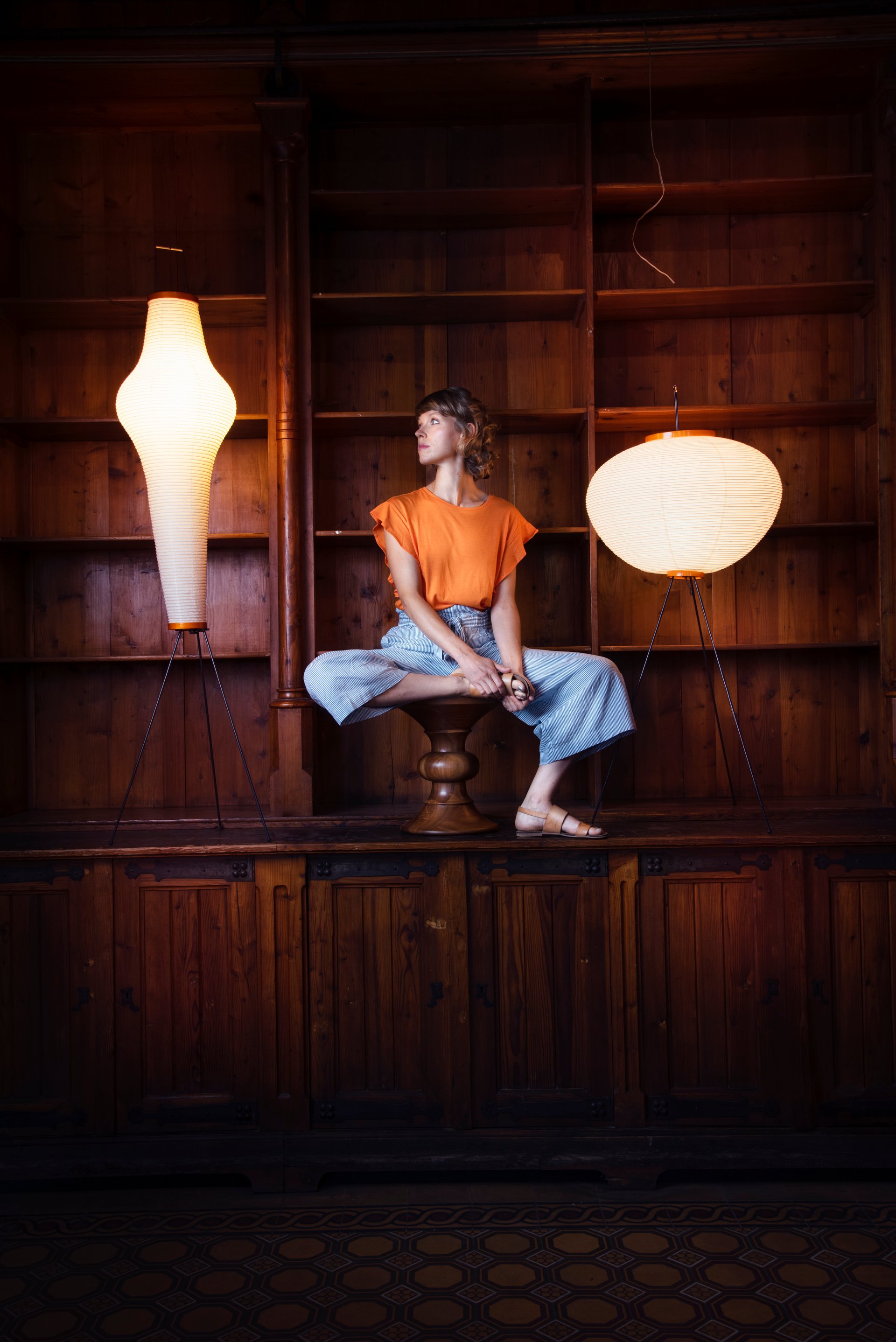
Copyright: Kateřina Sýsová
Are Those People Still Alive? Images (from) Wars and Compassion Fatigue
"Are those people still alive?" asks Andrea Průchová Hrůzová in her book, entitled Captured by Images. Visual Politics of the 21st Century, in the chapter on the war in Ukraine. She is standing in front of photographs displayed at an exhibition of two war photographers, Mstyslav Chernov and Evgeniy Maloletka, who, until the very last moment in 2022, recorded the lives (and deaths) of people in Mariupol, besieged by Russia. According to available reports, at least twenty thousand civilians died during this operation. Andrea admits that these images, their size, number, and the opportunity to observe them closely, shock her, and even though she feels physically sick at times, she continues to observe them in detail, "training her empathy." However, she mentions that when watching daily online news, photos and videos, which are "offered to her as a nonstop visual stream on social networks (cynically interspersed with commercials)," she struggles "with her own apathy and reduced ability to distinguish."
I think each of us is aware of this type of apathy and the possibility of skipping what we find uncomfortable in stories and elsewhere. Recently, two appeals appeared in my stories on the same day, both beginning with a similar sentence: "I know you must be tired of it, but this is how people here really live." These were testimonies (both direct and indirect) from two armed conflicts that are the closest to us – in Ukraine and Gaza. The news shook my conscience (and compassion) and, at the same time, I was overcome with helplessness, which I temporarily dispelled by sending some money to help these countries. But what should be done next?
In her popularizing book Captured by Images. Visual Politics of the 21st Century, which deals not only with the visuality of wars but also with other "crisis" topics of the present day, such as the climate crisis, racism, and decolonization, Andrea writes that war imagery "resembles a kaleidoscope of many fragmentary images rather than a concentrated narrative intended for closer observation". She also asks whether "the nature of the digital environment does not deprive war images of their ethical and civic dimension - one that elevates them above the level of singular, individual viewing and gives them broader social significance." By "nature," she does not mean so much their content but above all their "high fluctuation and instability." I would also add untrustworthiness. Which images can we trust, who presents them to us and why? Will Israel gain greater informational power, for example, if it does not allow anyone into Gaza, let alone international journalists? In an interview for the Slovak online magazine Pontón, Andrea states this specific conflict "is mainly framed by information asymmetry." We, who are merely observing the war, should be aware of "who represents whom and in what way."
Andrea Průchová Hrůzová has responded to this situation both verbally and through appeals to the public (see Appeal on ČT art), as well as through direct action via the NEmlčme (Let’s Not Be Silent) initiative. A number of significant personalities and initiatives have joined this campaign, whose goal was (and still is) to call on the Czech government to take a different stance on this war – more fairly, more decisively, and with an emphasis not on historical friendly, economic, and political relations, but on the current situation of humanitarian crisis and genocide affecting the lives of ordinary people.
Helplessness is a powerful emotion, often leading to apathy. However, we may fight against the overload we encounter every day online. This does not mean looking away and staying inactive, but rather considering where to direct your attention, with whom, and in what environment. Furthermore, we may also choose who we want to accompany us. It is precisely the texts, words and actions of Andrea Průchová Hrůzová that can help us find something essential in the abundance of images that (seemingly) overwhelm us uncontrollably. We can still choose, reflect, and cultivate targeted empathy, taking into account the varying degrees of compassion fatigue.
Tereza Špinková
Lecture: War Streaming, Digital Activism, and All-Too-Human Apathy (in Czech)
Current developments in political events and technological infrastructures allow us to experience a new type of spectatorship of war conflicts and genocides, in which the ways of human suffering exceed the limits of what was previously imaginable, and the ways of media content dissemination exceed the limits of what was previously displayable. How do simultaneity, algorithmization, high affectivity, and various display interfaces influence the production, circulation, and reception of digital war image communication? The lecture revisits theories of compassionate spectatorship and addresses the era of the culture of victimhood and necropolitical vision. The content builds on and expands the author's essays published in the book Captured by Images. Visual Politics of the 21st Century (2024, Akropolis). The program took place on April 8, 2025, as part of the "Technorok" [TechnoYear] lecture series organized by the Centre for the Study of Popular Culture (CSPK).
Interview with Tomáš Hudák: The Politics of Images and the Imagination of Solidarity according to Andrea Průchová Hrůzová (in Czech)
This interview, conducted by film critic Tomáš Hudák for the slow film magazine Pontón, deals with the main themes of the book Captured by Images. Visual Politics of the 21st Century (2024, Akropolis). It places the issues and images of visual activism, Black Lives Matter, migration, the Russian war in Ukraine, and climate change in the current political context of late 2024, when the interview took place. The longer introductory part of the interview focuses on the media coverage of the war, today known as genocide, in Gaza, which is briefly discussed at the end of the book.
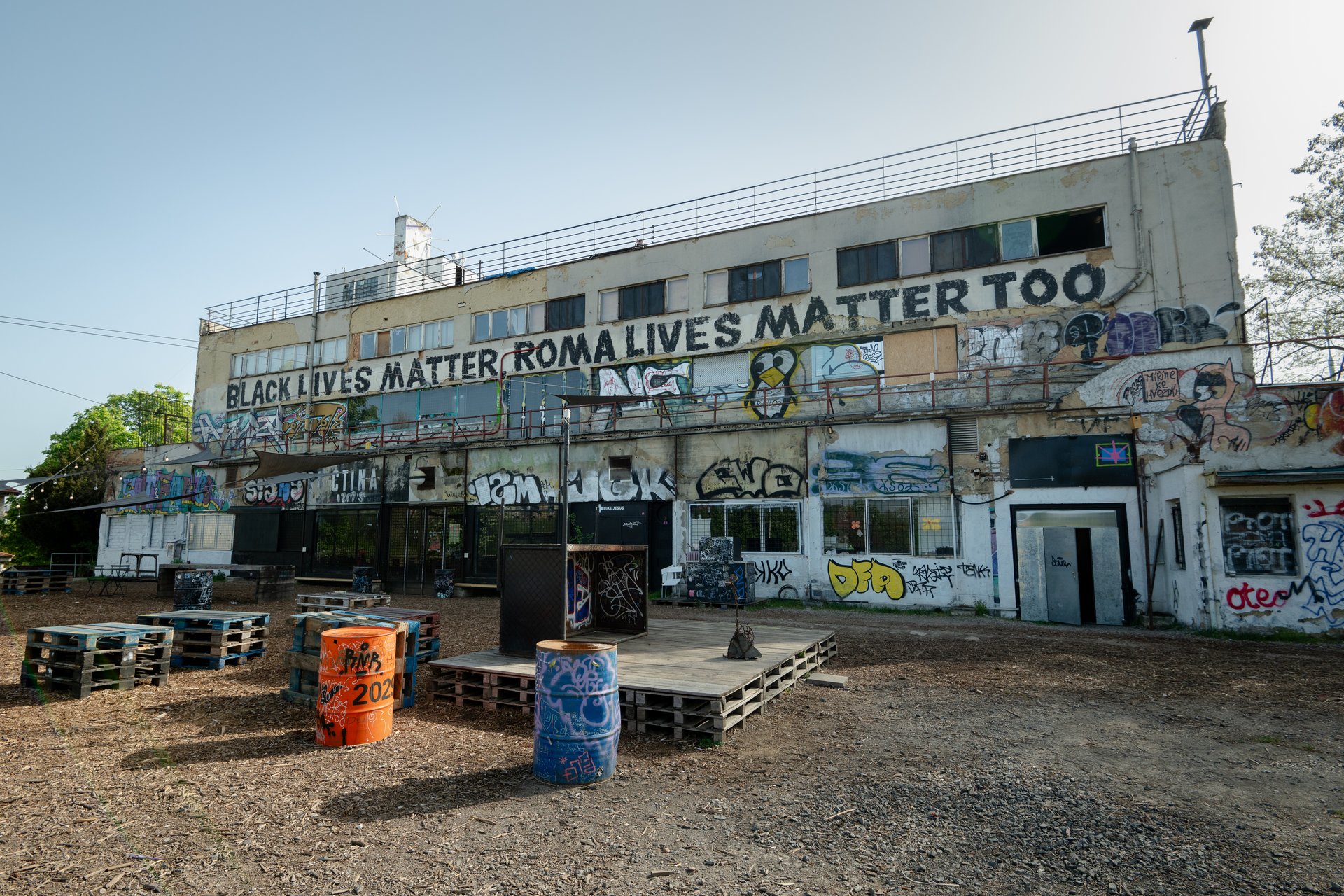
Copyright: Zuzana Jarolímková
Apel: Let’s Become the Guardians of Democracy Too (in Czech)
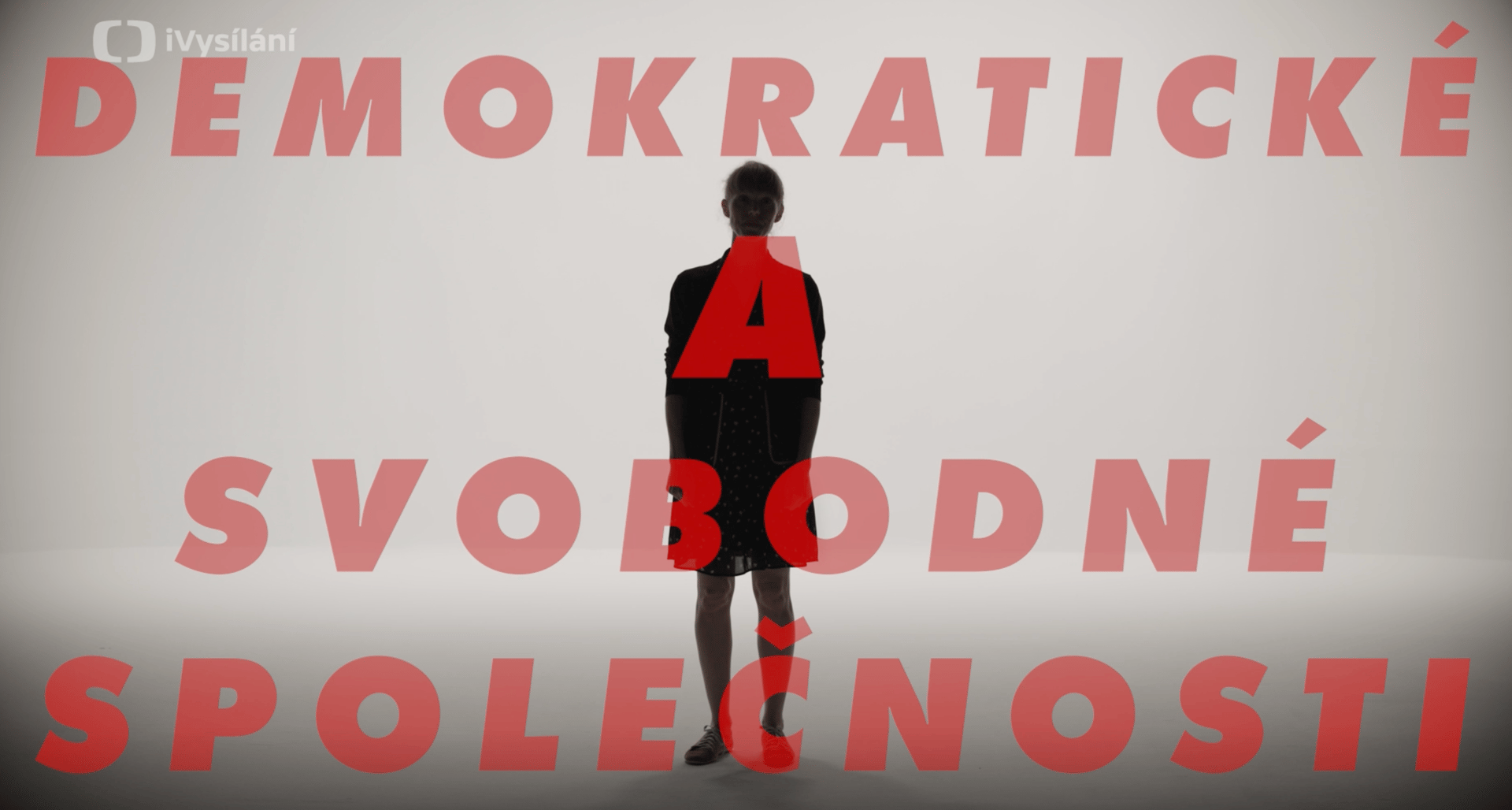
A short video critically assesses the one-sided and stereotypical reporting provided by many Czech and foreign media, which dehumanizes the Palestinian civilian population and downplays its suffering in Gaza. The appeal, supporting the critical and independent journalism, was published as part of the Apel program on June 19, 2025, on the ČT (Czech Television) Art website.
Book Chapter: Too Much Pain. The Visual Universe of War in Ukraine (in Czech)
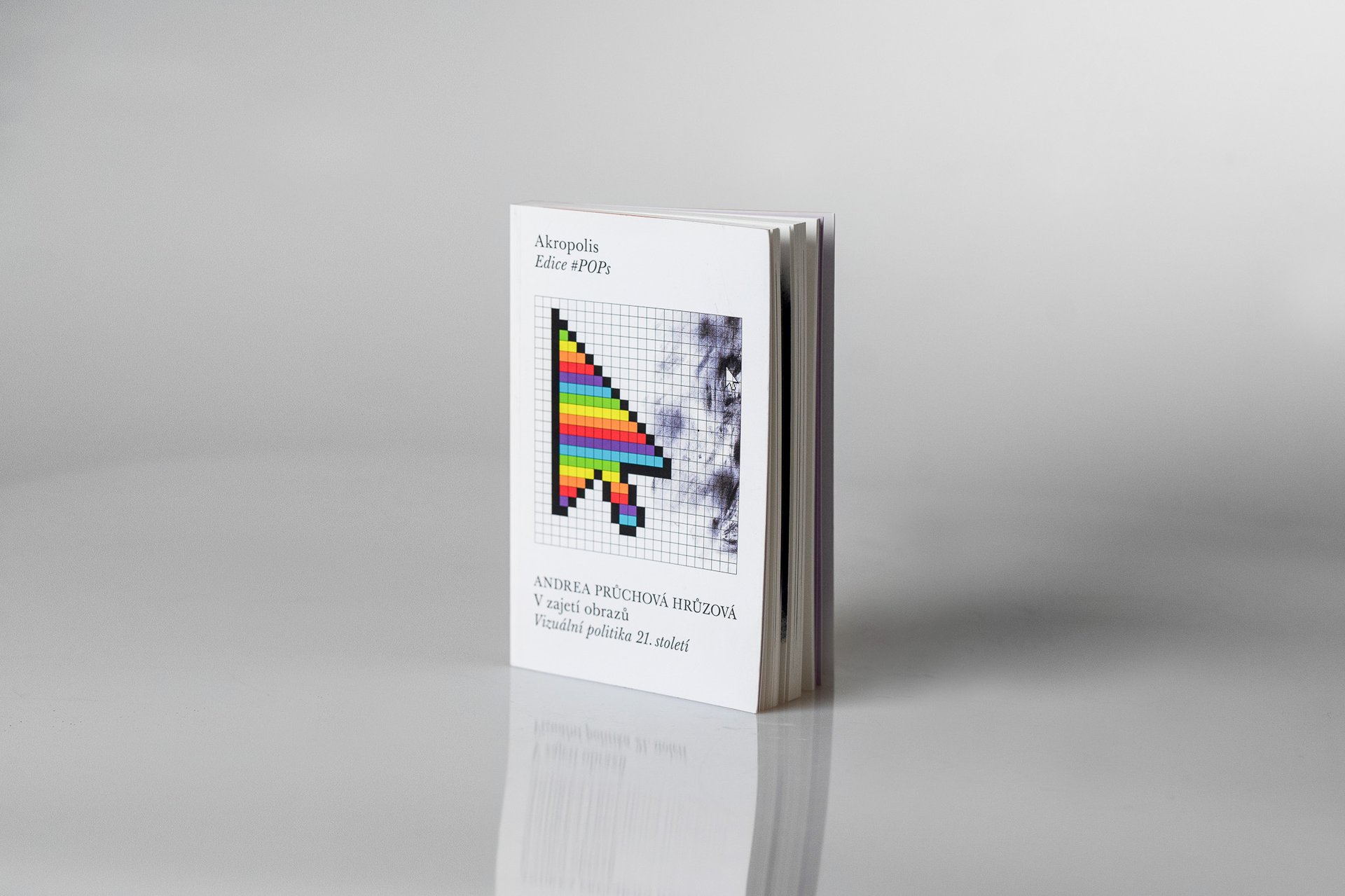
The text is the fourth chapter of the book Captured by Images. Visual Politics of the 21st Century (2024, Akropolis), which deals with images of the Russian war in Ukraine following the outbreak of full-scale invasion in 2022. The author reflects not only on specific images but also discusses the reception of war content through social networks and the mental images associated with Russian aggression in Ukraine in the Czech environment. The text is accompanied by illustrations by Barbora Müllerová. The book received The Best Czech Sociological Book Award 2025 and was nominated for the Magnesia Litera Award 2025 (the catefory of popular-scientific publication)
pdf version of an excerpt from the book (in CZ)
Copyright: Adriána Vančová
Civic initiative and campaign: NEmlčme (Let’s Not Be Silent)
The civic initiative NEmlčme was launched in May 2025 as a joint project by Andrea Průchová Hrůzová, documentary filmmaker Kristýna Bartošová, illustrator and curator Barbora Müllerová, and cultural manager Iveta Černá. It offered the general public communication tools to express disagreement with the violation of human and international rights in the Gaza Strip.
Platform for the Study of Visual Culture Fresh Eye
Platform for the Study of Visual Culture, Fresh Eye, was founded in 2011 at the initiative of Andrea Průchová Hrůzová, with initial support provided by the team of the former cultural venue Trafačka. Over the years, the project became independent, established cooperation with Petrohradská kolektiv, and in the last years of its existence, it operated on an independent guest basis in friendly cultural and artistic spaces. The platform focused on the development of visual culture studies through cooperation with local and international guests (e.g., Nicholas Mirzoeff, Joanna Zylinska, Marquard Smith, and others) and through various formats of public education - lecture evenings, screenings, discussions, workshops, conferences, and student competitions. The project operated until 2023, continuing to offer an online database of more than 250 lectures and an extensive, curatorially conceived library of texts.
Andrea Průchová Hrůzová’s Bio
Andrea Průchová Hrůzová is a researcher and university lecturer based in Prague, Czech Republic. She is a founder of the visual research platform Fresh Eye. Andrea investigates the intersections of visual culture, race/ethnicity, and memory. Her research work has been published in international journals (e.g., Visual Studies; European Journal of Cultural Studies; International Journal of Politics, Culture, and Society) as well as in international volumes (Amsterdam University Press, Palgrave Macmillan, Visual Studies Workshop Press). In 2024, her Czech monograph "V zajetí obrazů. Vizuální politika 21. století" (Captured by Images: Visual Politics of the 21st Century) was published, dedicated to the intersection of visual communication and global cultural politics as seen from the position of Central Europe. She is an editor of the international volume "Public Narratives of Decolonization and Racial (In)Justice and Central and Southeast Europe. Enemies and Colonies, Patriots and Riots" (2026, Palgrave Macmillan).
Publication: 22.12.2025