Rehana Zaman: Some Women, Other Women and all the Bittermen
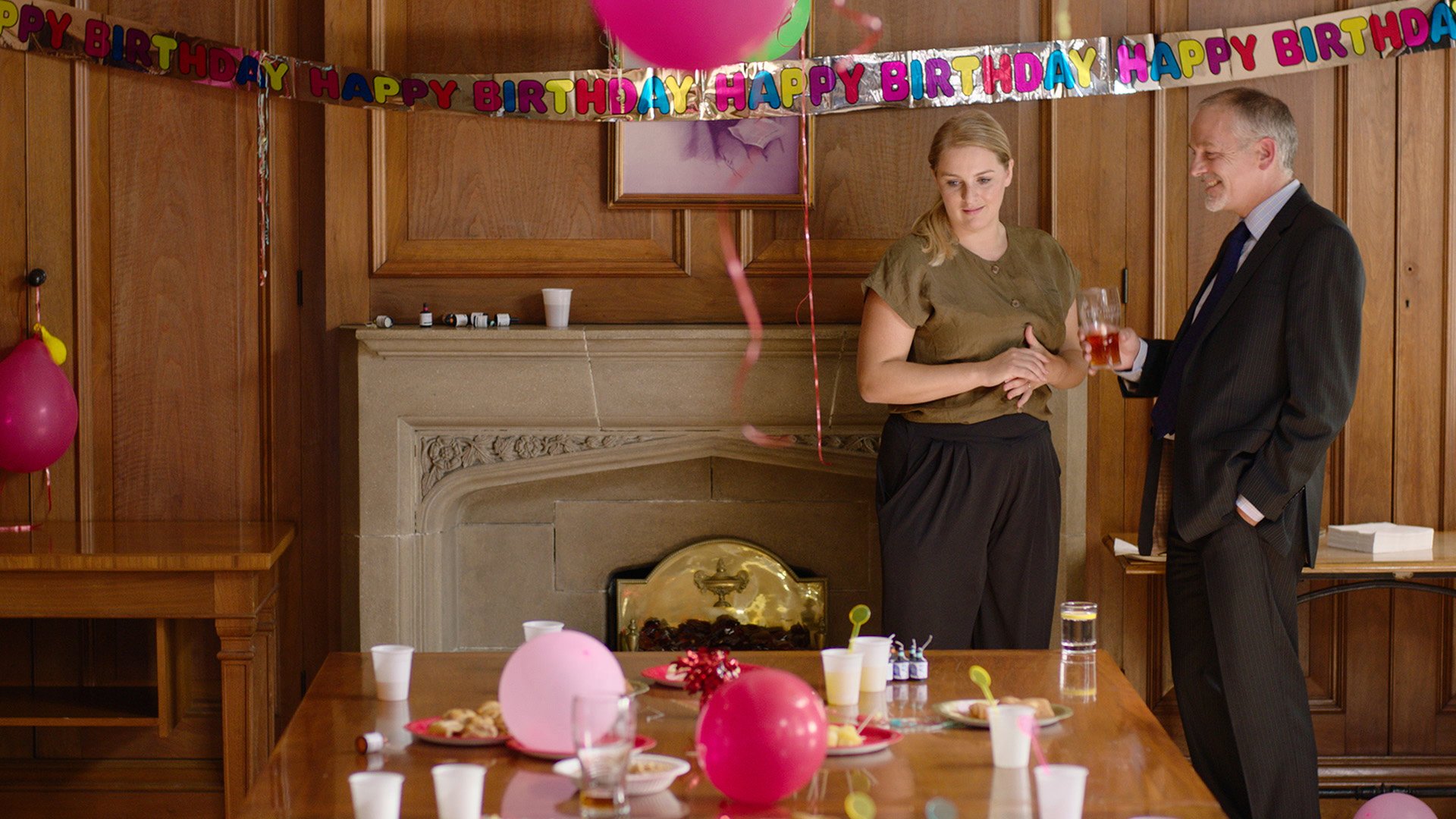
Still from the video "Some Women, Other Women and all the Bittermen" by Rehana Zaman
Year of production: 2014
Additional info on film:
http://whereslefty.tumblr.com/
https://www.facebook.com/pages/Justice-for-Domestic-Workers/456016897839252?fref=ts
‘They say it is love. We say it is unwaged work.’
In 1974, Italian-American academic Silvia Federici wrote the influential ‘Wages Against Housework‘ to declare the domestic sphere producing and reproducing labour power as the inseparable part of the capitalist system. By providing unpaid 'social reproduction (...) maintaining people both on a daily basis and intergenerationally', called by some the ‘labour of love’, this contribution by women is key to capitalist accumulation.
In 2013 Rehana Zaman was invited by writer and curator Amy Charlesworth to the self-led group Justice for Domestic Workers (J4DW), an organisation representing the rights of migrant women employed as ’domestics’ in private houses around the UK. Often brought by wealthy employers from abroad to take care of all aspects of their households, these women have seen their rights severely curtailed by recent changes in the British immigration policy, banning them from changing their employer. Even though the main focus of the group is a re-instatement of transferable visas, it goes hand in hand with their more radical proposal – resonating with that made by Western second wave feminists – to establish the domestic sphere as a place of labour exchange which should be waged appropriately. Comparably, domestic work done by men (as butlers, landscape gardeners and chefs) is often highly paid and professionally respected.
Zaman’s video ‘Some women, other women and all the Bittermen’ was a result of a collaboration with JD4W and suggests the cumulative effect of gender, class and race and how this intersectionality shapes different experience of female liberation. Racial and class prejudices have been instrumental in allowing mechanism of servitude to persist. In Anglo-American societies of the late nineties century the 'sentimentalisation of home as a haven in the heartless world' made increasing demand on middle class women to provide a clean, decorative home while maintaining their ‘feminine virtue’. This implied to keep themselves away from the hard labour, dirt and drudgery of domestic work to have a time for artistic, cultural and charitable causes. The hiring of lowly paid domestic servants, often migrant women, was justified by racial and class prejudices regarding the suitability of these women to servitude. In effect this displaced a conflict between middle class white men and their housewives to the housewife and ‘other’ women – their domestics.
Zaman’s work creates subtle links and propositions about the relevance of this experience, both in the labour market and in the cultural imagination. The familiar scenarios of …all the Bittermen invite identification with the protagonists, yet the structure of the film does not allow this to develop – documentary footage from J4DW flows in and out without any demarcations, forcing us back to reality. Sue, who longs for a managerial promotion, happily agrees to her boss’s demand that her newly gained position won’t be affected by her pregnancy. Sue’s managerial wages will have to be used to provide childcare, possibly by 'hiring a lowly paid domestic help who was forced to leave her children thousands miles away.
… all the Bittermen is scripted to replay the stereotypes of the British working class as disseminated by mainstream media and its white and masculine bias, faithfully following televisual conventions of ‘ordinary working life.’ The experience of the domestic workers, the ‘other’ British working class, is narrated by voiceovers of migrant women. Its shaky camera work is contrasted by the masterfully executed rendering of the fictional storyline as a kitchen sink drama of the kind that makes up the bulk of British daytime television. Watched mostly by women, soap operas, such as Coronation Street and Eastenders, are plotted to accommodate their viewer’s attention which is often distributed between various domestic tasks, the internet conversation with elderly relatives and childcare, where boundaries between work and time-off disperse and fragment. Zaman questions this fragmentation with her narrative methods – as the narrative unfolds and lose a direct connection to moving image on the screen, voiceovers disperse out of sync.
While watching the shift of the traditional industrial labour and power of unions to corporate models, where Sue’s feminism will be co-opted to deliver neoliberal strategies ‘to get rid of the dead wood’, the women from J4DW present us with an informal network of solidarity and friendship. While Sue’s fate points at the way women’s liberation has been utilitised by capitalism, it also opens the proposition of going back to feminist roots to integrate class and race, if feminism is going to mean something more than a number of middle and upper class (mainly western) women gaining access to 'power' on the same basis as men.
Rehana Zaman: Biography
Rehana Zaman is an artist based in London. Her videos and performances take up anecdotes, vignettes and short stories to examine moments of particular socio-political resonance. Narratives are often generated through collaboration with individuals and groups, a process that determines both the subject and structure of the work. Solo presentations include ‘Some Women, Other Women and all the Bittermen’ The Tetley, Leeds, Projections Art Rotterdam, NL (both 2014), ‘What an Artist Dies in Me/Exit the Emperor Nero’ OUTPOST, Norwich and ‘I, I, I, I and I’ Studio Voltaire, London (both 2013).
Selected group exhibitions include Tenderpixel, London (2014), Baro, São Paolo BR (2013), The Showroom, Whitechapel Gallery, Limoncello, London (all 2012). In 2013 Zaman was awarded a Gasworks International Fellowship to take up a residency in Lebanon. She completed her MFA in Fine Art at Goldsmiths in 2011 and was a LUX Associate Artist 2012/2013.
New Feminism – I turn the images of my voice in my head
”New Feminism – I turn the images of my voice in my head” is a regular online presentation of work by a generation of artists responding to the on going fourth wave of feminism. Author of the project is Hana Janečková. Screenings of artists’ moving image will be accompanied by commissioned texts from curators, critics and theoreticians writing about the influence of feminism, technology and new media on contemporary culture.
Exhibition credits
Author of the Project / Curator: Hana Janečková
Author of Texts: Hana Janečková
Online Exhibition Concept: Hana Janečková and Lenka Střeláková
Editing and Realization: Lenka Střeláková
Translated into Czech: Palo Fabuš