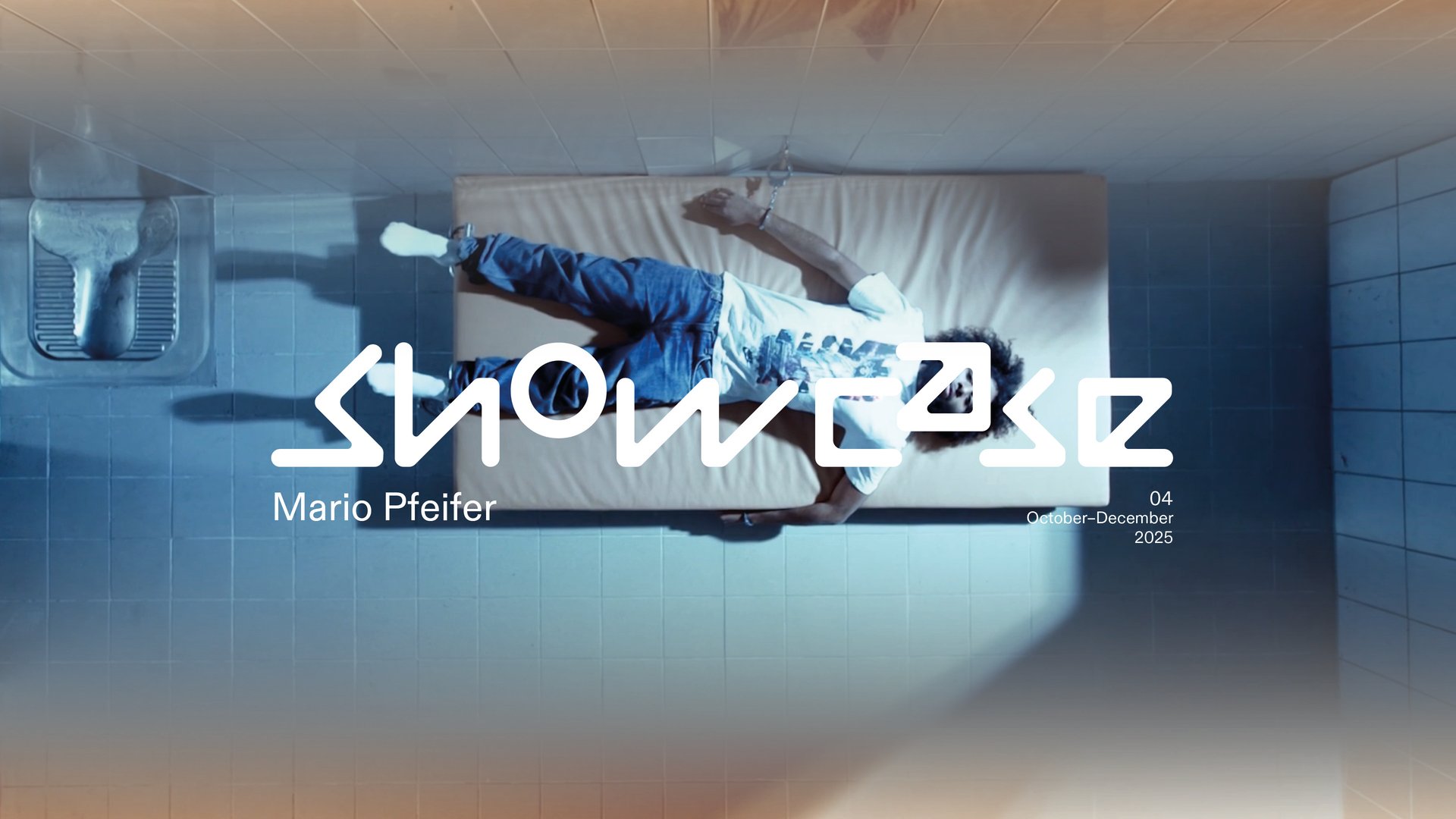
On January 7, 2005, Oury Jalloh, an asylum seeker from Sierra Leone, died in a German police cell due to a fire accident. The police version of the case states that it was probably caused by the detainee himself, or a suicidal act, in relation to the ignition of a mattress made of non-flammable material to which Oury Jalloh was handcuffed and shackled.
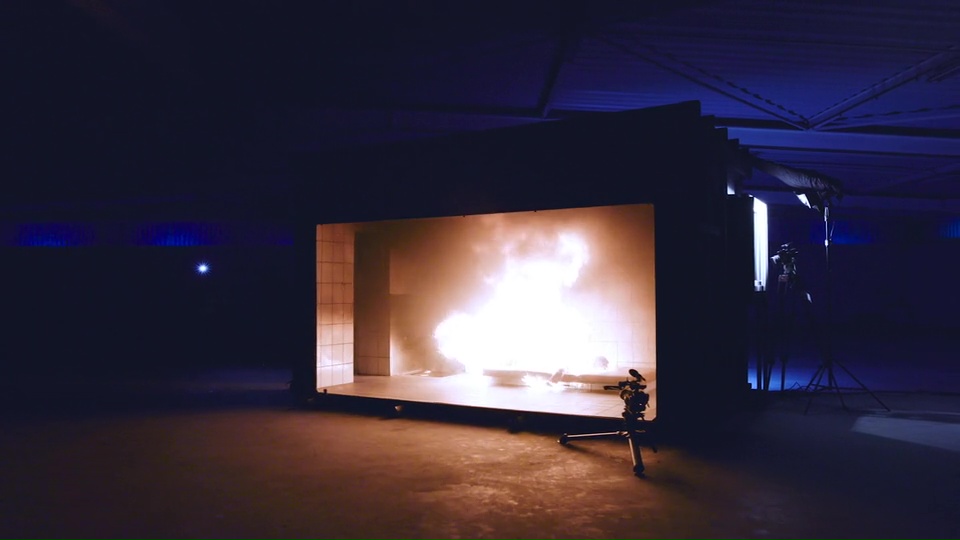
Unconvincing or non-existent evidence to support this official version and subsequent efforts to quickly dismiss or postpone the case led artist Mario Pfeifer to conduct his own experimental reconstruction of the entire case. Based on a careful analysis of all available documents, testimonies, and audiovisual materials accompanying the still-ongoing trial, Pfeifer, with the help of forensic expert Ian Peck, prepared a setting that shows with great accuracy how and under what circumstances a fire could have actually occurred in the cell, leading to the death by burning.
The results of the experiment bring a very disturbing report on racism and police brutality, to which neither the legal nor the political system in today's Germany is able to adequately respond. Cell 5, oscillating on the edge of documentary and fictional film, provides a dramatic and atmospherically very dense spectator experience.
Video was available until Dec 31st, 2025.
For a deeper insight into the background of Cell 5, listen to Janek Rous's podcast interview with the author, Mario Pfeifer.
Mario Pfeifer (born in Dresden in 1981, lives and works in Berlin and Dresden) is a visual artist and filmmaker. In his work, he deals with current discourses and social disruptions, placing at the center of his work the understanding of democracy, racism, technology, and artistic research with regard to socio-political, ecological, technological and economic realities of our time. Mario studied at the Städelschule Frankfurt am Main, der Universität der Künste Berlin, the Academy of Visual Arts in Leipzig and the California Institute of the Arts. He is a Fulbright and DAAD almuni whose works have recently been awarded with the Hessian Film Prize (2023) and Germany's Human Rights Film Award (2024). In 2025 he was a fellow at the Schaufler Lab. Previosuly he was an artist-in-residence at the International Studio and Curatorial Program [ISCP] in New York, Gasworks in London, and Cité Internationale des Arts in Paris. In 2017 he has been named the RWE innogy – foundation for energy and society scholar. Mario installations were presented at the Los Angeles County Museum of Art [LACMA], Los Angeles; MMK Museum für Moderne Kunst Frankfurt am Main; N.B.K. Neuer Berliner Kunstverein; Fotomuseum Winterthur; KOW, Berlin; Beursschouwburg, Brussels; MAAT Museum of Art, Architecture and Technology, Lisbon; KW Kunst-Werke, Berlin; and his film presented at international Film Festivals in Berlin, Cologne, London, Madrid, Paris, Oberhausen, New York, Seoul and Toronto.
He participated in the 3rd Montevideo Biennal (2016), The 11th Bienal do Mercosul (2018) and the 10th Berlin Biennale (2018). Numerous press reviews appeared in Artforum, The New York Times, Al Jazeera, Frankfurter Allgemeine Sonntagszeitung, FAZ, taz, The Guardian, Kaleidoscope, Senses of Cinema, The Brooklyn Rail, ArtReview, Camera Austria, Monopol among many others. Mario has lectured in Chile, Germany, India, Mexico, Poland, the U.K. and in the U.S. Mario is represented by KOW, Berlin.
Introduced by: Janek Rous
Podcast Sound Design: Jan Kašpar
Published on 6th of October 2025
Available online till the 6th of December 2025
The work was created with the support of Artyčok.TV.