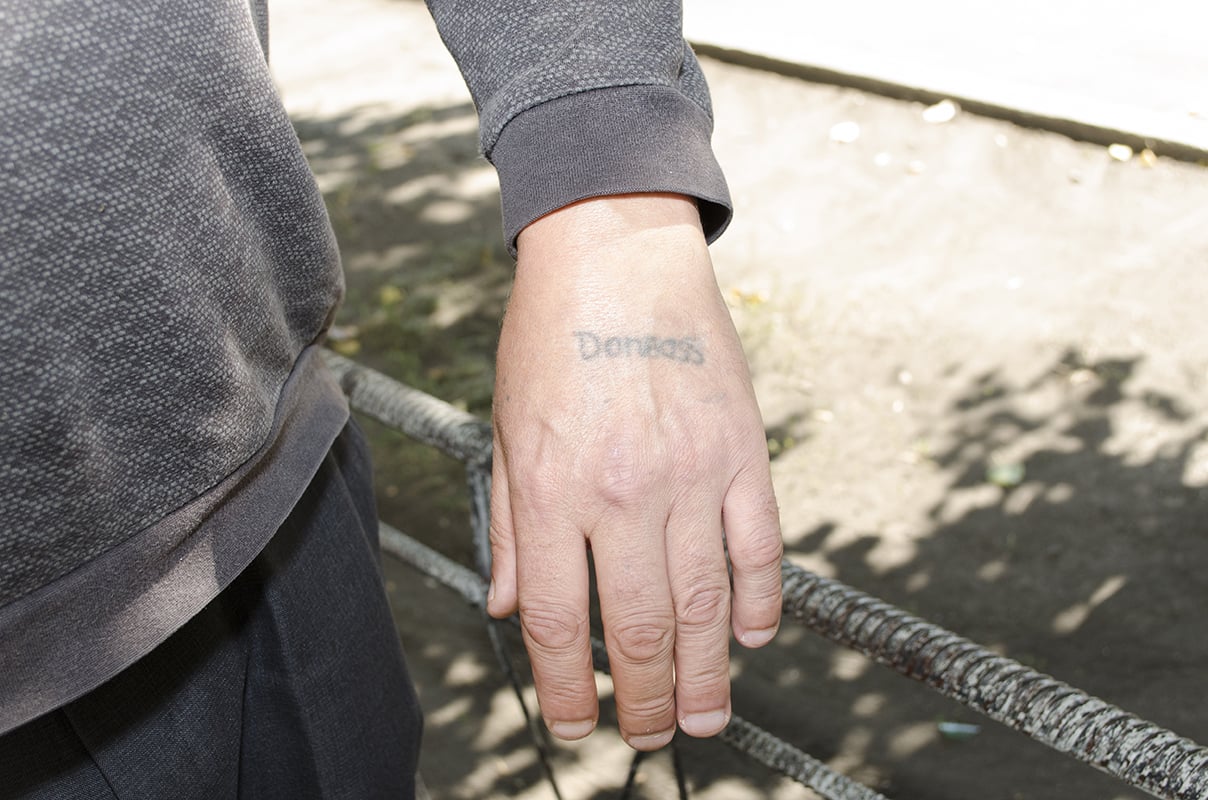
Podcast by Aneta Jetmar Martínková
This podcast on the theme was created under the dramaturgical guidance and moderation of Aneta Jetmar Martínková. The guests of the episode are Polina Davydenko, Alice Nikitinová, and Darja Lukjanenko.
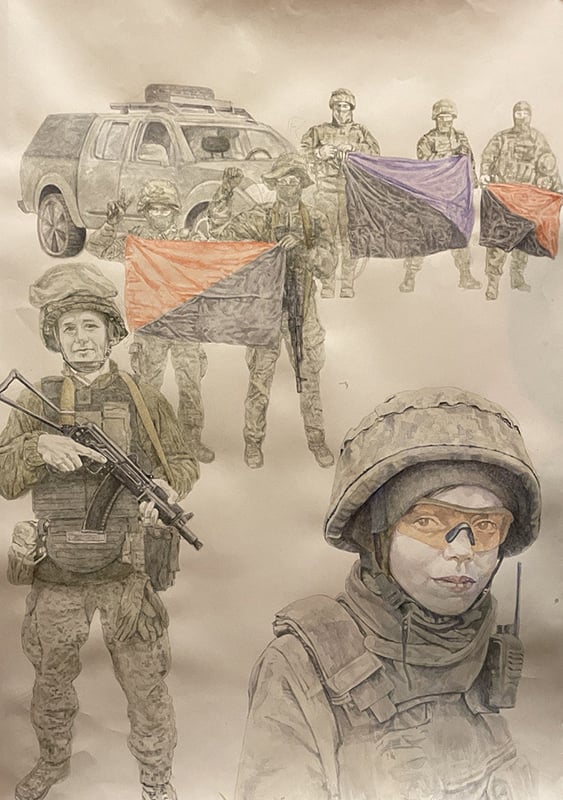
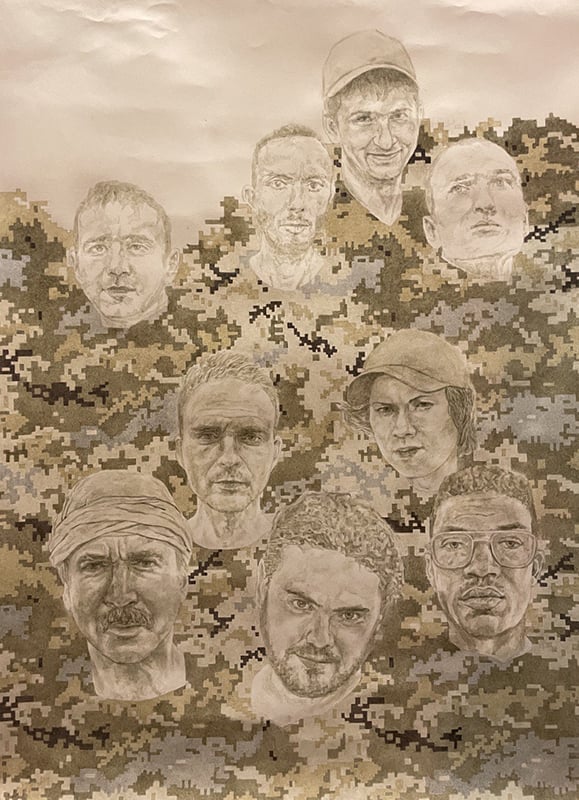
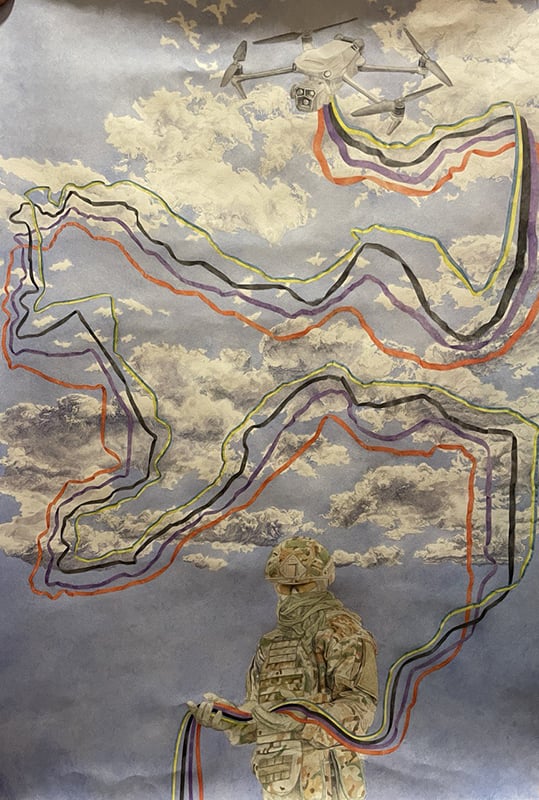
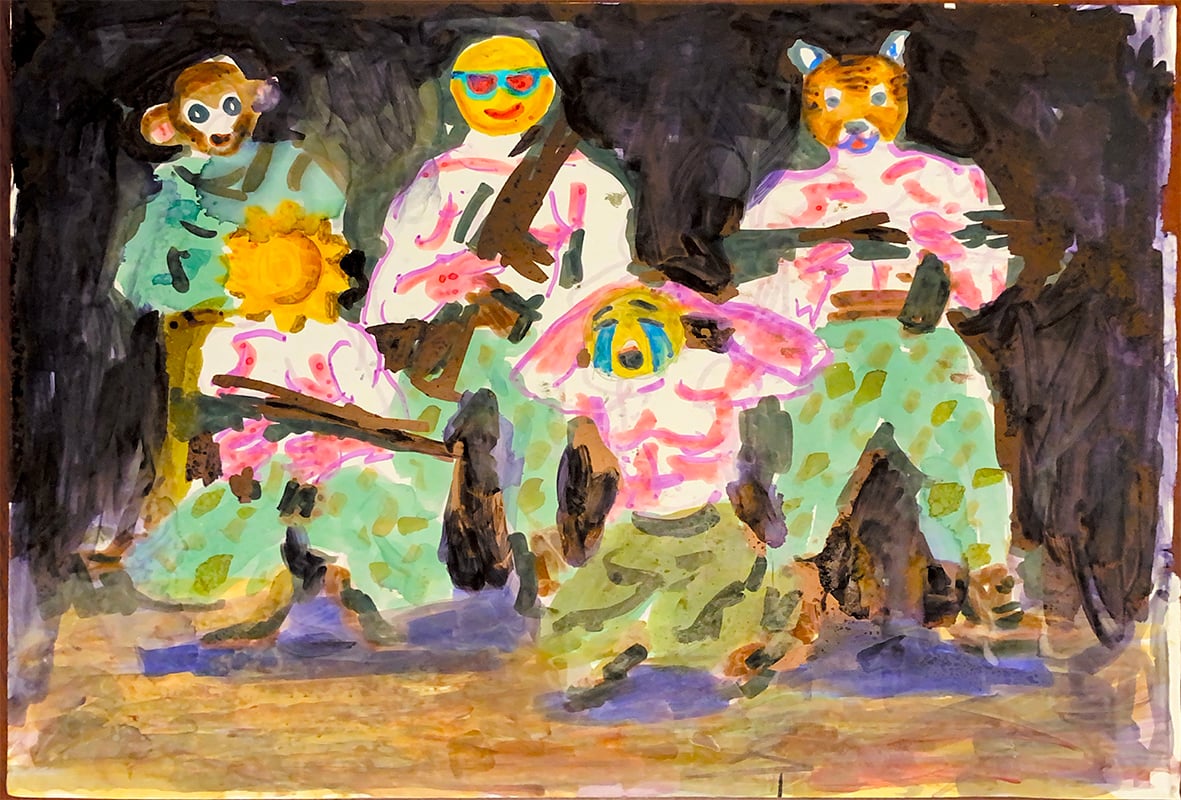
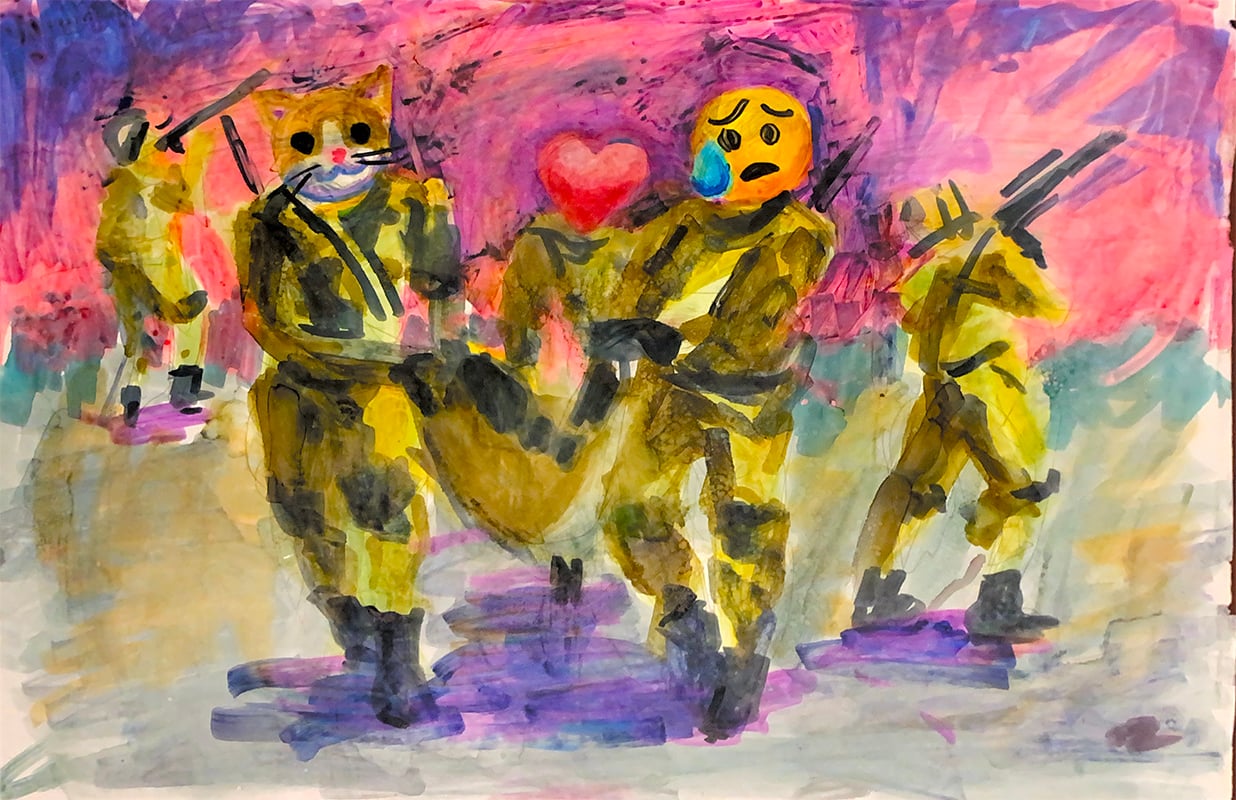
The title Toward Zero refers to the zone where active combat takes place. It is a no�man’s land where the constant presence of drones makes it impossible to move freely, so most movement takes place underground. To provide for a single defender in such a location, an entire team of people must work to ensure their safety, logistics, food, and supplies. In this case, the idea of a soldier as an individual in war is completely wrong. As is the idea that everyone who goes to war will end up at zero.
Sashko Protyah and Dana Kavelina were born in the cities of Mariupol and Melitopol, which are now occupied by Russia. Protyah and Alina Yakubenko are involved in volunteer movements. Zhanna Kadyrova uses the proceeds from selling her art to buy equipment for soldiers. Marharyta Polovinko and Davyd Chychkan decided to go directly to the front, which led to their tragic deaths.
We are aware that most people are already tired of the dramatic news that we are all inundated with every day. Nevertheless, we would like to give readers at least a little insight into the state of the war, including details from everyday life - and this time not through the language of news reports but the language of art and the stories of individual artists.
Not only does Ukrainian art have to confront the Russian narrative claiming that it does not exist and is merely a marginal area of Russian culture, it also has to face the physical death of the artists themselves. That is why it makes sense to exhibit this art and raise awareness about the individual artists and the diversity of their positions. Artists are dying on the front lines just like other soldiers and civilians, but they have one privilege - they can use their work to tell the story of what they themselves have experienced, what society as a whole is experiencing, or to convey their thoughts.
And we can perceive them, even after their authors are gone.
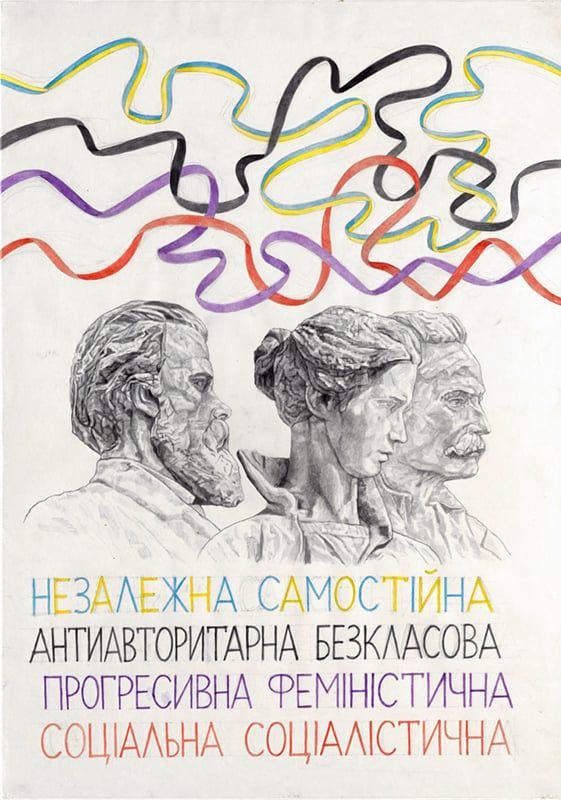
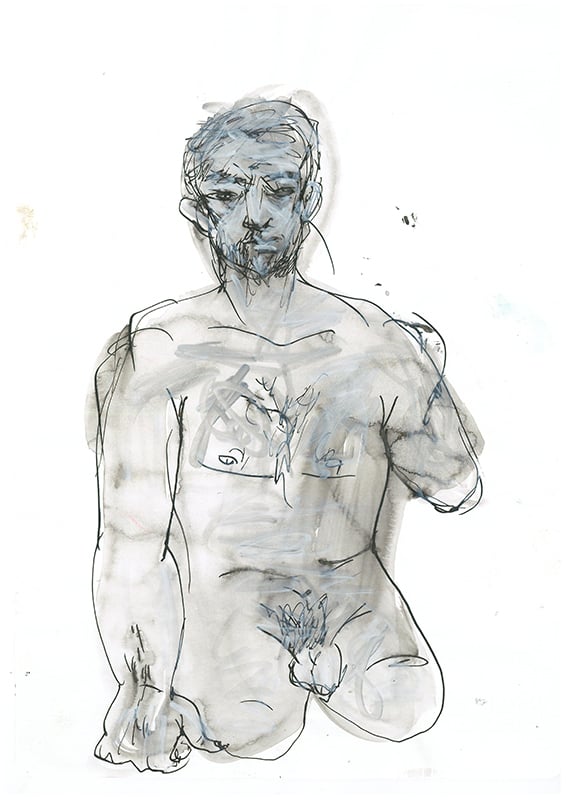
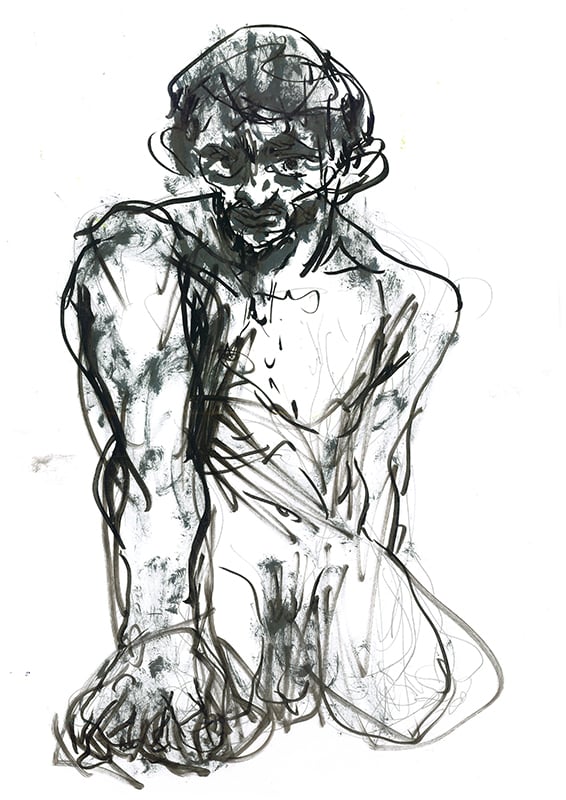
Davyd Chychkan died before we had a chance to speak with him in person. He was a very prominent figure in both the artistic and activist communities. He brought a completely atypical perspective to Ukrainian cultural identity.
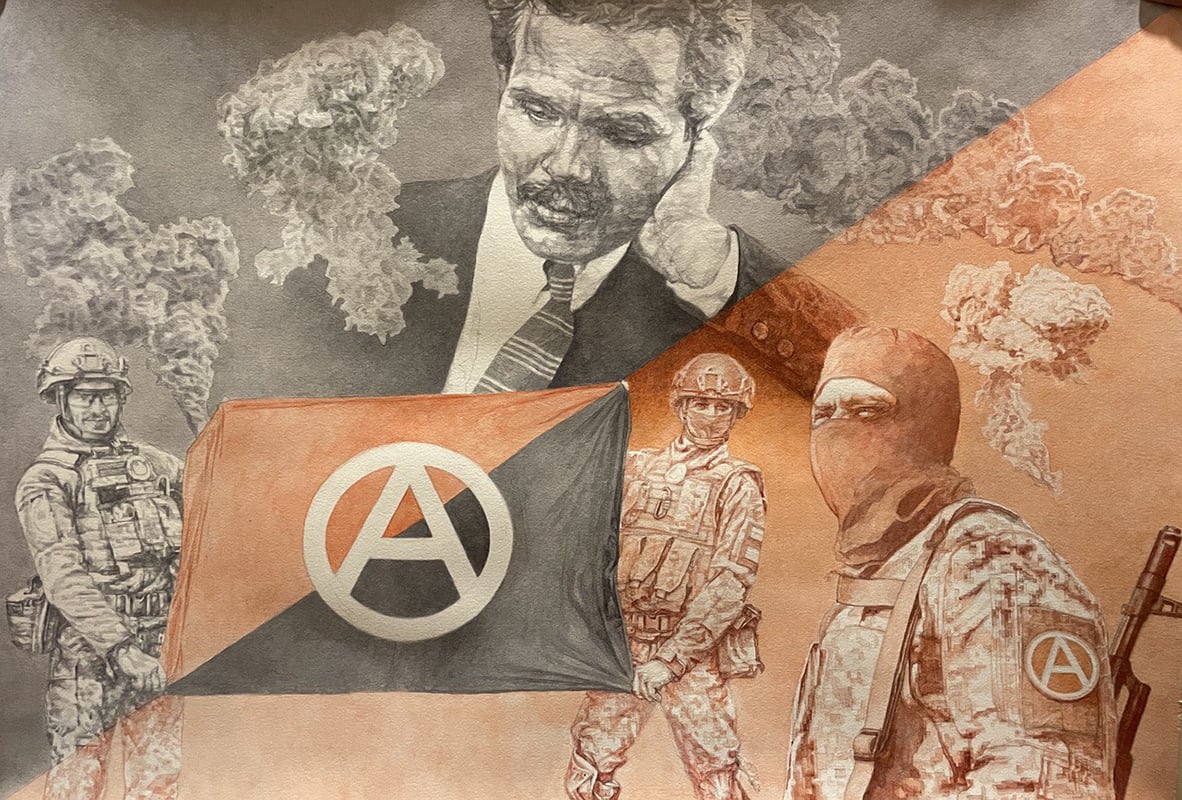
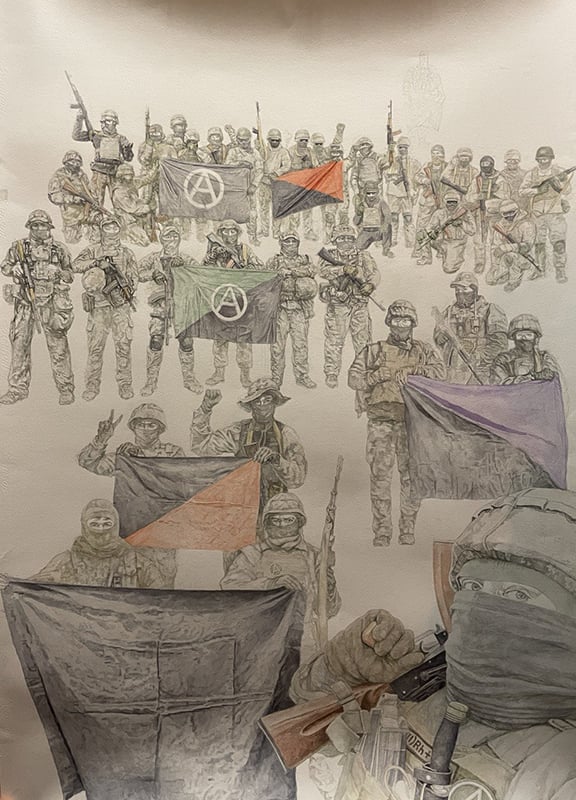
He pointed out that the main contribution of the Ukrainian national revivalists was, above all, the ideas of social equality, feminism, and grassroots democracy. Because of his political views, he often came into conflict not only with the radical right but also with cultural institutions. Western anarchists, on the other hand, could not comprehend his decision to join the army. He left for the front voluntarily, not only because he wanted to share the common fate of ordinary soldiers but also so that he would have the right to defend his political views. He argued that, as an anti-fascist, he had to defend his country against real dictatorship. After Chychkan’s death, a large number of friends posted memories of him on social media, and articles about him appeared online.
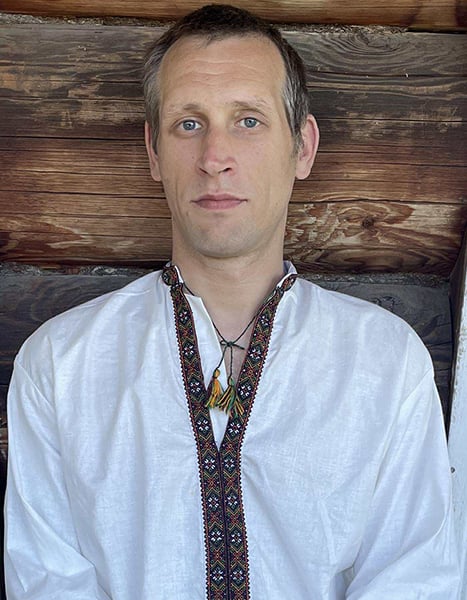
Davyd Chychkan (1986–2025)
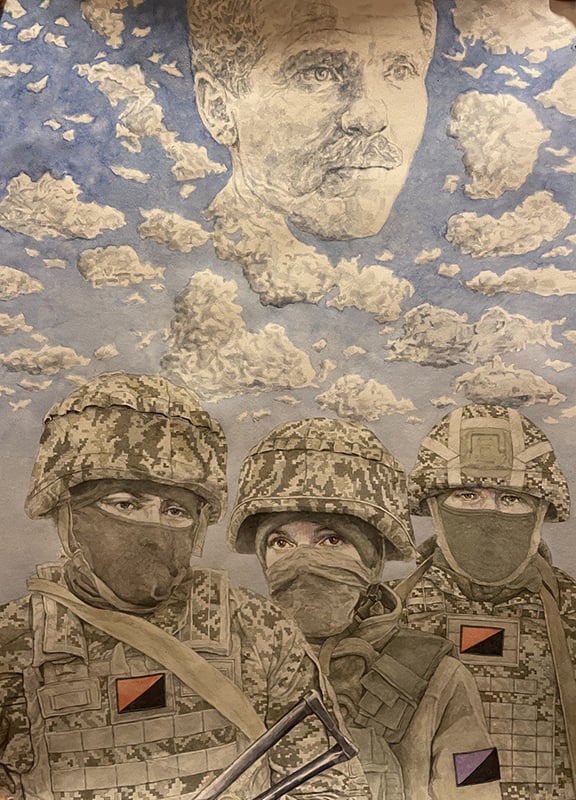
Davyd Chychkan was one of the most distinctive and original representatives of Ukrainian contemporary art. He created his own unmistakable artistic language. Beginning in the mid�2000s, he consistently developed a critical approach to art, turning his own artistic practice into an instrument of social transformation. His practice was inextricably linked to an active civic stance and political awareness - through his work, he promoted the ideas of anarchism and explored the history of the modern Ukrainian project and left-wing political thought. The media he worked with included printmaking, painting, street art, performance, and text.
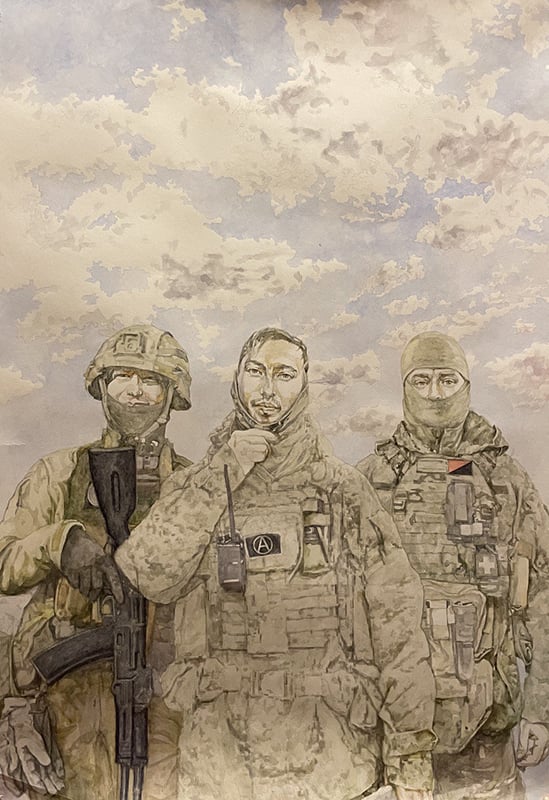
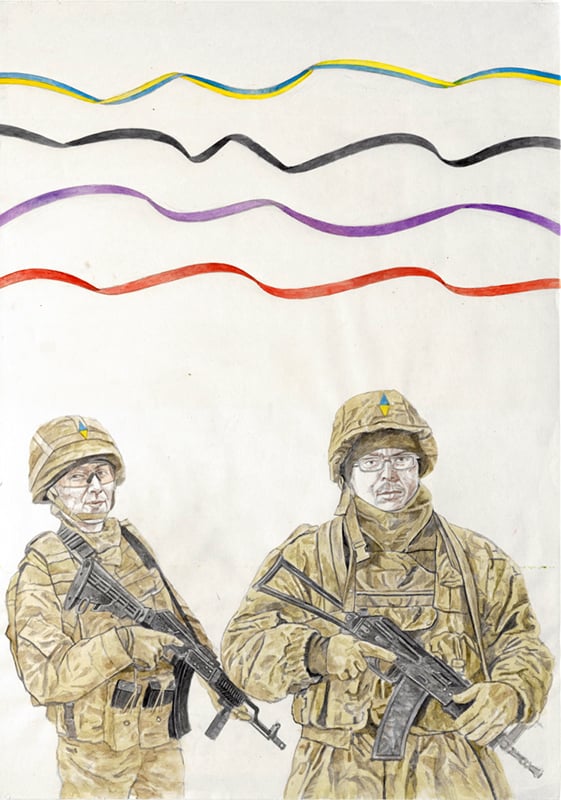
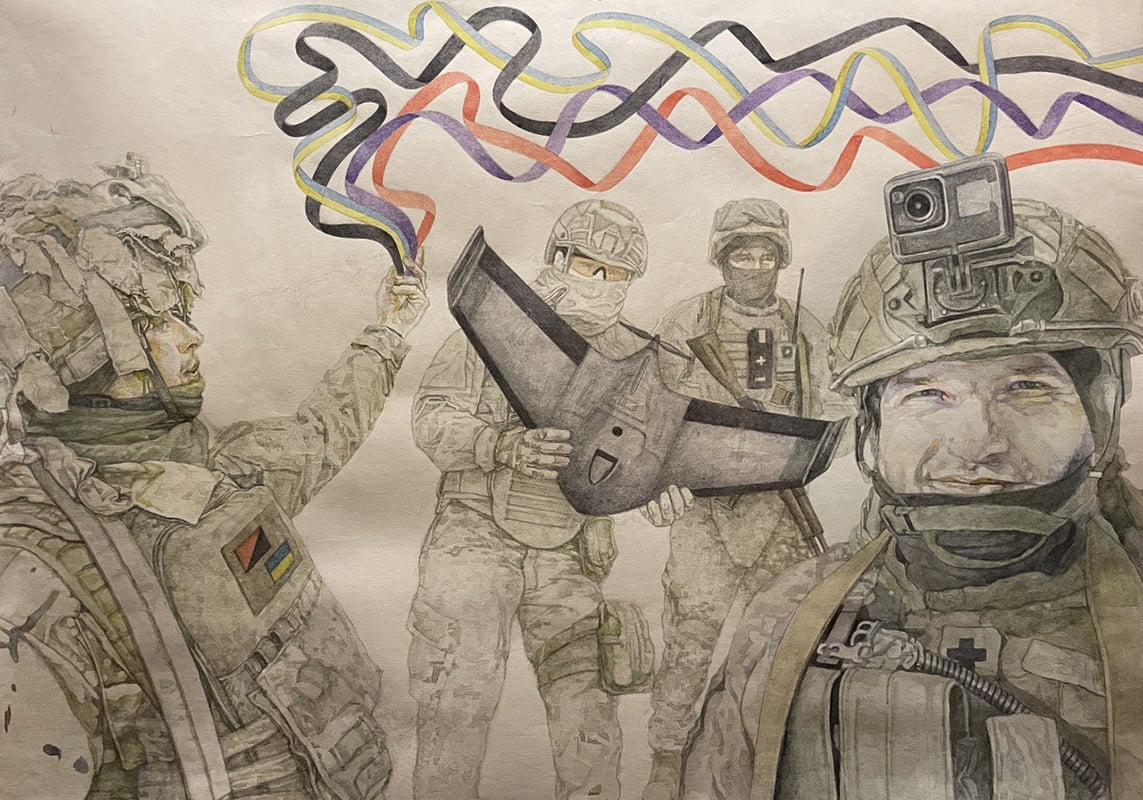
After the Russian invasion began, Chychkan, who was already a well-known artist at the time, turned down invitations from international institutions and categorically refused to leave Ukraine, even temporarily. In 2024 he voluntarily enlisted with the Ukrainian armed forces and joined a mortar battery in the infantry of the 241st Kyiv Brigade. After a year of fighting on the front lines, he was killed in action on 10 August 2025 near the village of Orikhiv in the Zaporizhzhia region.
Chychkan lived and worked in Kyiv, where he was born in 1986 to artists Tetyana Illyakhova and Illya Chychkan. Davyd was not the first person in the Chychkan artistic dynasty to become a soldier. His great-grandfather Leonid Chychkan, a distinguished artist and teacher at the National Academy of Fine Arts and Architecture in Kyiv, was a decorated soldier in World War II. Works of his that were housed in the Kherson Regional Art Museum were looted by the Russians in 2022.
Davyd Chychkan’s works can be found in museums and private collections in Ukraine and abroad, particularly in the National Art Museum of Ukraine, the Ludwig Museum in Budapest, and the Museum of Contemporary Art Antwerp.
Chychkan’s projects included an illustrated edition of the Administrative Code of Ukraine (Administratyvnyj kodeks Ukrajiny, Osnovy Publishing, 2017) and a series of murals on war themes in Zaporizhzhia (Main Railway Station, 2023) and Uzhhorod (Radvanka housing estate, 2022), which he created in collaboration with Mykyta Kravtsov.
Text by Hanna Tsyba
The texts for this exhibition are more akin to storytelling than art theory. There are times when artists’ life stories and experiences can say more than an analysis of their work.
The traits that the selected artists have in common include a close connection between their work and their own lives, empathy for the suffering of others, and humanism. Although there are now a whole host of prominent artists in Ukraine who have decided to swap their brushes for weapons, we could only choose a limited number. Most of the selected artists identify more with leftist politics, and their motives for joining the defense were not solely related to nationalist sentiments. We will attempt to understand their motivations. The war depicted in their works does not come across as heroic or romantic in any way. They are not (were not) admirers of the army or brute force, and like every artist, they value(d) personal freedom, which is something you have to give up if you want to be useful to a larger whole, such as the army or a volunteer movement.
Alina Yakubenko (1983)
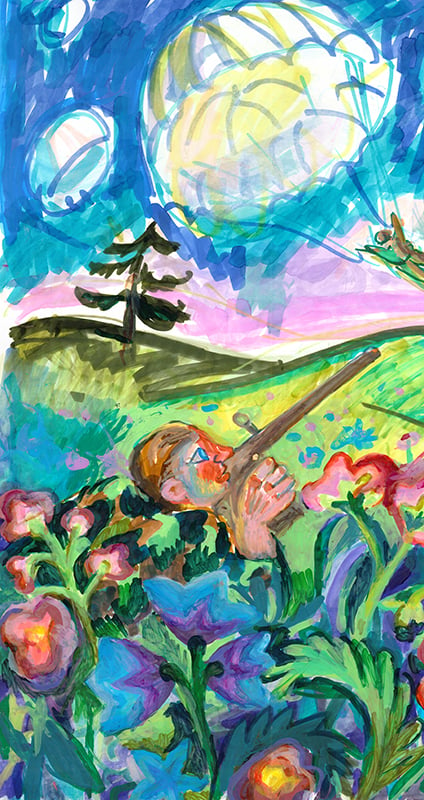
After the full-scale invasion began, Alina Yakubenko, an intermedia and musical artist, returned to the medium of drawing, which she had previously abandoned. She also described her experiences from the beginning of the war very directly and expressively on social media, and she is involved in volunteer activities. Her drawings were shown in the exhibition The Pain of Others (2023) at DOX in Prague, where they were presented alongside works by Francisco Goya and Otto Dix, who are characterized by a similar urgency and directness.
Yakubenko was born in Kyiv. She studied at the film and theater faculty of the National Academy Of Fine Arts And Architecture in Kyiv. She is active in the field of contemporary art, and her work combines painting, video, installation, and photography. She explores themes of collective memory, war, trauma, and human interaction with space and society. In 2015 she curated the exhibition Nad Bohom (Above God) in Vinnytsia, which gave rise to the interdisciplinary initiative DE NE DE (Here There Somewhere). This exhibition became the starting point for a process of working with public space, protecting Soviet monuments, and taking a critical approach to the politics of decommunization. Since 2016 the DE NE DE group has been active in the regions of eastern Ukraine, particularly in the areas of Donetsk and Luhansk, where it collaborates with museums of local lore, art, and history. With the help of contemporary artists, curators, and museum workers, the initiative sought to create horizontal networks of cooperation between local communities and cultural institutions. Until 2022 Alina Yakubenko also performed as a composer and DJ. Since the start of the full-scale invasion, she has been involved in various forms of volunteer work, from helping civilians near the front lines to supporting Ukrainian soldiers and left-wing activists involved in the resistance.
She organizes evacuations, procures humanitarian and technological resources, and coordinates initiatives at the intersection of culture and civic activism. Building on the tradition of DE NE DE, she also collaborates with Leonid Marushchak and the initiative Museum Open for Renovation, helping to evacuate museums from combat zones.
Alina Yakubenko – Memory
This story took place in 2025. In it I talk about two people who were close to me who later died. In 2025 I traveled to Druzhkivka, a town near Kramatorsk that had been severely damaged by the war and at the time was populated almost exclusively by soldiers. My friends from the Center for Decision-Making Processes were organizing an event there for left-wing activists and soldiers. The venue for the meeting was actually a volunteer headquarters, and its location had to remain secret. The gathering was officially canceled due to fears of intervention or information leaks, but we got together anyway. There were journalists, musicians, and artists - including Davyd Chychkan, a mortar operator and artist who would later be killed. For me, it was an opportunity to see my friends, even if it was under enemy fire.
For a long time, I couldn’t find the right house. I had mixed up the streets, and I was starting to panic. When I finally got there, I found a warm, almost homely atmosphere inside. The old three-room apartment was full of people, with an old gramophone, a projector, as well as a guitar on the bed. The kitchen was packed too. They had me sleep on the sofa with two girls, but I was so agitated that I didn’t sleep much; the Polish cameraman Janusz and a musician from Kyiv slept in the next room.
The next morning, I was supposed to go into town with Davyd, but his unit unexpectedly changed its deployment location. The building where they were stationed had been hit that day. I was planning to stay a few more days, but then my dad called me: “Alina, I’m right nearby.” At first I thought he meant in Kyiv, but then he continued: “I’m fifty kilometers away.” It turned out that he and my brother’s girlfriend were transporting blood to the front lines. We agreed to meet in front of Celentano’s pizzeria - the only one still open. He was exhausted and hadn’t slept for forty-eight hours.
On the way, he was supposed to pick up a family from Selydove, a town where the Russians had already murdered a lot of locals. It was a married couple who had stayed there because of their animal shelter - they didn’t want to leave the dogs and cats behind. But then a rocket hit, destroying their house and car. They were stuck in the basement for a week without food or water, and when they realized that help wasn’t coming, they decided to leave on their own. We couldn’t go and get them because the city was already occupied. They walked six kilometers through the fields carrying a bag of belongings, with a cat running along behind them. When we arrived, the gray-bearded man was holding the cat in his arms, and he just kept repeating, “She came on her own. We couldn’t help it. She just didn’t want to stay there.”
It goes without saying that we took the cat as well. The road was full of potholes, and it ran along the border, beyond which were the Russians. Google showed me the way. Suddenly, a drone was hovering over the car. Dad immediately recognized it as a combat type. It descended several times, examining us, but eventually flew away. Either we got lucky, or it decided that some civilians with a cat weren’t worth a rocket. We took the couple to Pavlohrad and left them there in a small house by the river, which my brother’s girlfriend had inherited. Then we drove home.
A month later my father passed away. He had a heart attack. Three months later Davyd Chychkan died. The Russians killed him.
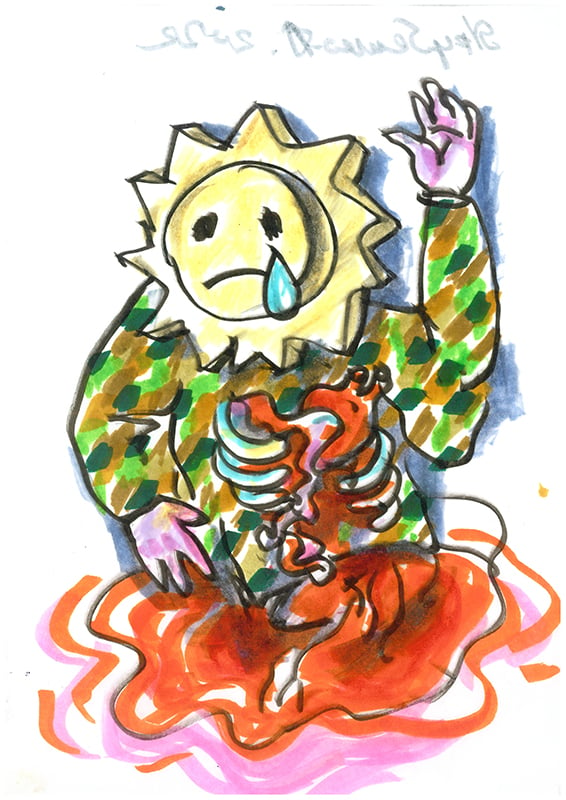
Marharyta Polovinko (1994–2025)
The experience of war often completely changes an artist’s approach to their work, with the direct articulation of experience becoming more important than the global discourse and attempts at being topical.
Many Ukrainian artists have returned to the medium of drawing, which allows them to quickly and effectively capture dramatic moments. Examples include Bohdan Sokur (who volunteered for military service), Kinder Album, Ihor Husev, Inga Levi, Serhiy Maidukov, and another of the artists featured here - Marharyta Polovinko.
Marharyta Polovinko was born in 1994 in Kryvyi Rih. She first studied at an art-oriented secondary school in Dnipro, then at the National Academy of Fine Arts and Architecture in Kyiv, where she graduated in 2019.
Polovinko began volunteering in 2022 - first rescuing animals in the flooded area of Kherson, then transporting wounded soldiers to safety. In 2024 she joined the Ukrainian armed forces and became a drone operator. In 2025 she fell in battle in eastern Ukraine.
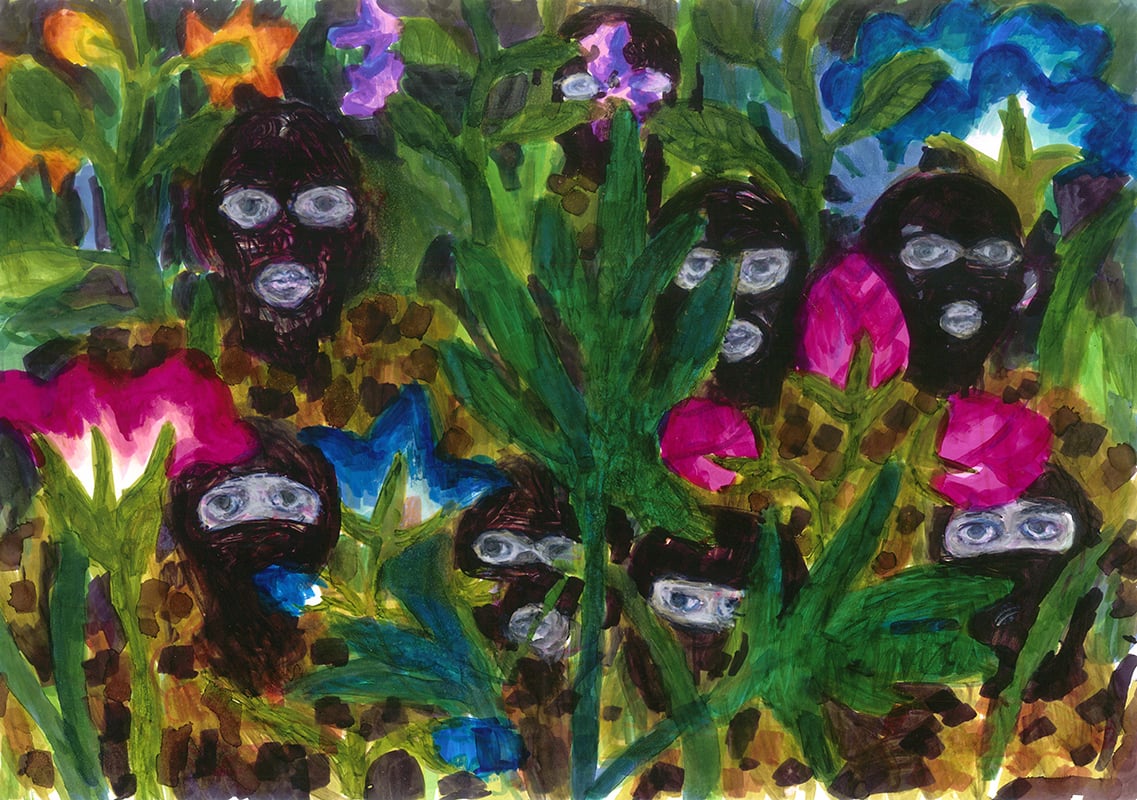
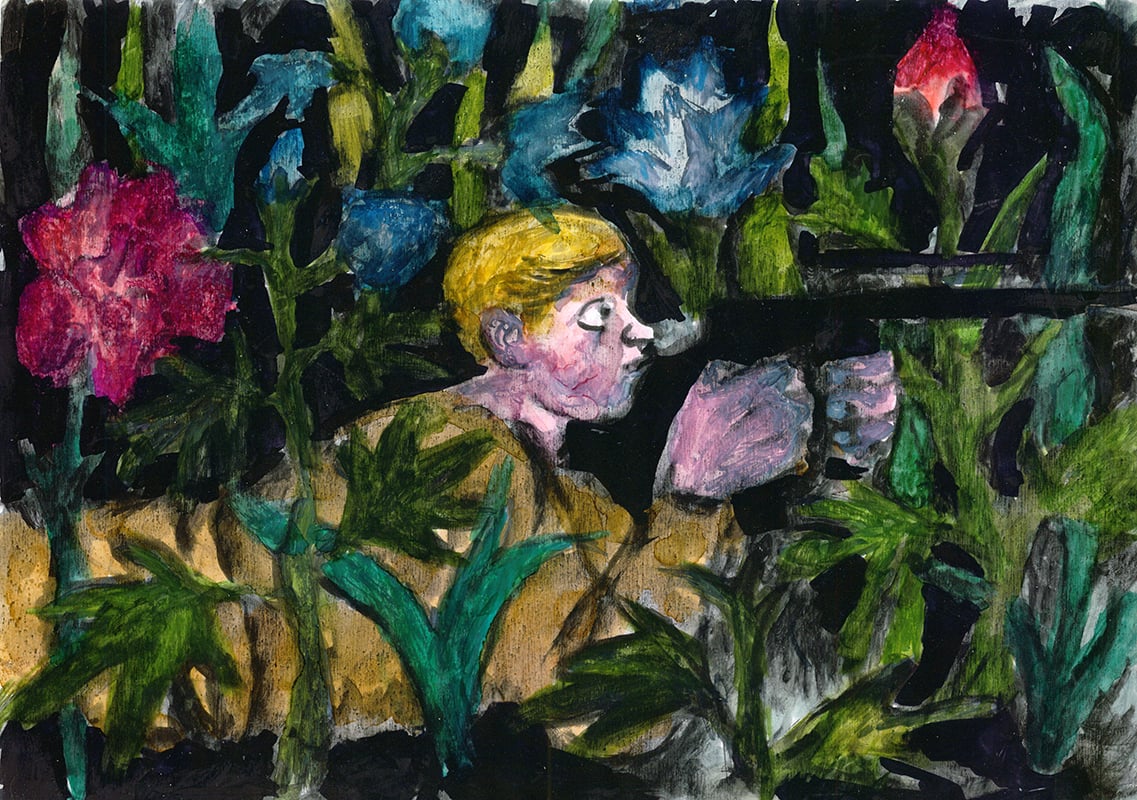
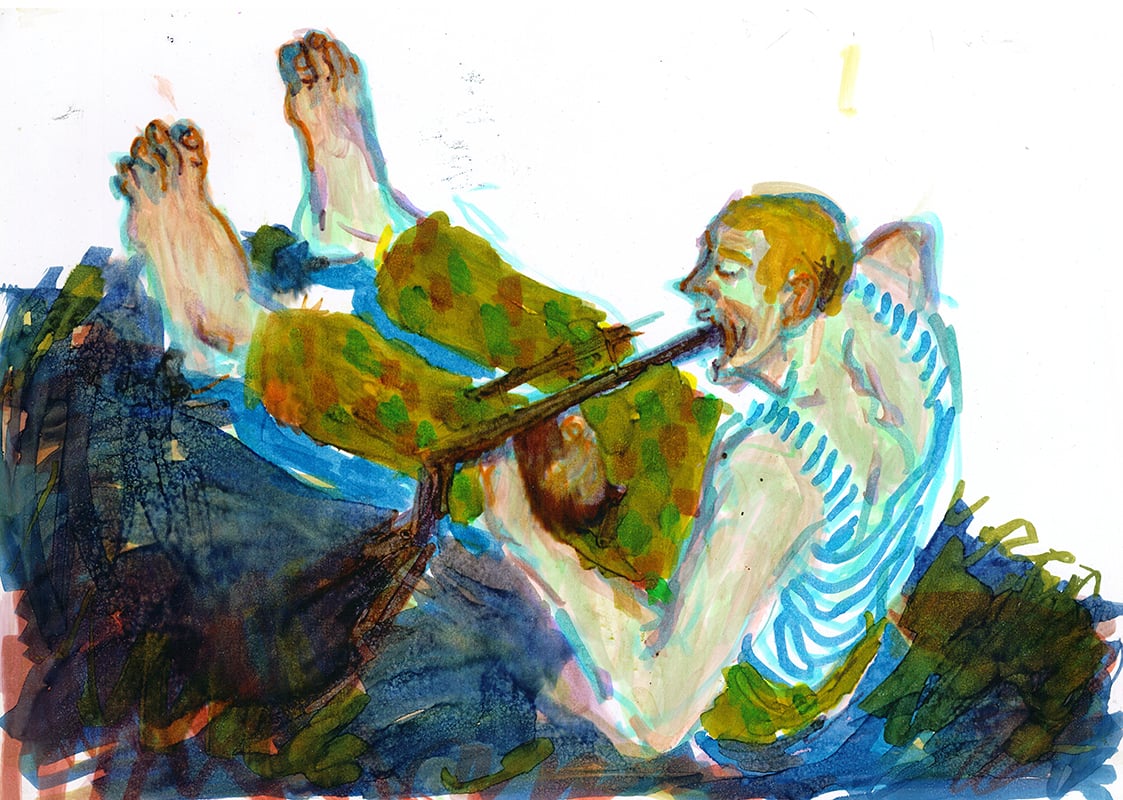
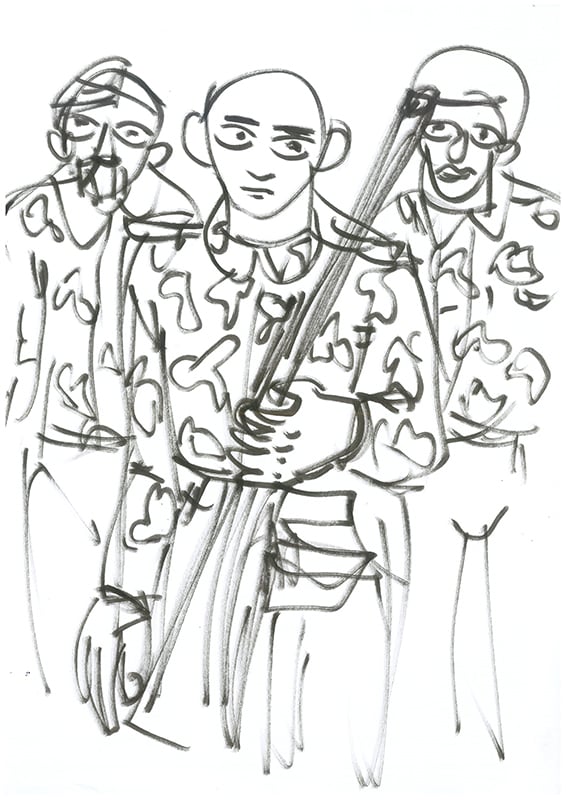
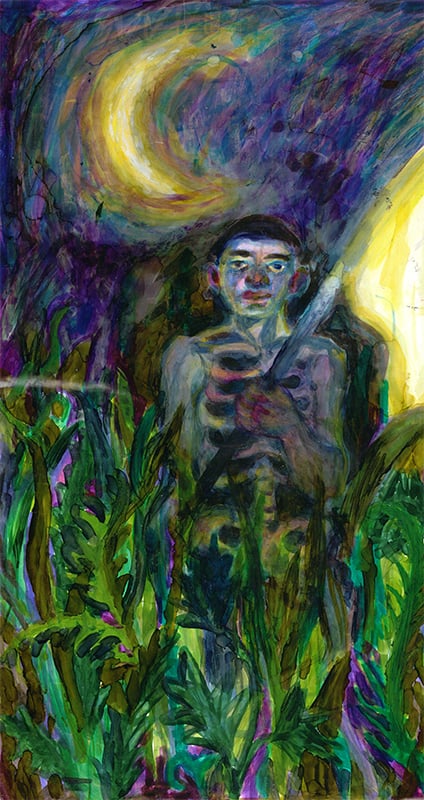
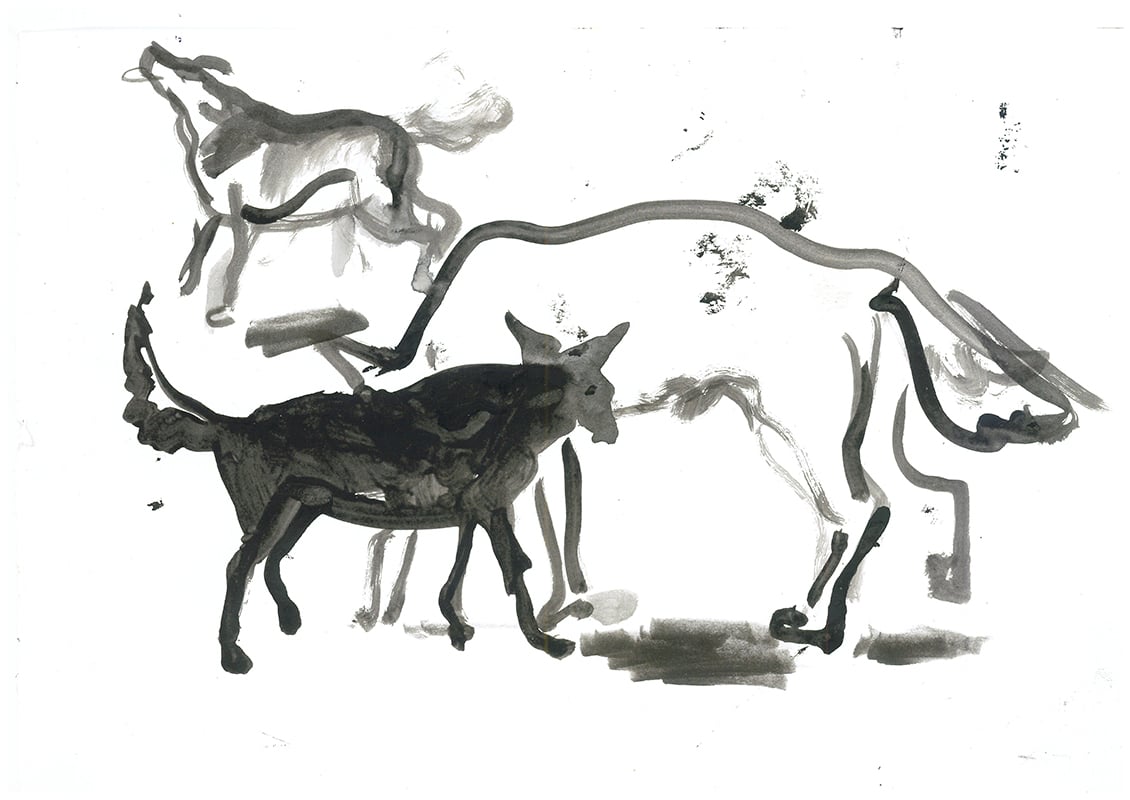
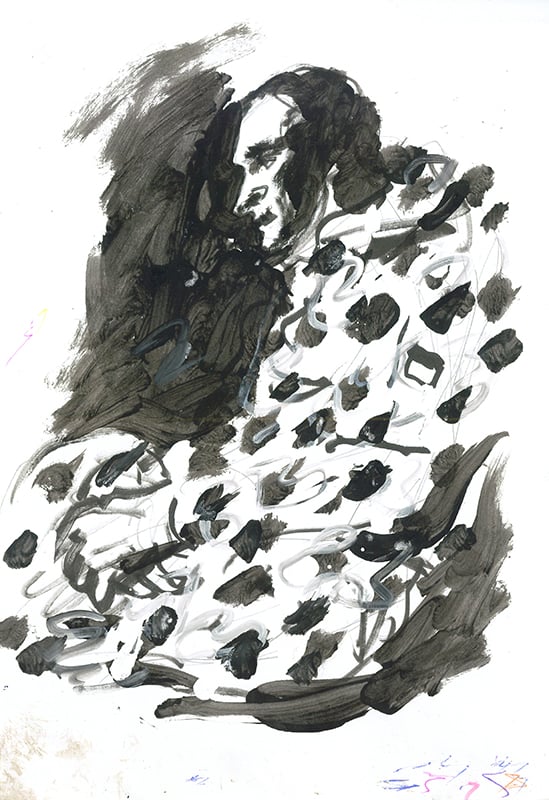
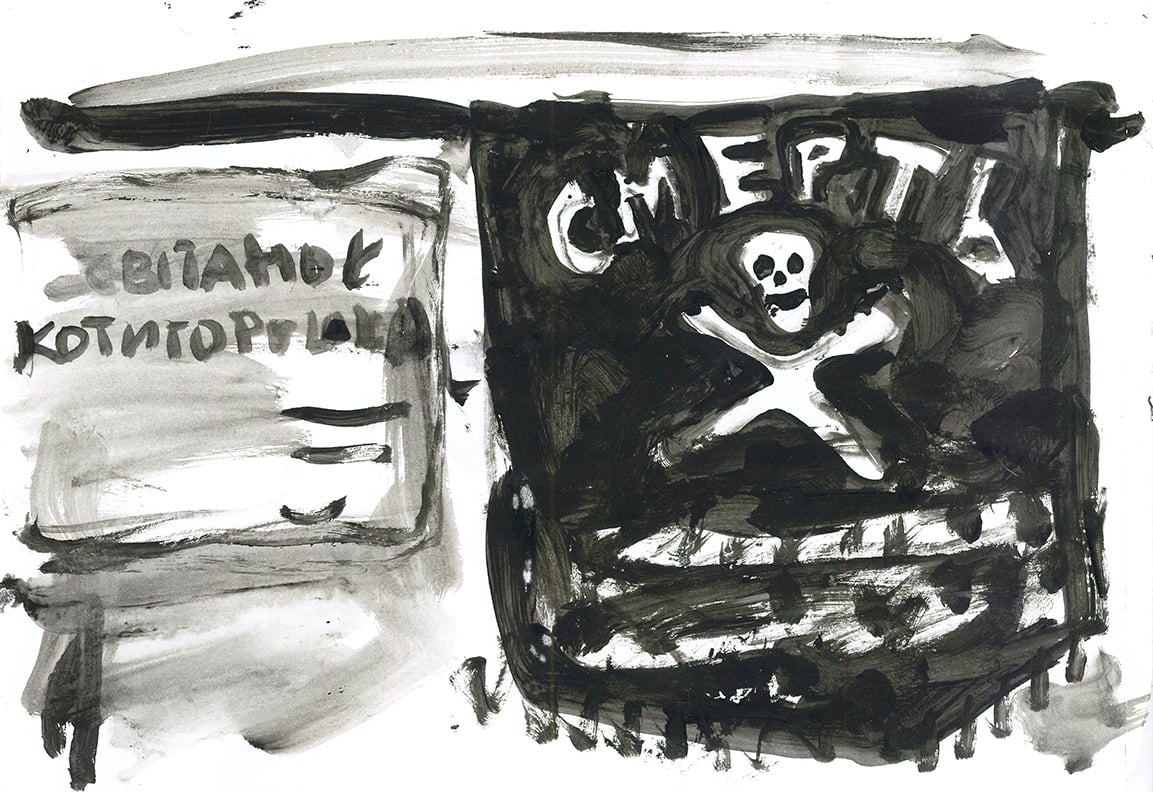
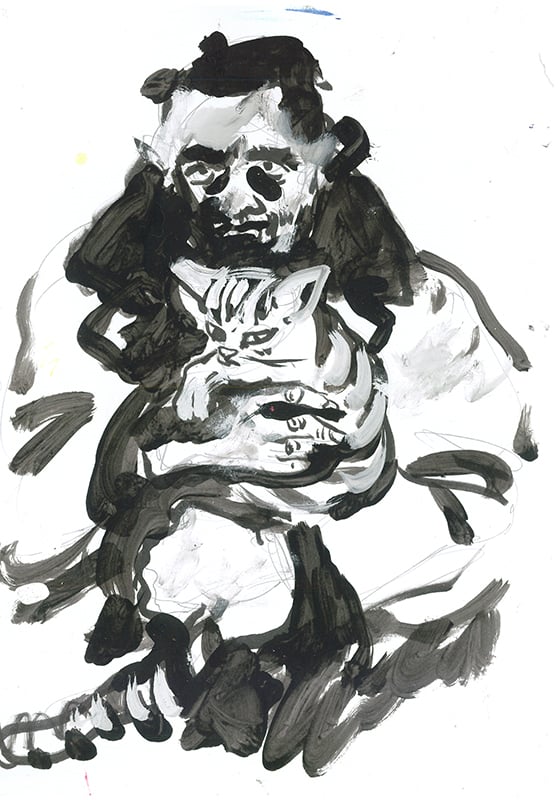
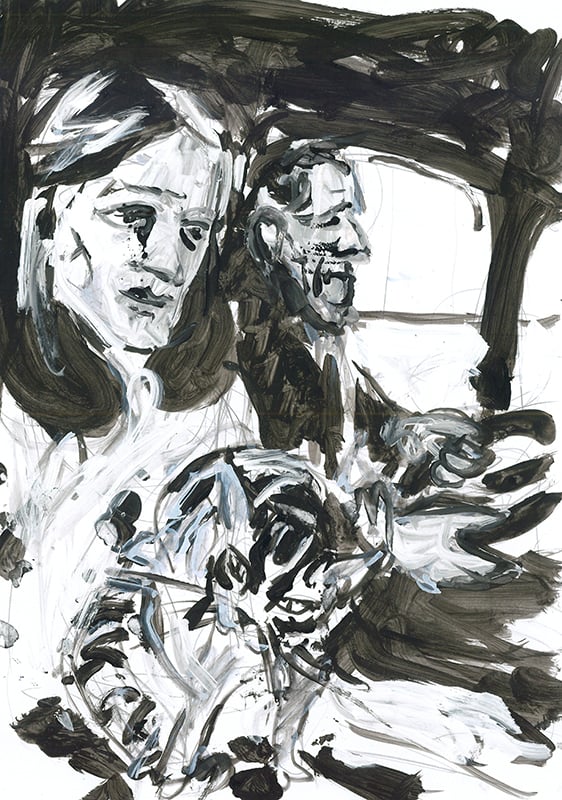
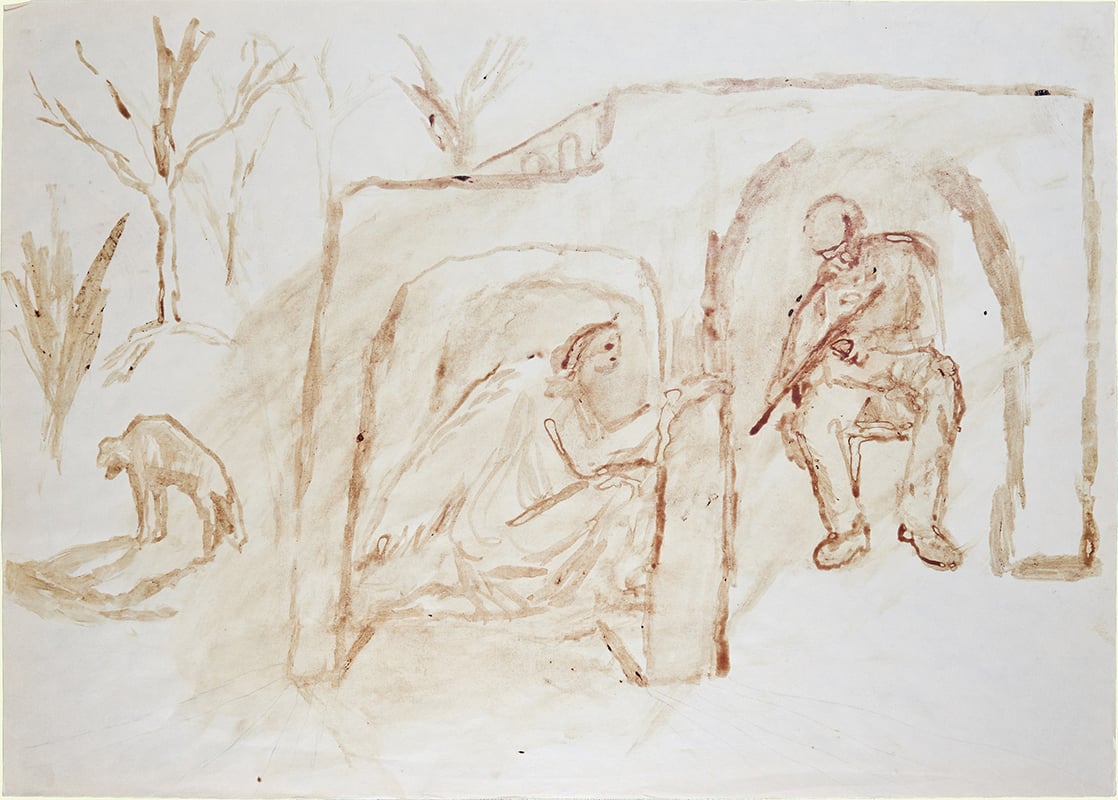
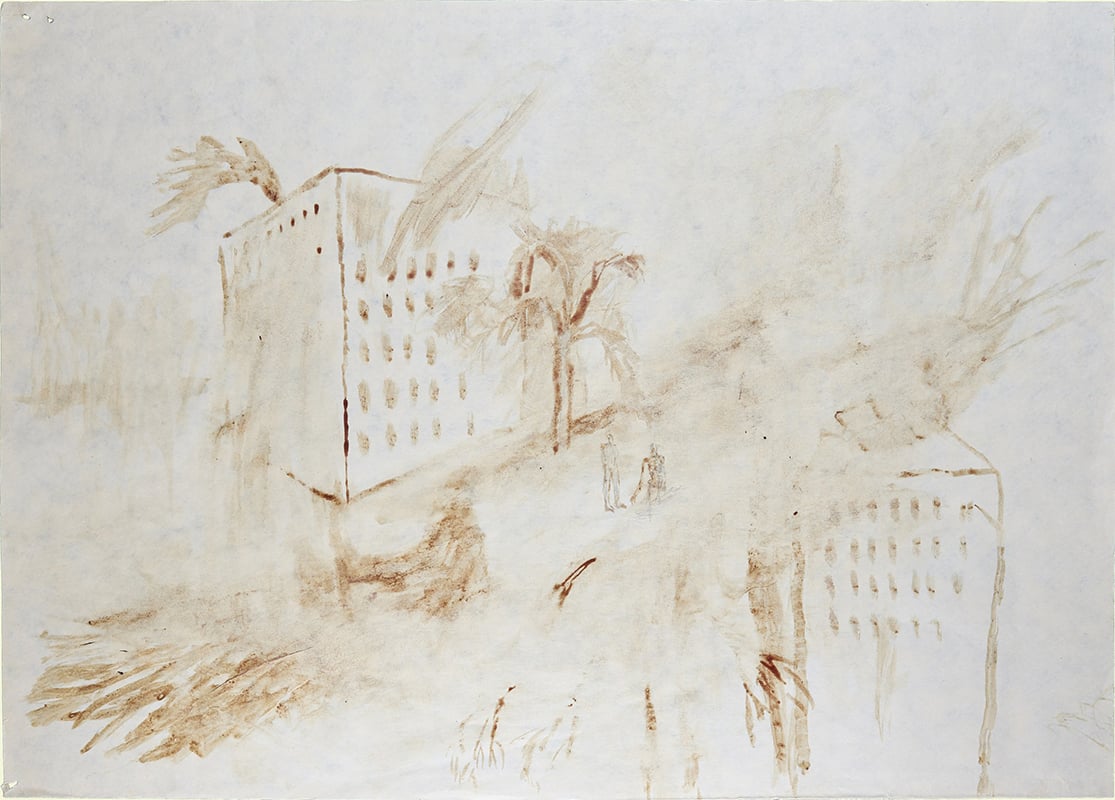
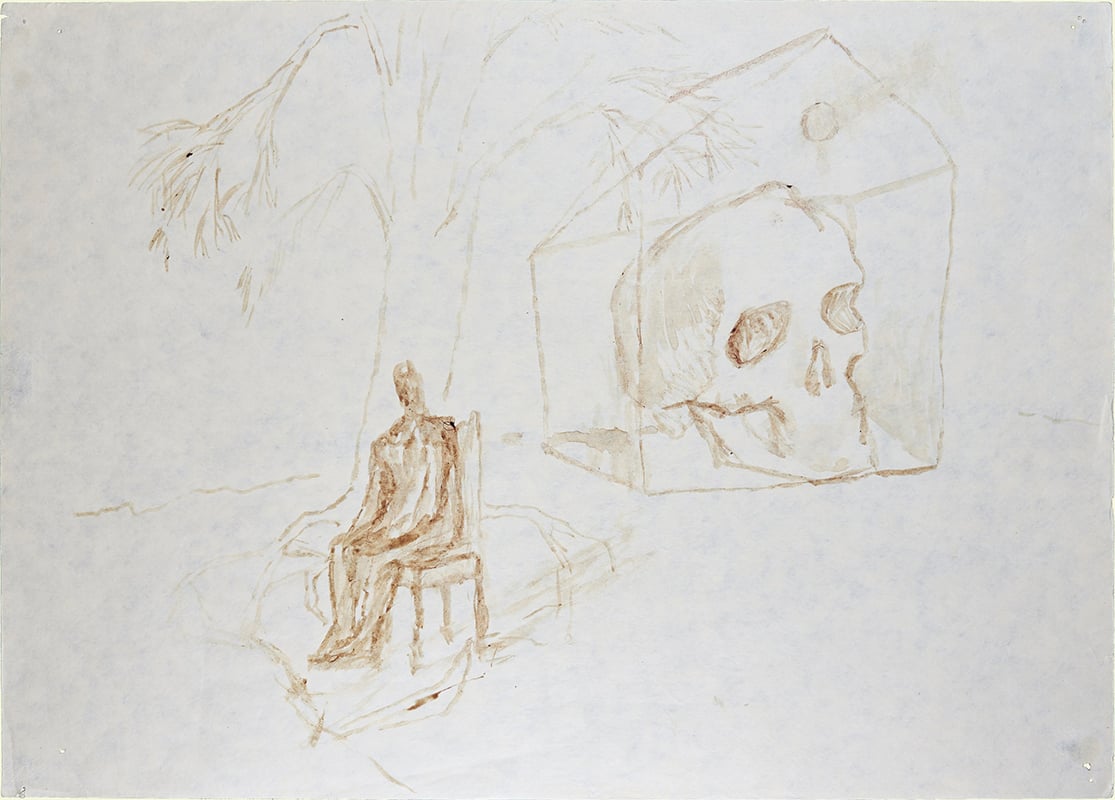
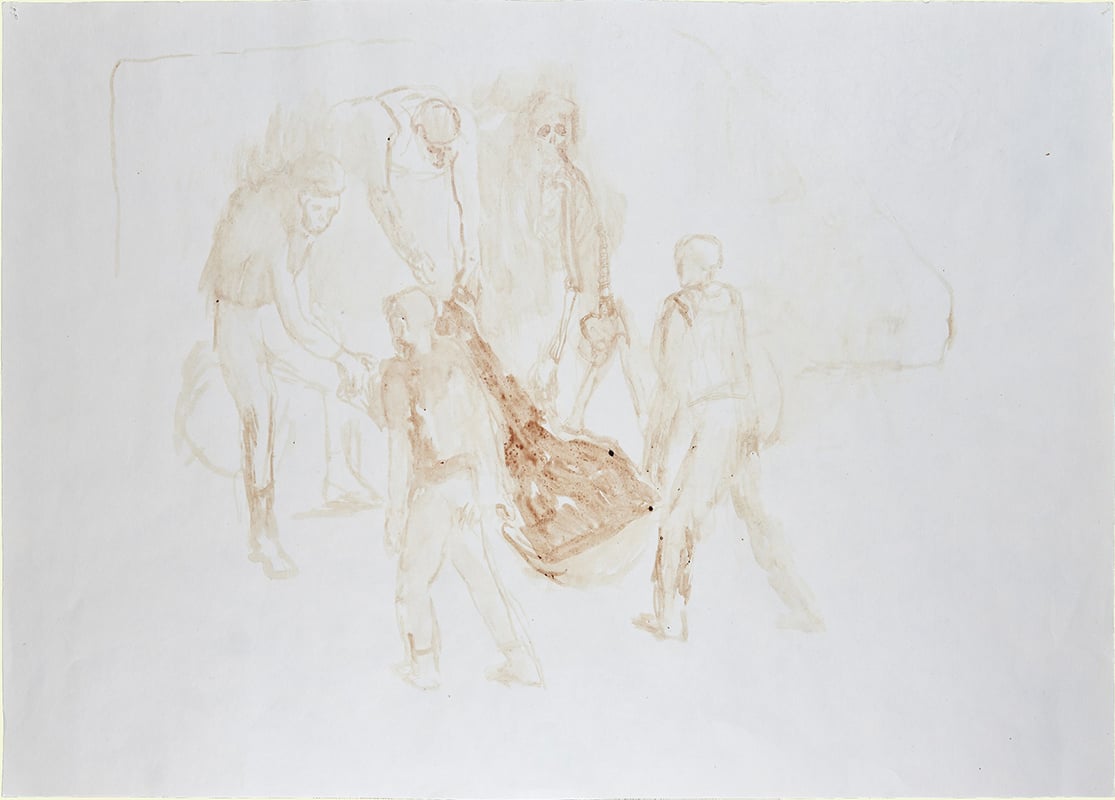
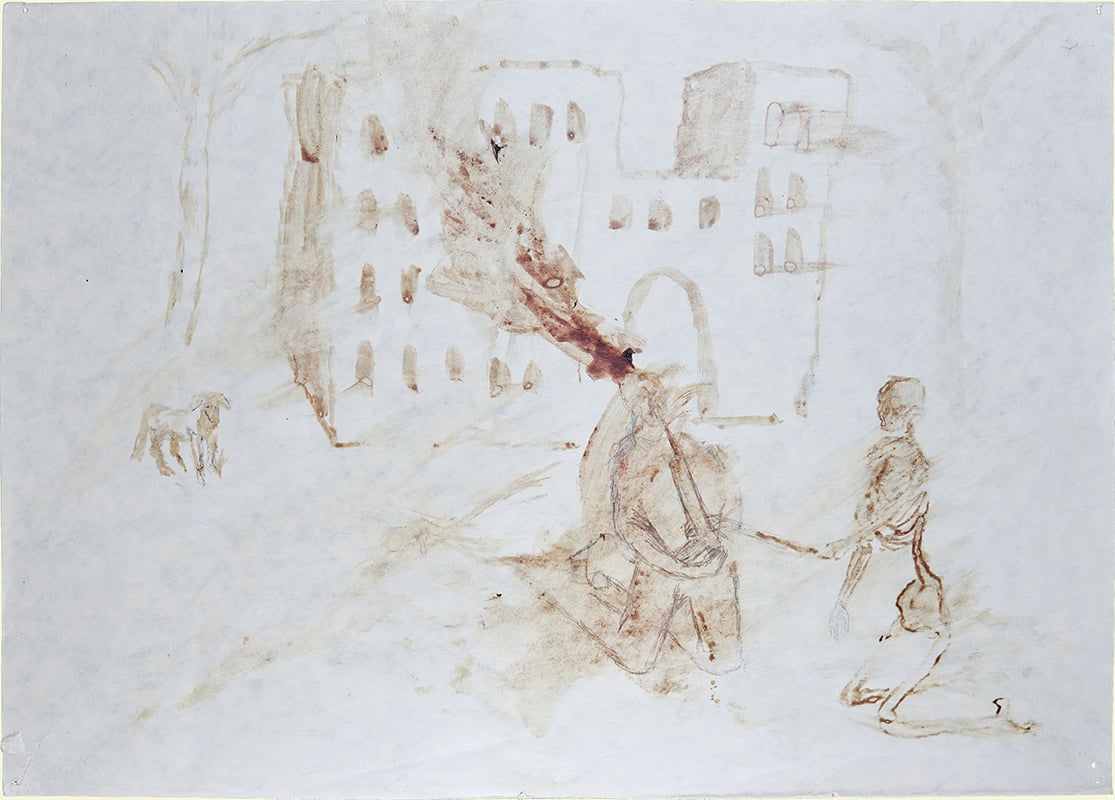
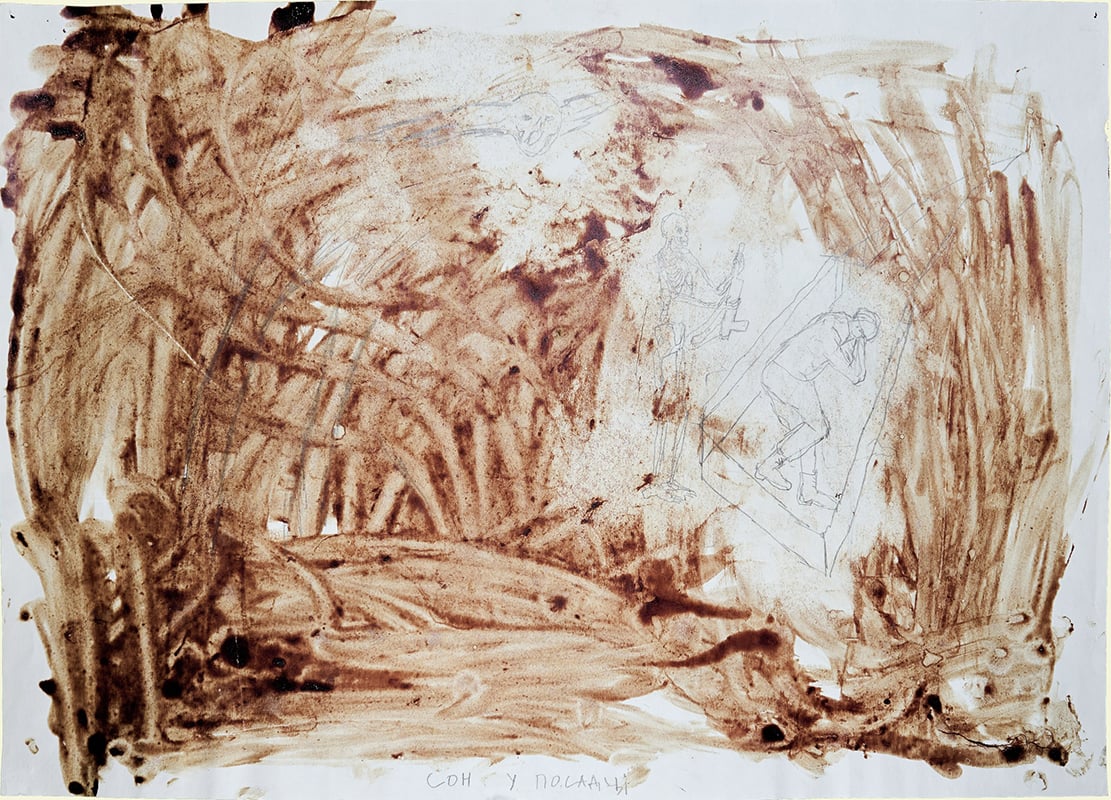
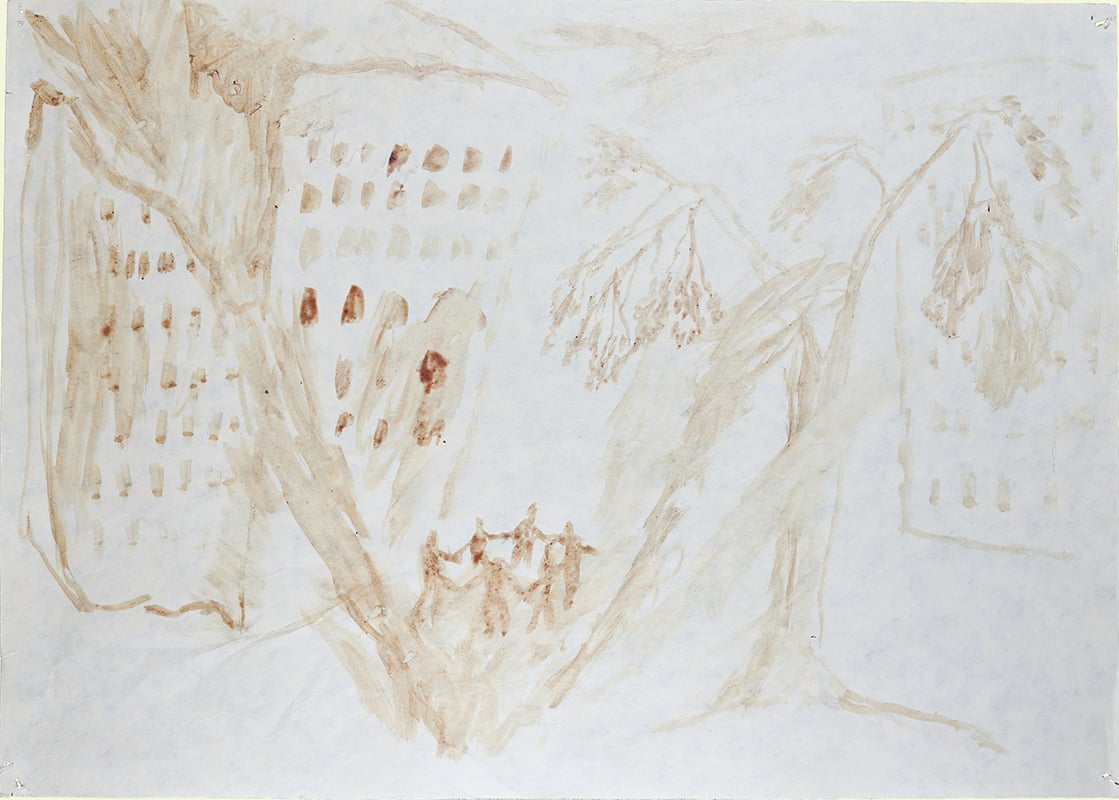
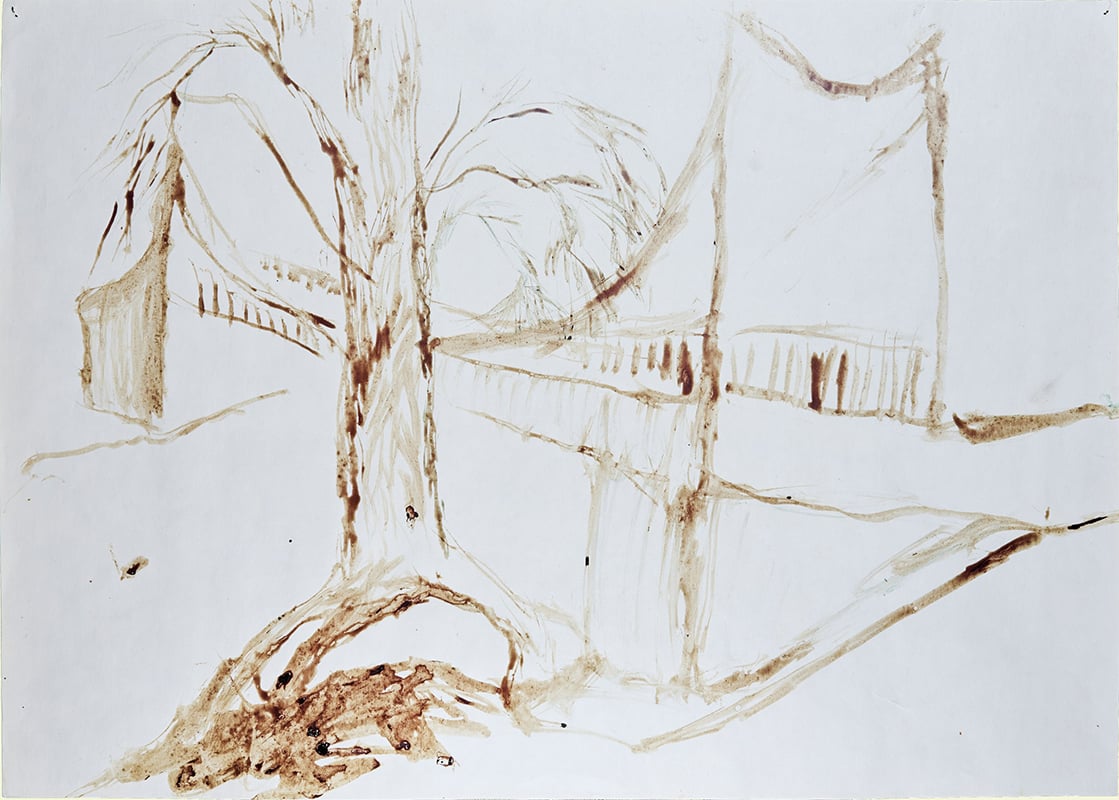
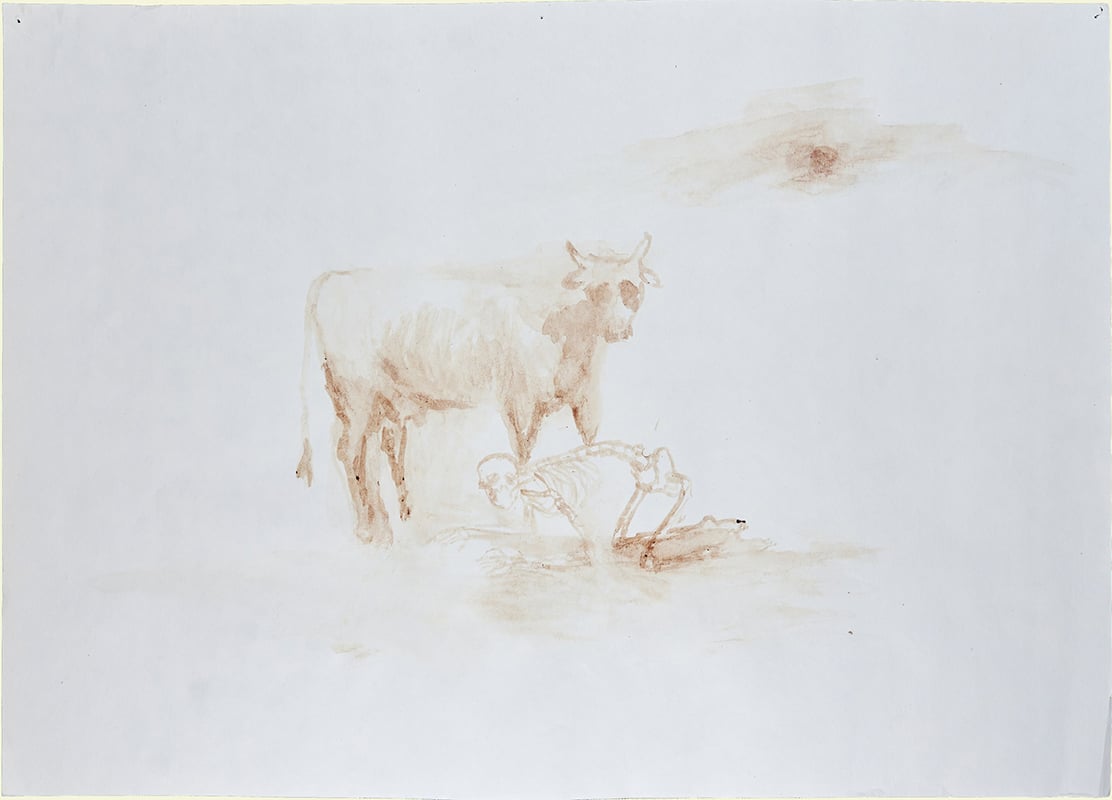
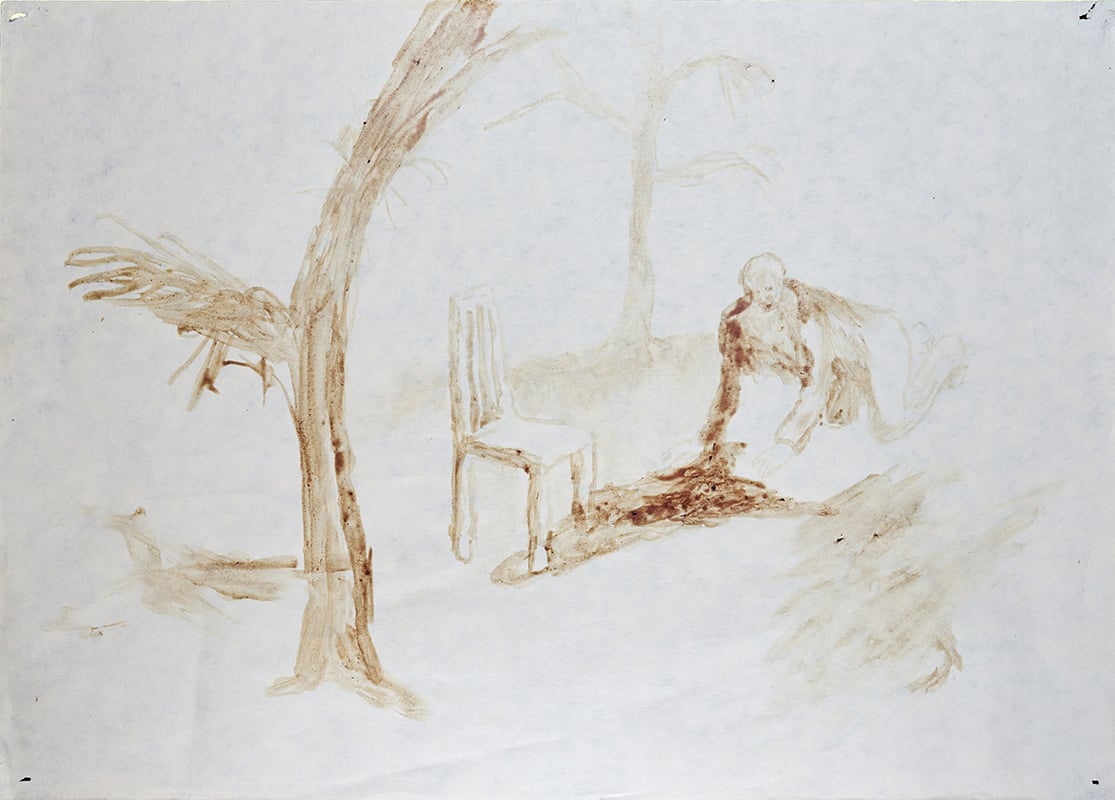
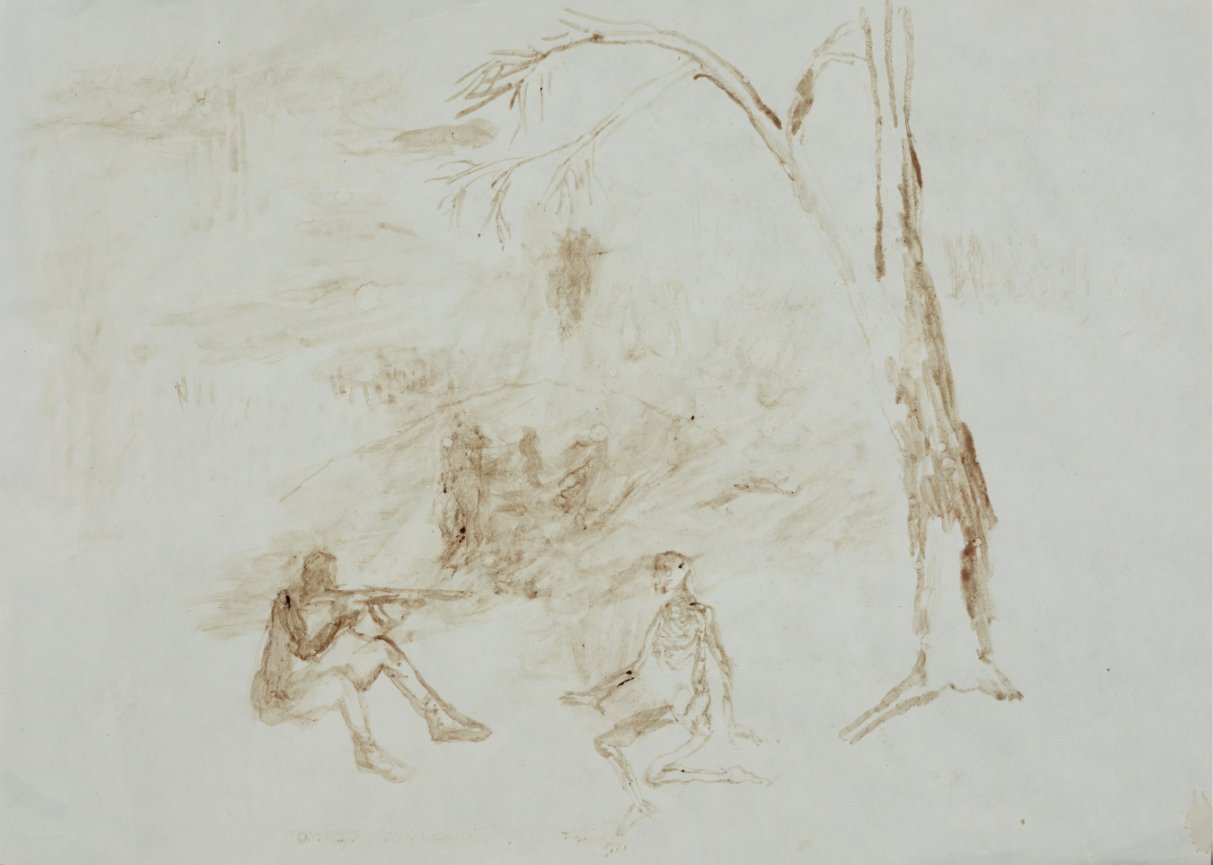
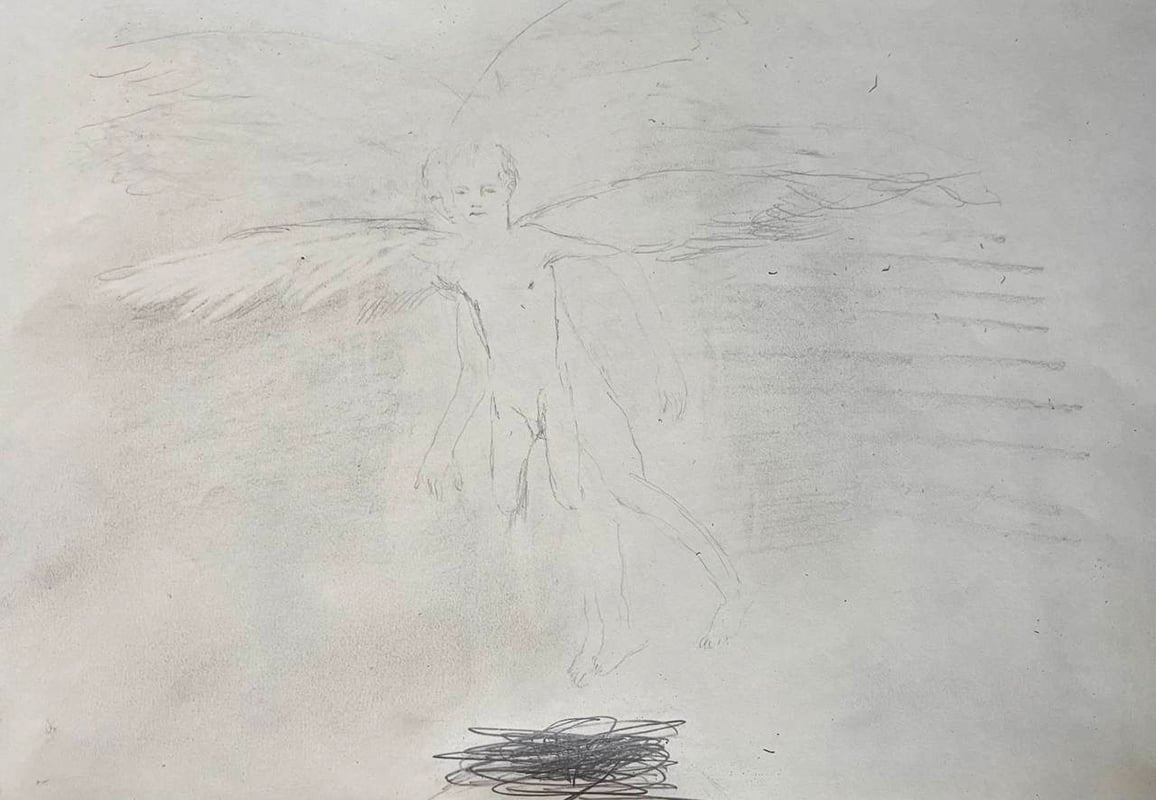
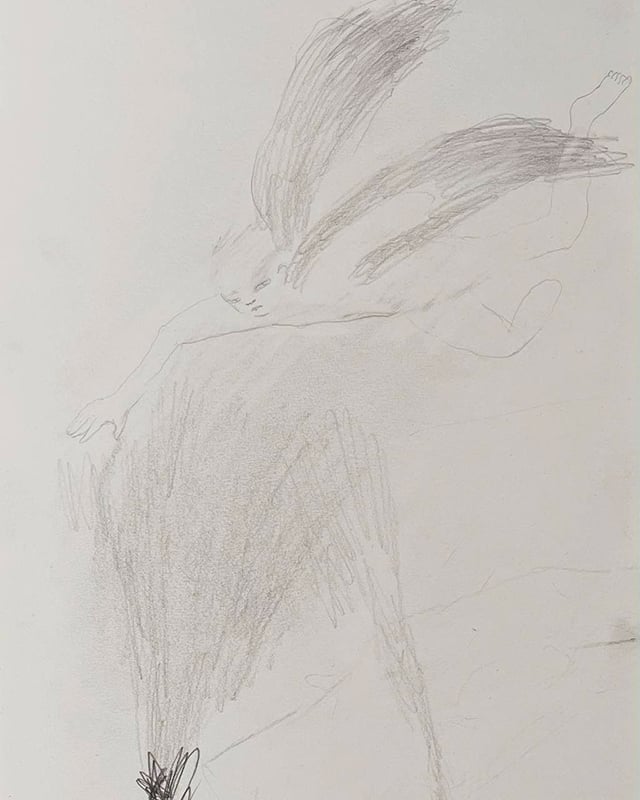
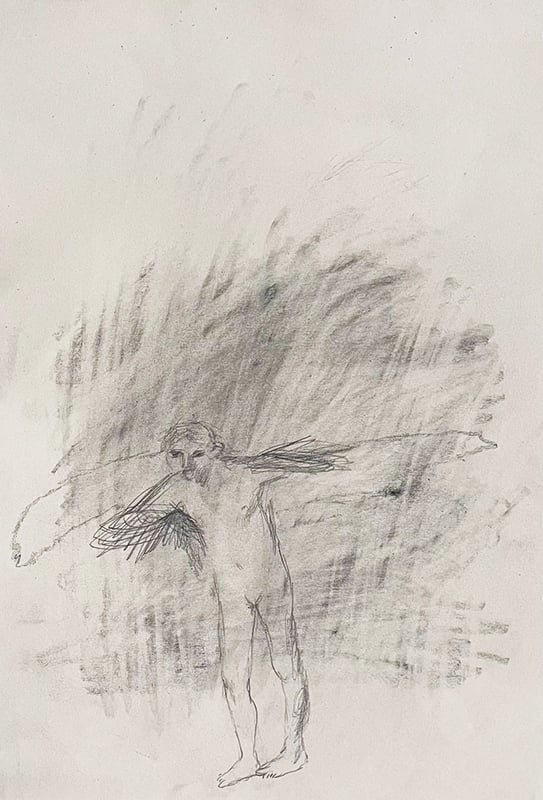
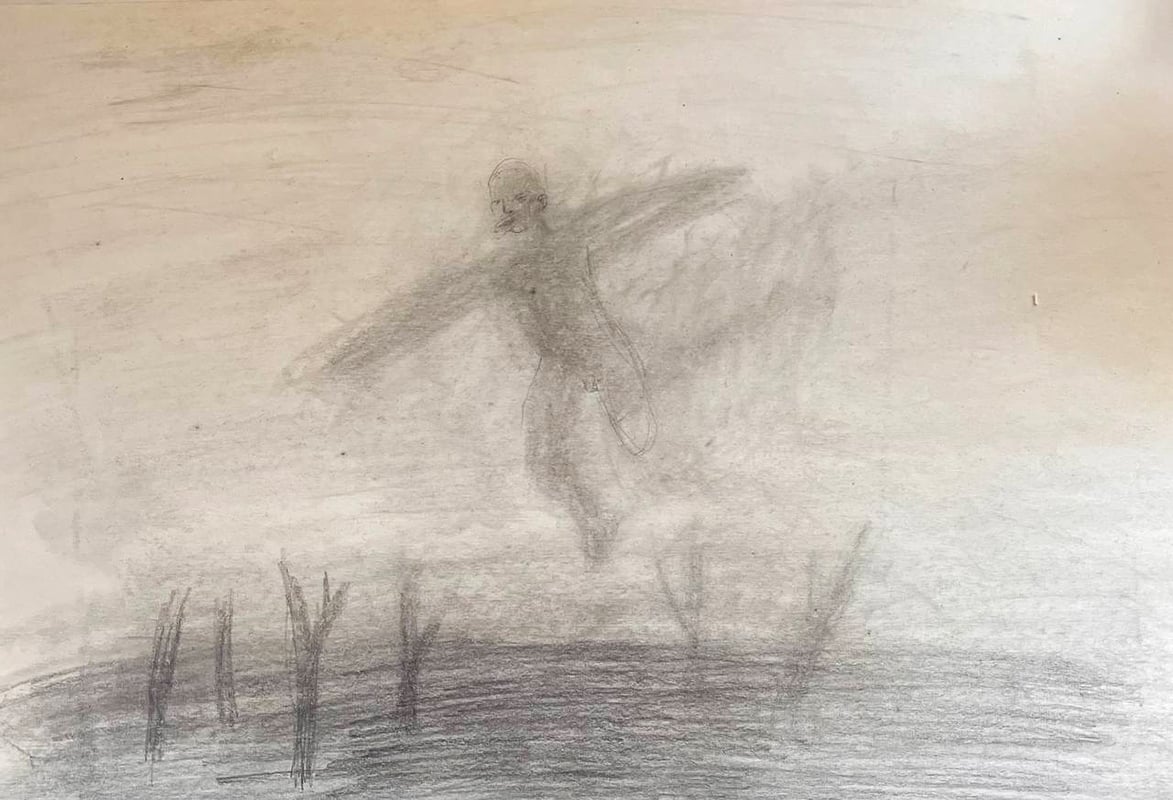
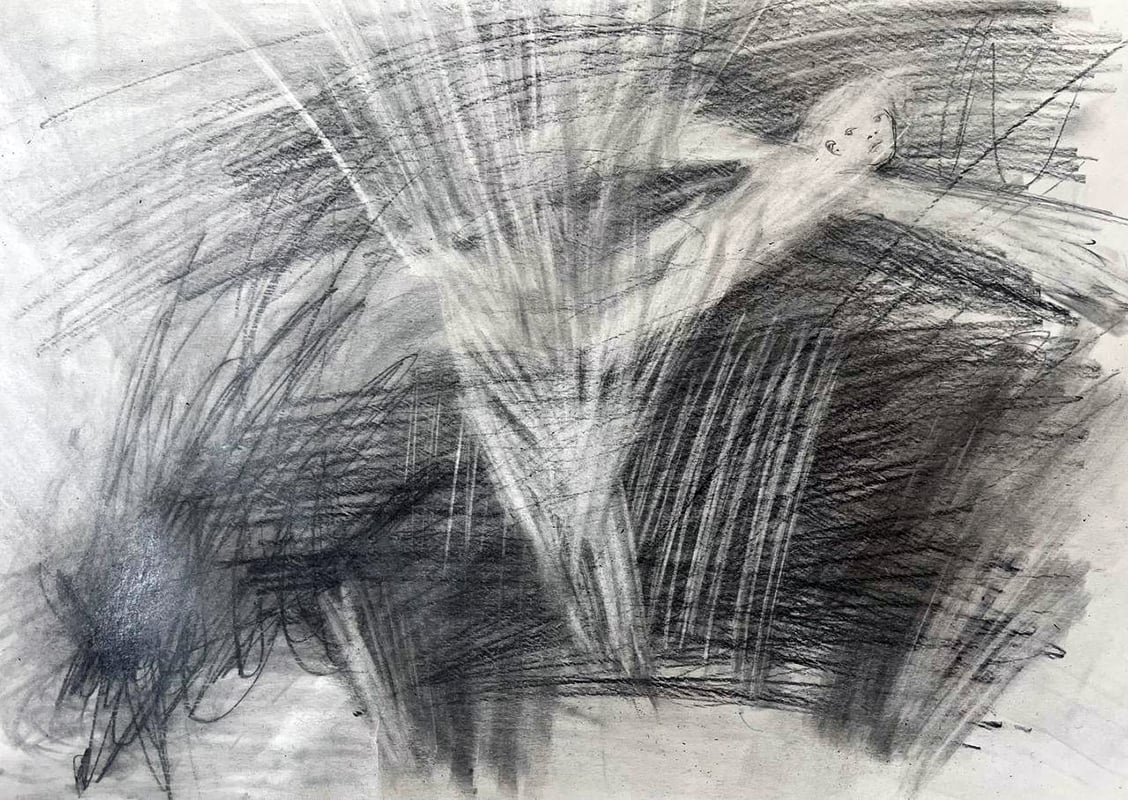
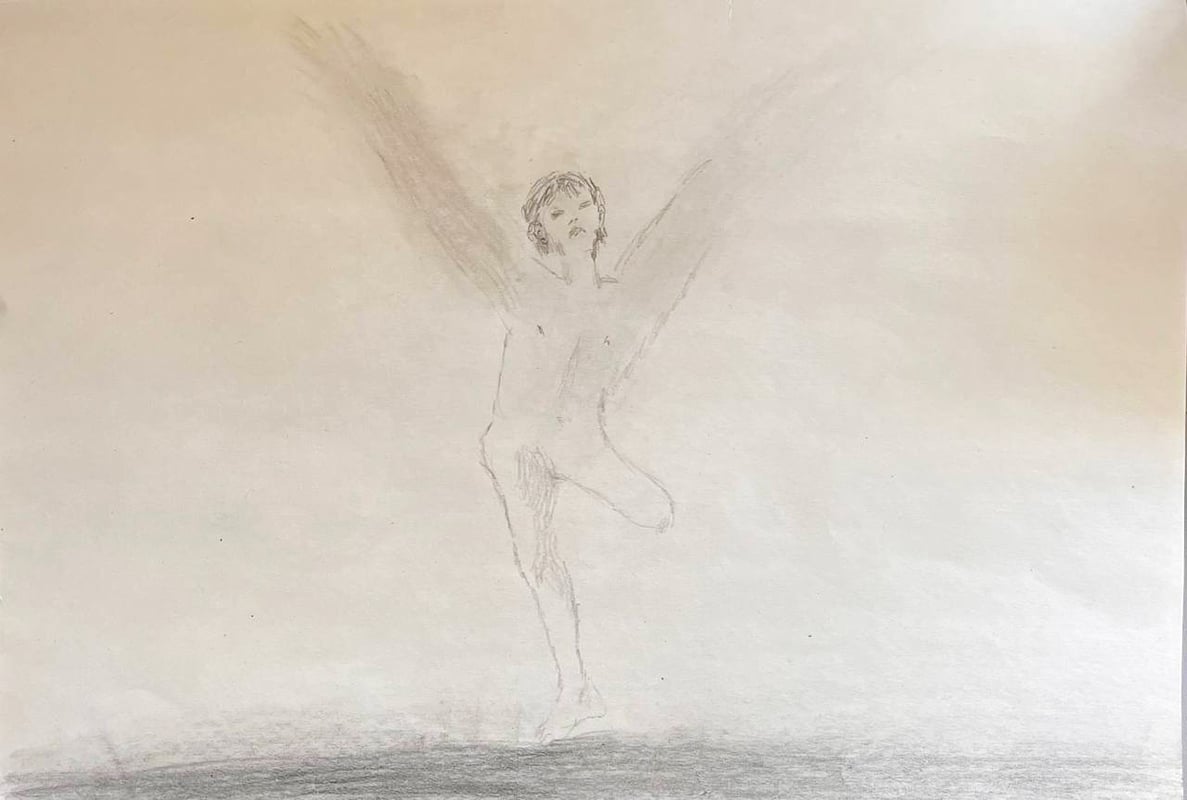
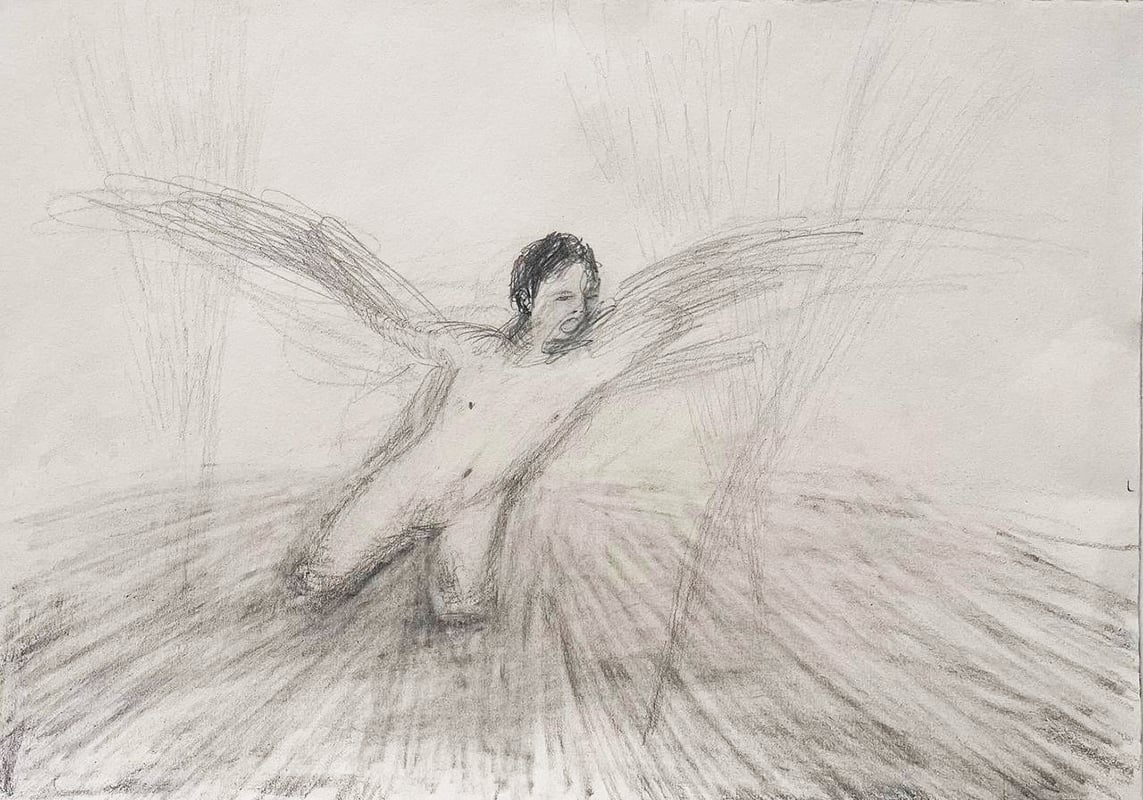
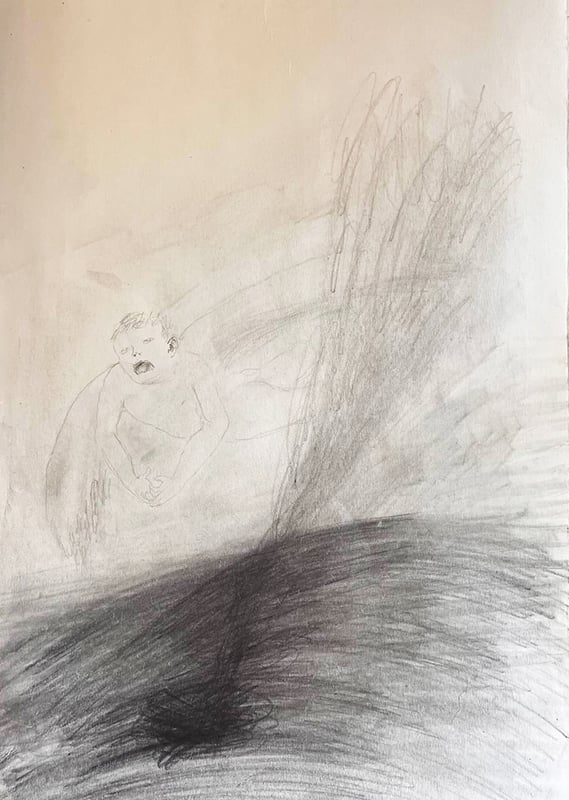
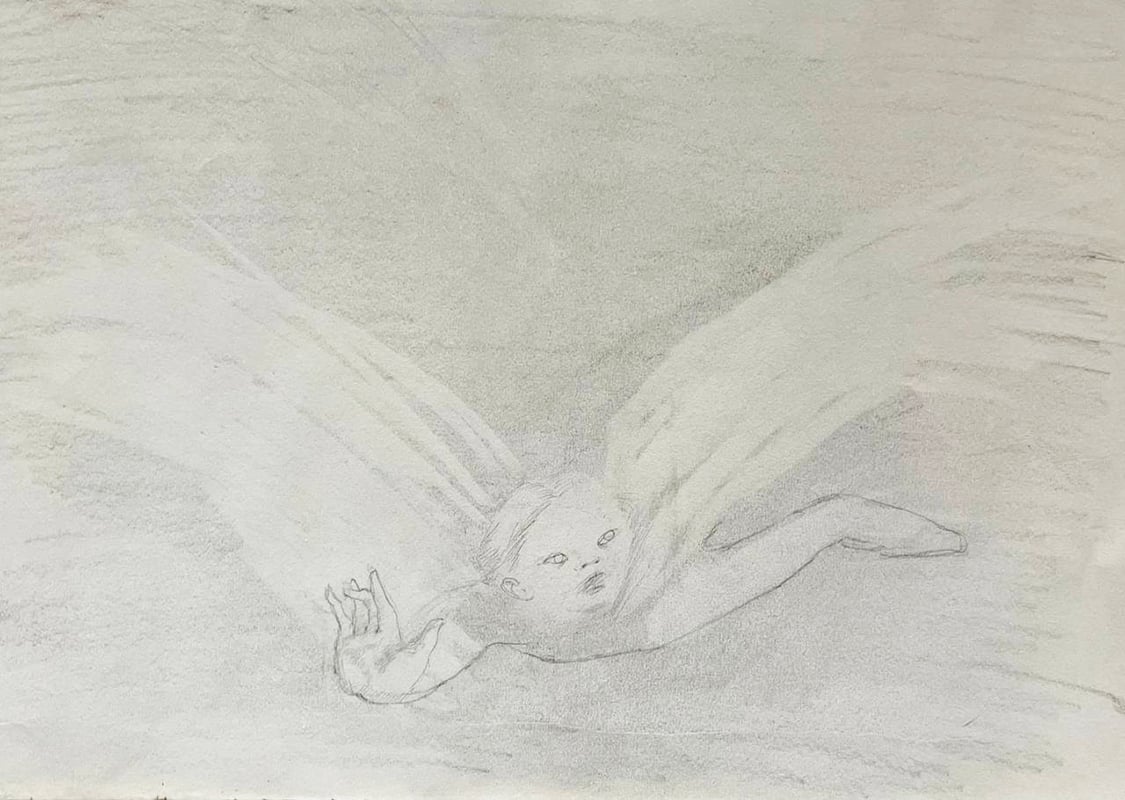
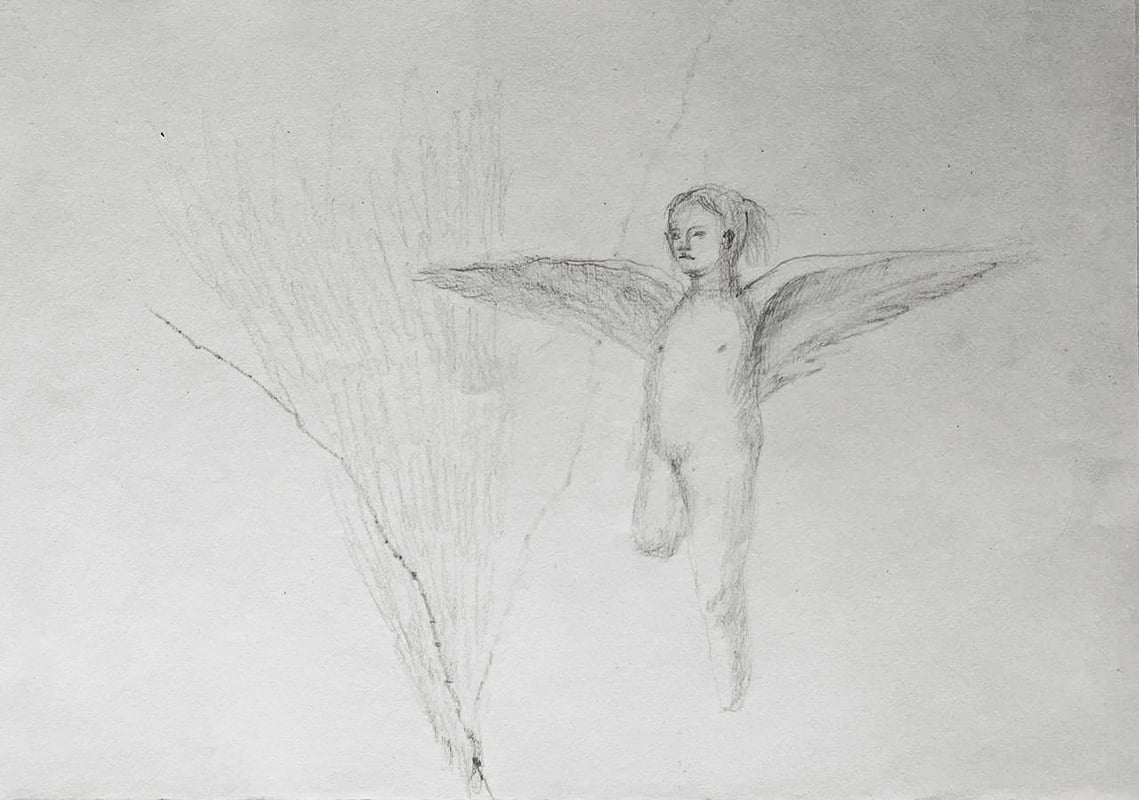
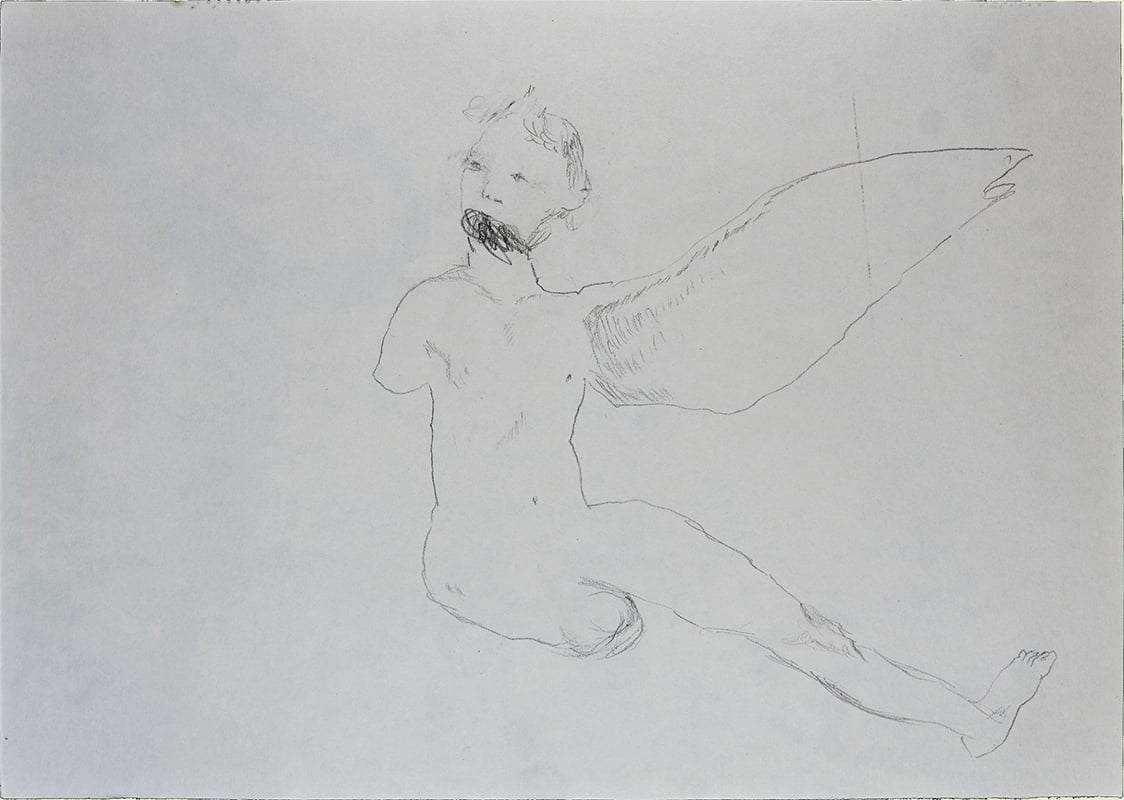
Her most intensive creative period came after 2022, with works that include sketchpads and notebooks filled with images or texts, a series of paintings made with her own blood, and the never to be finished series of pencil drawings Angels, whose number was supposed to equal the number of children who fell victim to the war. It was a period filled to the brim; she felt that she had finally found meaning, countless works, a rich source, a stream. However, due to her volunteer work and joining the army, she had less and less time for her artistic practice. The war provided her with themes and energy for her work but at the same time deprived her of the physical ability to create. It drew her in, presenting her with new challenges and raising the stakes. Polovinko remained true to herself and followed this path to its very end. What began as art continued in the form of a life practice that grew in intensity, leading to extreme risk and definitive answers. A short and horrifically interrupted life story. It is a part of the new Ukrainian canon, in which stories purposefully head toward a violent conclusion, and in the whole of the “national artistic heritage” it occupies an absent, interrupted, and occupied place no less significant than the extant and physically present.
Text by Nikita Kadan
She experienced war firsthand. Self-harm and painting with her own blood helped her cope with the trauma she had experienced. Her drawings have an incredible power of expression, testifying to a high degree of sensitivity and depth of experience. She regularly witnessed death with her own eyes, and in her drawings it appears in the form of a skeleton wandering the world - as humanity has depicted it for centuries. For Polovinko, an important feature of blood as a painting medium was its ability to gradually disappear. She wished that all bad memories would vanish in the same way. She died on the battlefield this spring.
More information about the work of Marharyta Polovinko can be found here.
Sashko Protyah (1978)
Sashko Protyah is a documentary filmmaker from Mariupol and a member of the association Freefilmers, which has declared its goals to be: resistance to colonial policies; horizontal cooperation; support for disadvantaged and discriminated communities; films that are as attentive and sensitive to reality as possible, focusing on human life and the struggle for equality and freedom; and the expansion of independent cinema and grassroots initiatives in political art.
After the full-scale invasion began, he worked closely with volunteers who were evacuating people from besieged Mariupol and made a film about them called My Favorite Job.
Sashko Protyah is a film director and activist from Mariupol, Ukraine. He is the cofounder of Freefilmers, a collective of artists and filmmakers. His films deal with themes of memory, otherness, and alienation. Currently, Protyah is primarily involved in volunteer work for internally displaced persons and the Ukrainian army. He has also been working on a series of interviews with Ukrainian antiauthoritarian fighters, a project carried out by Freefilmers in collaboration with Solidarity Collectives.
An Interview with Sashko Protyah from Freefilmers
How has the war changed your artistic practice?
First and foremost, I am usually not in the mood for any art. I would say that the main artistic practice now is survival - surviving together, because it is not an individual task.
You’re a member of the Freefilmers collective. What is the group’s main goal? And what do you think is the main advantage of collective work?
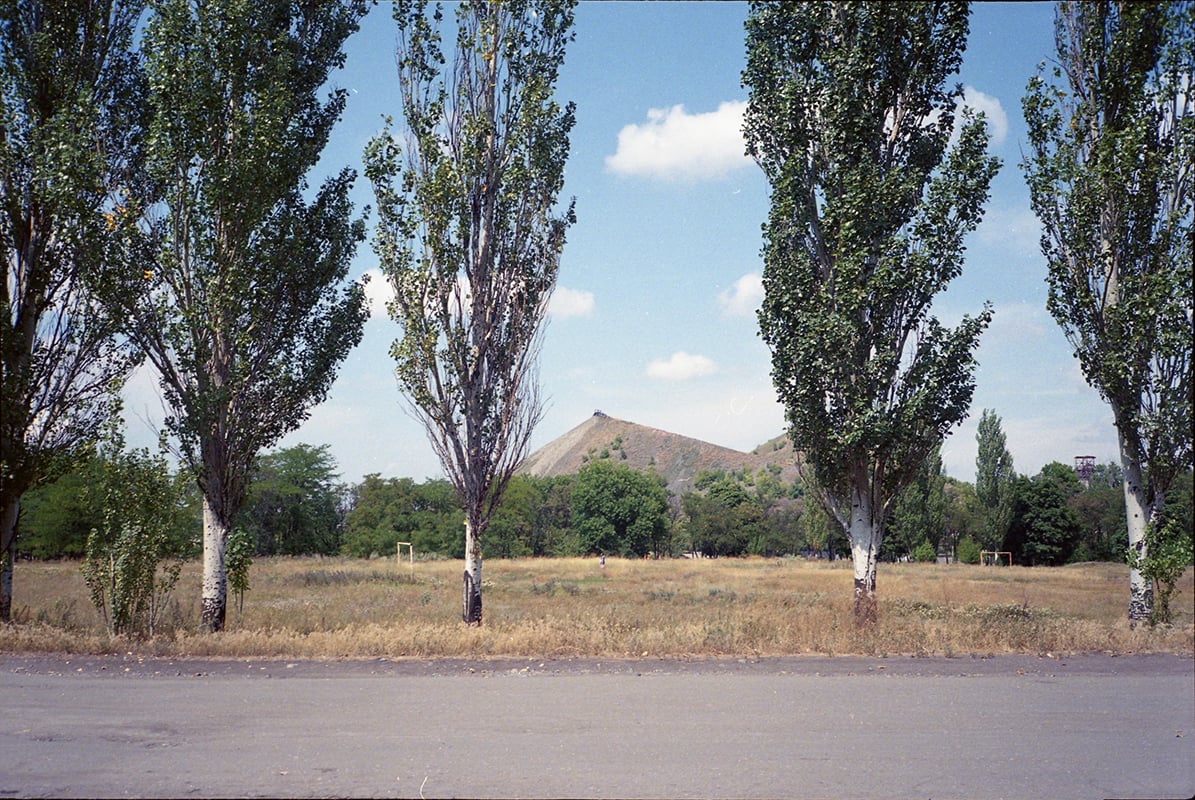
Originally, we were most interested in abandoned buildings, industrial monuments - everything that was peripheral and marginal. We got together because the way we perceived eastern Ukraine was different than what was usual in the mainstream. We sincerely love all those rough cities, steppes, thickets, and slag heaps. Collective work gives me a sense of solidarity, mutual respect, everyday empathy, and support. At the same time, it is a constant process of dialogue/dialogues about how we could do things better, more precisely, more comprehensibly. At certain times, some decisions - such as those concerning editing - are still individual, but in most situations we try to function horizontally.
Volunteering has become part of your work. What led to this? And how do you manage to combine your artistic and humanitarian work?
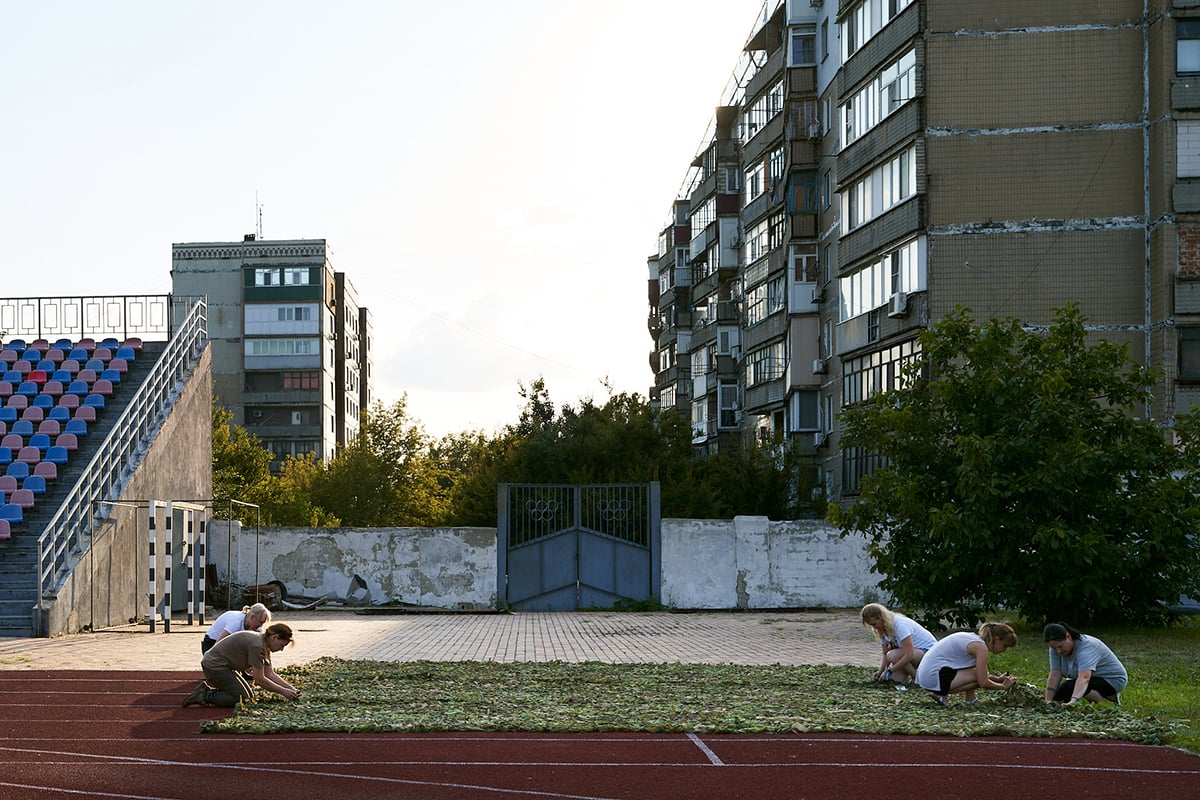
I left Mariupol on the last train out. A few days later, the connection to the city was cut off. I found refuge in Zaporizhzhia, about forty kilometers from the front line. At first I started helping drivers who were going into the occupied territory to rescue people. That’s what the film My Favorite Job (2022) is about. In the spring of 2022 we thought our most important task would be the psychological and medical rehabilitation of those who had survived the blockade and fall of Mariupol. But by June it was clear that we needed to focus our efforts on helping the soldiers - because you can’t stop the invasion of Russian fascists with children’s toys and candy. If we don’t help the soldiers now, tomorrow there won’t be enough toys in the entire European Union for all the maimed and orphaned Ukrainian children. We are currently providing a lot of support to grassroots workshops where people repair and assemble drones, print spare parts on 3D printers, and knit camouflage nets. We finance these workshops with funds raised during solidarity screenings. When we receive grants for humanitarian activities, we mainly assist liberated villages with medical and construction equipment. Even volunteering can be done in a creative way - why not? Some of our volunteer experiences even make it into our films. Julija Appen is preparing a feature-length project about Romani women in Transcarpathia and a short film about knitting camouflage nets. In my opinion, these are very poetic works.
You are from Mariupol, which is now occupied. Are you in contact with your relatives? Can you describe what the occupation is like and what it means for locals? What was your personal experience?
Almost all of my friends left the city. I only have a rough idea of what the occupation is like. I talk with those who stayed behind using secret chat apps. I know that just having Signal or WhatsApp on your phone can get you into serious trouble, including arrest. And they can check your phone on the street at any time. Anyone who’s interested can read about the background of the Russian urban reconstruction projects in the investigation on our website Mariupol Memory Park.
Can an artist be useful during a war?
I think I can be useful if I don’t remain just an artist. Or if I focus my artistic energies on things that are as realistic and concrete as possible - so that people survive, so that there are more supportive contacts. For the Solidarity Collectives project, I edited several interviews with female soldiers. The funds raised at our screenings go to the army, grassroots workshops, and reconstruction. I was exempted from military service due to health problems, but I try to get involved in the resistance as much as possible. Whether resistance to the Russian invasion can be art is a question I don’t know the answer to. I’m focusing more on other things now.
Zhanna Kadyrova and Natalka Diachenko
Zhana Kadyrova
Zhanna Kadyrova is currently one of the most famous artists in Ukraine, and she has been very actively supporting her friends on the front lines since the beginning of the full-scale invasion. Most of her former classmates are fighting, and Kadyrova has helped them secure all the necessary equipment. Thanks to her fame and influence, she is able to provide significant aid. In 2024 she had a solo exhibition at Galerie Rudolfinum in Prague.
Natalka Diachenko
Natalka Diachenko is an photographer and director who lives and works in Kyiv. Since 2016 she has been involved with the artistic initiative DE NE DE (Here There Somewhere). She is the cofounder of the association Museum Open for Renovation and the social project Dana and Natalka’s Photo Studio of Miracles, which provides assistance to people in difficult life situations. She focuses on the topics of memory, war, monuments, local history, and archiving.
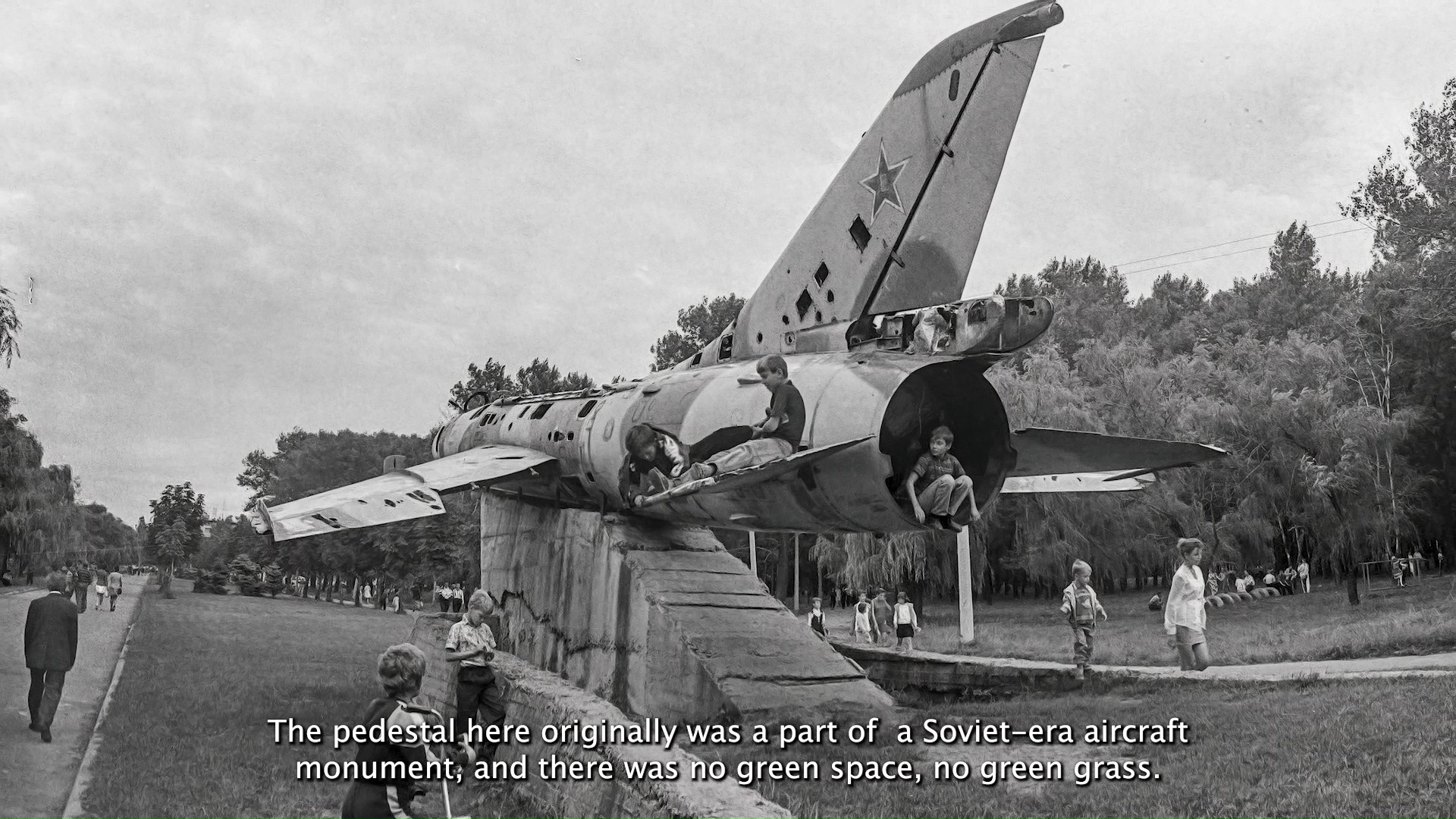
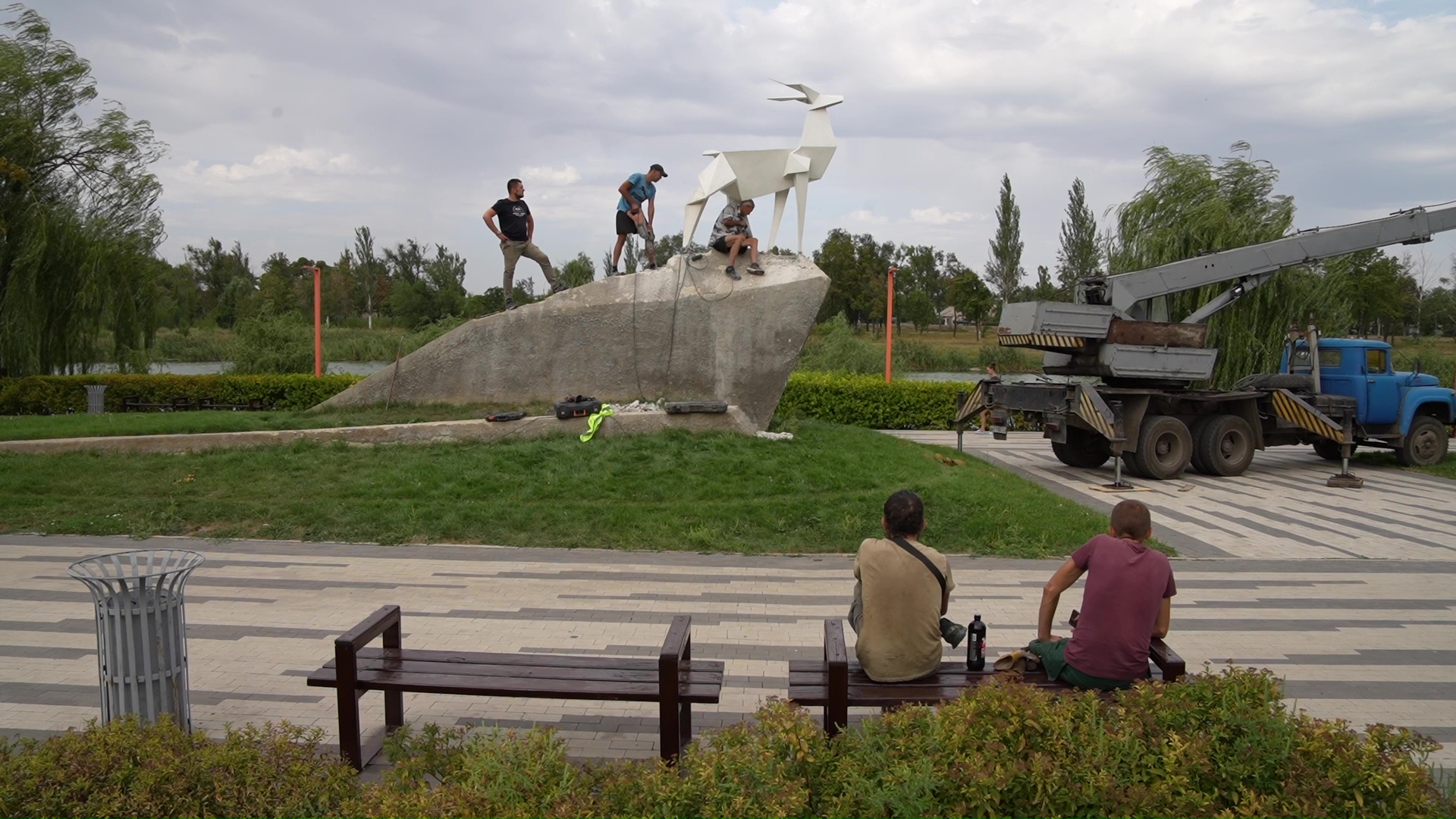
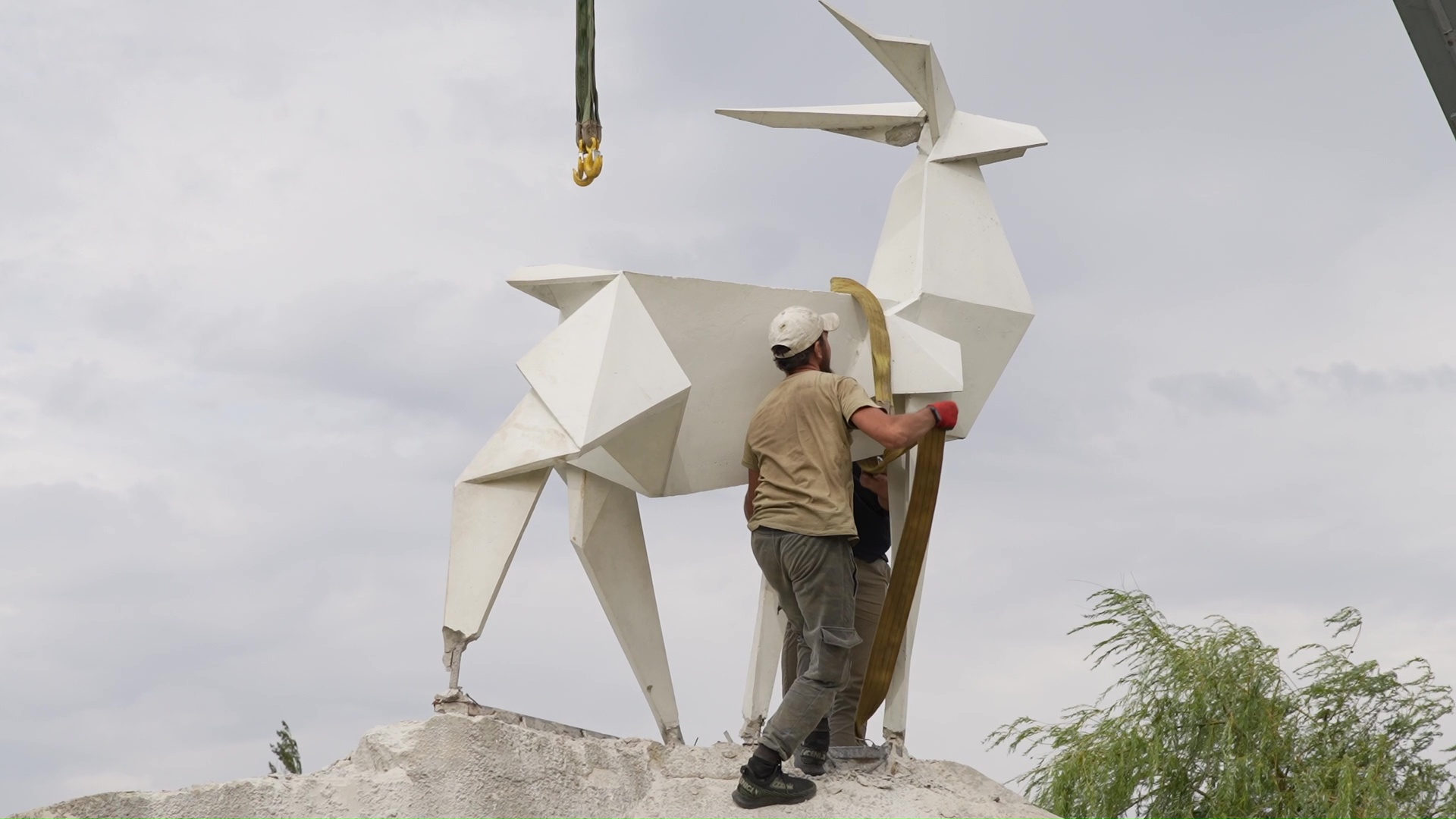
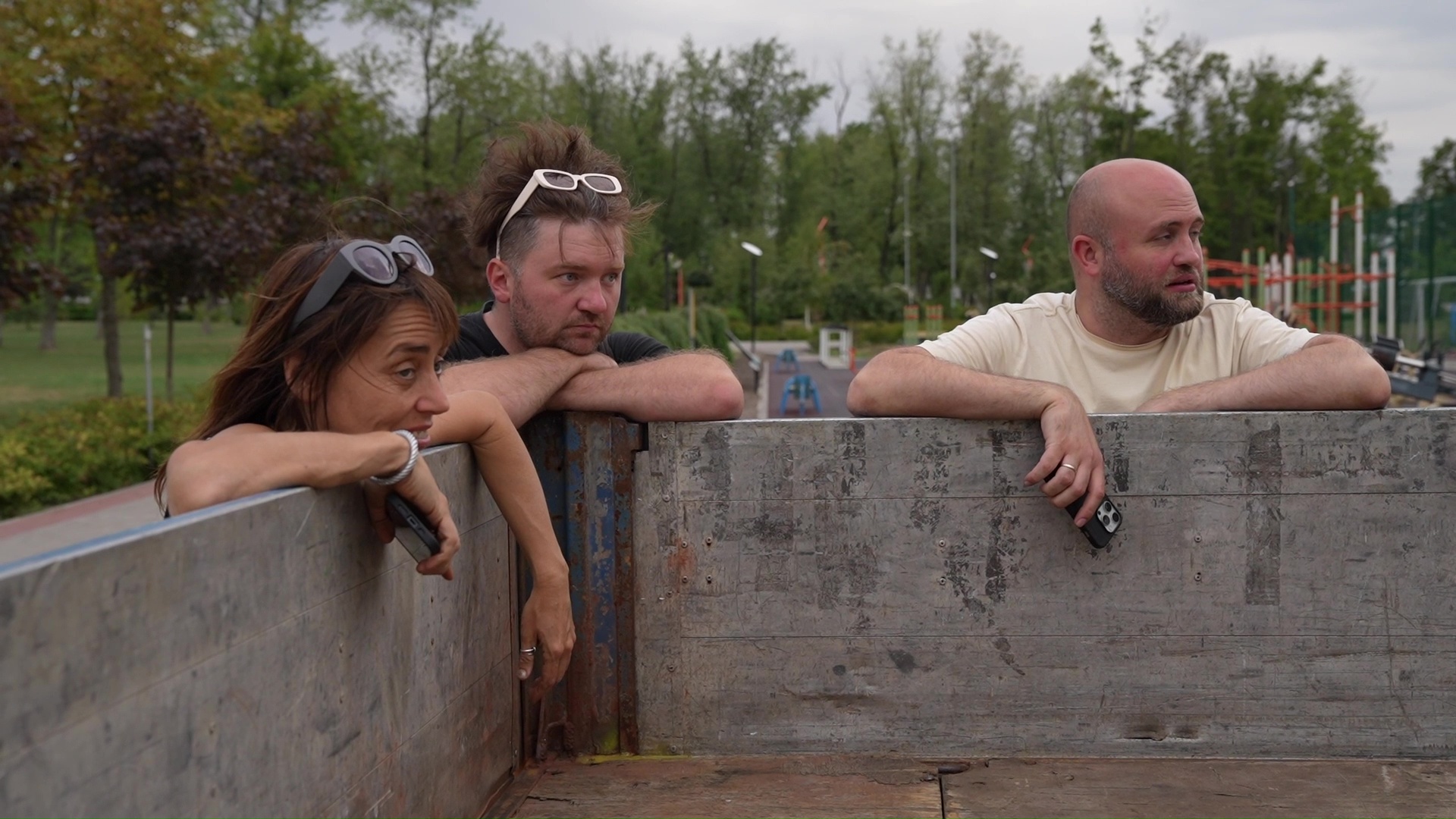
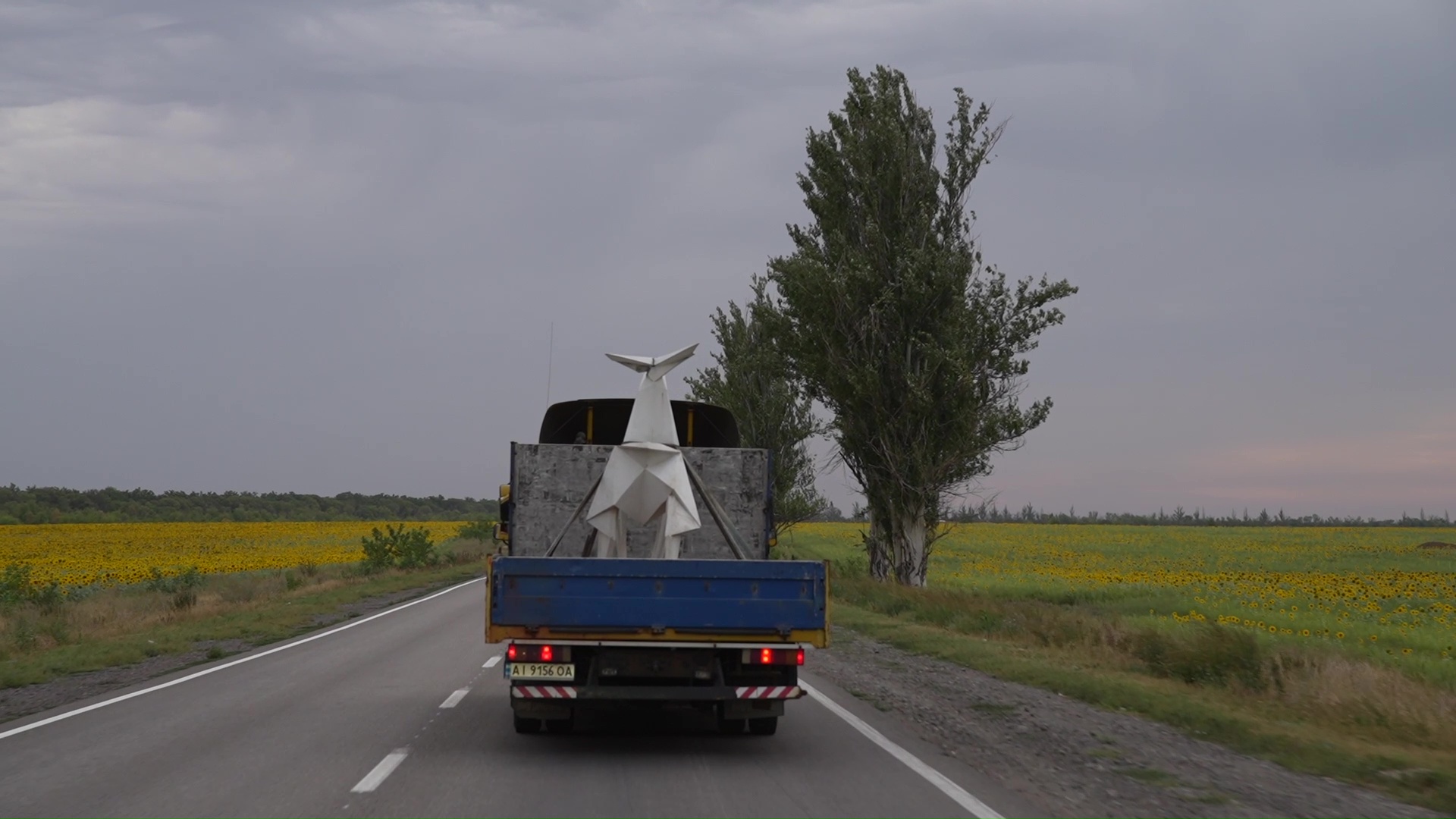
Screenshots from Zhanna Kadyrova and Natalka Diachenko’s upcoming film IDP:
Natalka Diachenko and Zhanna Kadyrova’s documentary from late August 2024 follows the dismantling of a deer statue in a city park in Pokrovsk in the Donetsk region and its subsequent transporting to Vinnytsia in western Ukraine. In 2024 most of the city’s residents were evacuated due to the rapid advance of the front line. Zhanna Kadyrova, the creator of the statue, decided to also evacuate her artwork - a deer stylized like origami. During the deinstallation process, the camera captures curious passersby who have no idea where the statue is being taken - but everyone knows why. The war has come so close that all anyone can think about is whether to leave or wait a little longer. The video’s title, IDP (Internally Displaced Person), refers precisely to the issue of the high number of refugees who are leaving for safer parts of Ukraine due to the ongoing fighting or the danger of shelling.
The statue of a deer was situated on a pedestal that remained on the site after a monument of a Soviet-era military aircraft was dismantled.
Dana Kavelina
Dana Kavelina (born in 1995 in Melitopol, lives in Lviv) focuses primarily on animation and video but also works with installations, painting, and printmaking. She studied graphic design at the National Technical University of Ukraine. Her works often examine military violence and war from the perspective of the victim as a political subject, but they also deal with the distance between historical and individual trauma, memory, and misrepresentation.
Her film Letter to a Turtledove (2020) was acquired by the Museum of Modern Art in New York and featured in the exhibition Signals: How Video Transformed the World (2023). Her works have been exhibited at the Kyiv Perennial in Vienna, the 60th Venice Biennale, M HKA Antwerp, and steirischer herbst (2022 and 2023), among others. She won the main award of the 7th edition of the PinchukArtCentre Prize and was a finalist for the Future Generation Art Prize 2024.
Dana Kavelina shows us a slightly different view of the figure of the soldier on the front lines.
In the animated film Such a Landscape, we see a man walking down a street in Kiev. The clouds floating above him reach their hands out to him. These same hands then shove the man into a waiting van, which takes him away somewhere. This is a metaphor for compulsory military service, which applies to all Ukrainian men between the ages of twenty-five and sixty. Kavelina empathizes with this character of a man who is being taken to the front lines. Everyone thanks him for his service, which wasn’t his choice. This breaks with the typical narrative of the soldier as a brave hero - instead, he is presented as an ordinary person who falls victim to historical events.
Polina Davydenko – Memory
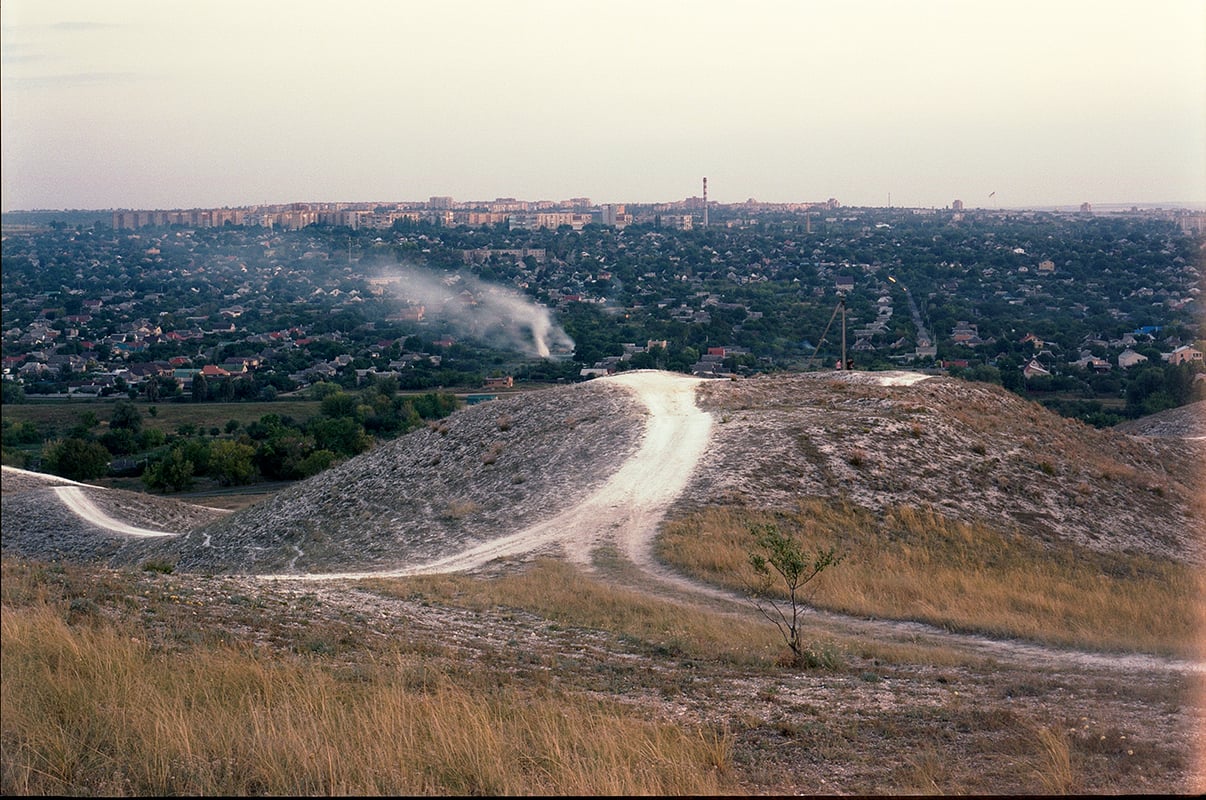
After another summer offensive by the Russian army, in August 2025 my hometown became the new front line - the term “Dobropillia direction” can now be heard on TV and the radio.
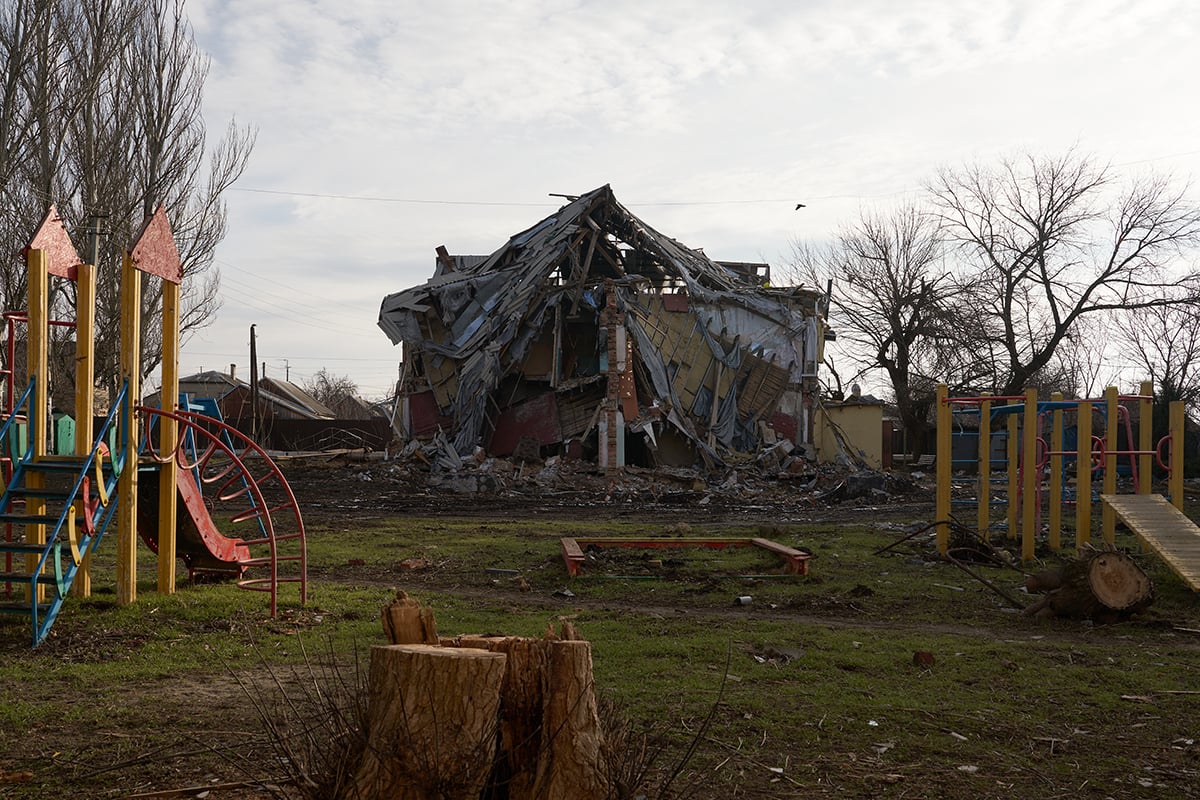
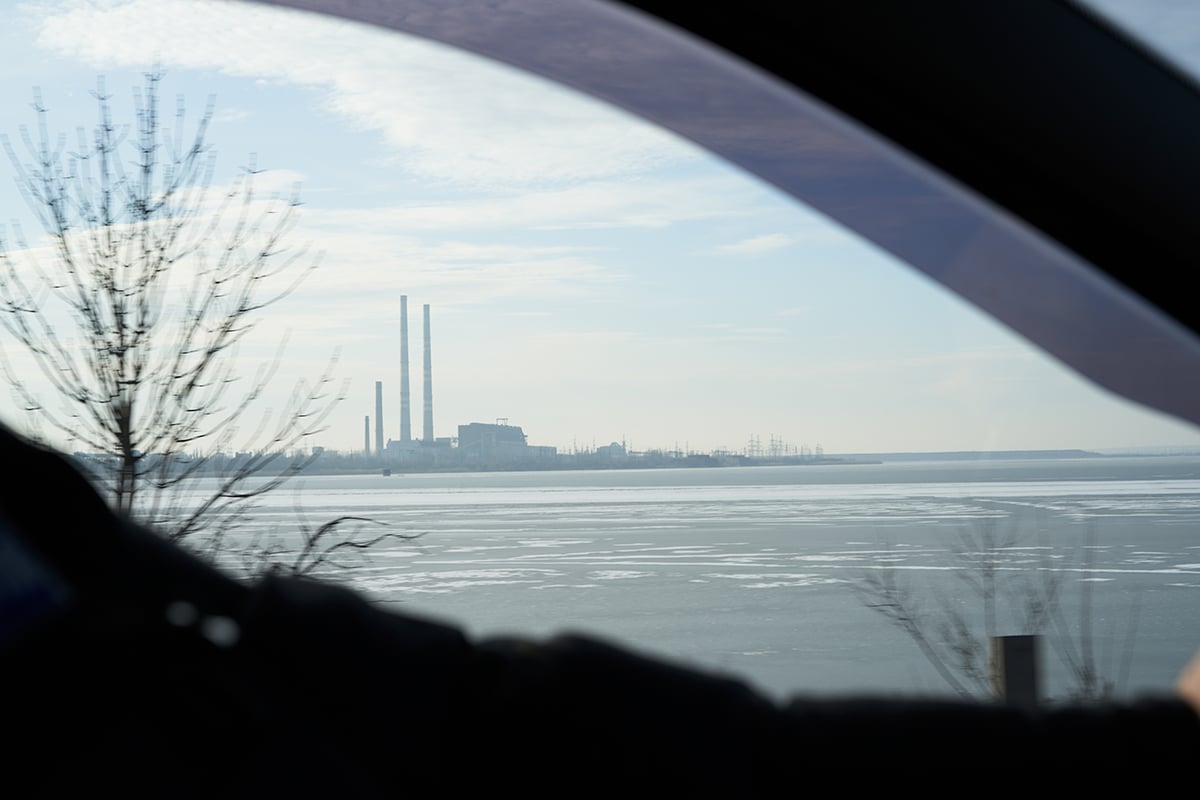
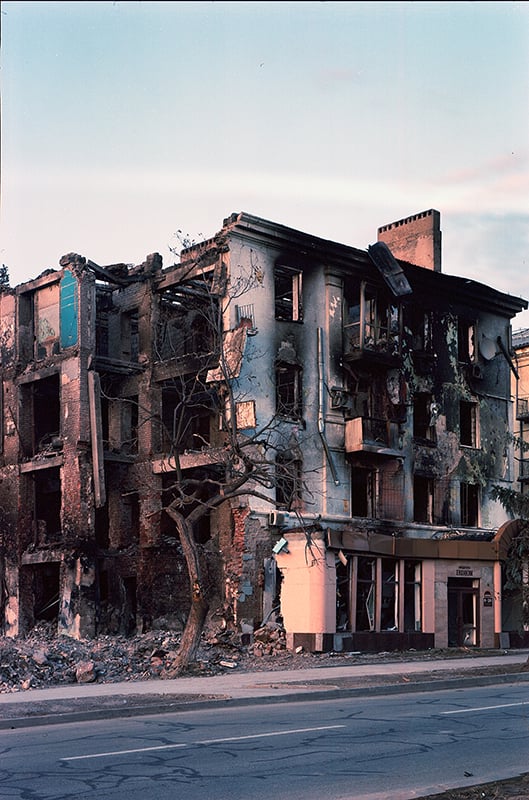
It was in this area that I took some now lost photographs. Although the advance of the first diversionary groups of the Russian army was repelled within a few weeks, the city - including the district hospital - became a regular target of shelling. During my last visit to the ruined streets of this town in the Donetsk region, which had a population of thirty thousand before the war, I was struck by its emptiness. The streets, where just last August miners (and, since the invasion, female miners) walked to their shifts, are now littered with the wreckage of suicide drones and debris from recent attacks on residential apartment buildings. There are three of us here: me, my boyfriend Lukáš, and our friend Jonasz, a filmmaker from Poland. Stray pets scurry around us, seeking any kind of human contact. Pigeons drink the last drying drops from a water pipe under the broken windows of a building. The reservoir that supplies the entire area has now been bombed, and the nearby village has fallen under occupation. The city will have no more running water. There is complete silence, broken only occasionally by the sounds of artillery and mortars - both Ukrainian and Russian.
Before we headed closer to the front line, we discussed at length whether to hide our bulletproof vests with the word PRESS under our sweatshirts or to be visibly labeled. Reporters now often say that being marked as a journalist is a much greater and so they are increasingly swapping their blue press vests for less conspicuous black ones. We also chose black, but in the end we decided to leave the large lettering visible.
While I am taking a photo of burnt roses against the backdrop of torn off sheets of roofing, a woman slowly approaches us with a bicycle, which she is using in place of crutches. She asks us which organization will come to repair her windows broken by the shelling and when they will be here. So as not to merely shrug our shoulders, we look up the phone number of one such organization. We repeat the most common “mantra” about how she should leave while she still can, for we know all too well that volunteers with plywood and tools will not risk their lives to come to such a dangerous place. After a long period of calm, the front line has shifted here too quickly. The only response in this case is evacuation. But older people don’t want to leave their homes. They are afraid. Financial assistance for internally displaced persons (IDPs) is so low that it barely covers the cost of food. Finding housing is nearly impossible for retirees, who are left with only temporary asylum shelters. Prices in Lviv, for example, have risen so much that in order to pay one month’s rent for a studio apartment, an IDP would need an average of eight and a half months’ worth of refugee benefits. Pensions have remained at the same level as before the full-scale invasion, and evacuation abroad is no longer an option with international support waning. While these thoughts of helplessness run through our minds, the woman in front of us describes the moment of the explosion in her apartment building. She wipes the tears from her eyes, but she does not want to leave. She concludes with that most common sentence: “I’ll be here until the very end.”
Our last detour takes us to the intersection with the only traffic light in town, under which sits a burnt-out van. Across the street, we see the ruins of the pizzeria where they would generously sprinkle dill on their pizzas, even if you protested. Behind us are the broken doors to the main office of the Dobropillia Coal Mines, a state enterprise whose activities kept the town bustling with life. Through the broken windows, I can see rolled-up carpets and chairs stacked as if ready to be moved. Perhaps they didn’t fit in the car, and now they will remain under the rubble. The mines are where they always were, but during the last six months some of the equipment has been evacuated from the shafts to mines in the Lviv and Volyn regions. Although these processes were accompanied by a minor corruption scandal, some of the workers got jobs at these western Ukrainian mines.
I want to take one last look at my favorite apartment building, which bears a picture of sunbeams made with multicolored bricks. Even though Russian drones are most dangerous above the main route and we have to go the long way back to the car, I take a moment to admire it - at that time, it was still standing there, untouched.
During this war we have witnessed repeated attacks by Russian forces on Ukrainian museums, schools, and other cultural institutions as well as the looting of museum collections in occupied territories. Ironically, among the works stolen from the Kherson Regional Art Museum were pieces by Davyd Chychkan’s great-grandfather Leonid Chychkan.
That is why we believe that the art of Ukrainian artists must be protected and given space to be presented. Artists are able to organize themselves and send the proceeds from the sale of their works to support the needs of the army and affected civilians, as in the case of Zhanna Kadyrova. They devote their knowledge and experience to supporting other volunteer groups, as does Sashko Protyah from Freefilmers. And like many other civilians, they join the armed forces to become soldiers and defend Ukrainians and Ukraine’s right to exist. Their experience is invaluable and difficult to pass on, so it is necessary to find understanding and empathy for all those who have lived through the invasion. Sharing experiences and finding new perspectives is important in times of war, as is archiving and preserving art from occupied and threatened territories.
Authors of the accompanying text: Alice Nikitinová & Polina Davydenko
Fundraiser for the treatment of Heorhiy Ivanchenko
The Kyiv Independent on attacks targeting journalists and evacuation teams
Resistance Support Club website
Resistance Support Club Instagram
Publication: 1.12.2025