We are an editorial collective shaped by the artistic environment. Our focus is on contemporary art in the context of current social issues, along with an exploration of its critical potential.
Absences in the video archive 3 (VVP AVU collection) - Memory, migration and nationalism is the third continuation of a series of interventions in which invited guests from non-art disciplines reflect on the audio-visual art collection of the VVP AVU Video Archive.
In addition to selecting works from this collection, they also focus on which works, artists or concepts are not present in the collection due to the chosen theme. The third intervention was prepared by cultural anthropologist Markéta Špiritová, who works at the Institute of European Ethnology at the Bavarian Academy of Sciences and at the University of Munich. In her research, she mainly deals with issues of nationalism, the culture of memory and popular culture in the Central European area.
The theme of Czech national identity and collective memory is also the starting point for the selection of audiovisual works from the former VVP (now NFA) video archive, which Markéta Špiritová presented in the program series Parallel Cinema at the Ponrepo Cinema, which includes the program Absences.
ETUARE Group and THC Crew, Digitalmania: "Homage to Václav Havel" (2003)
Ivars Gravlejs: My dumpling (2010)
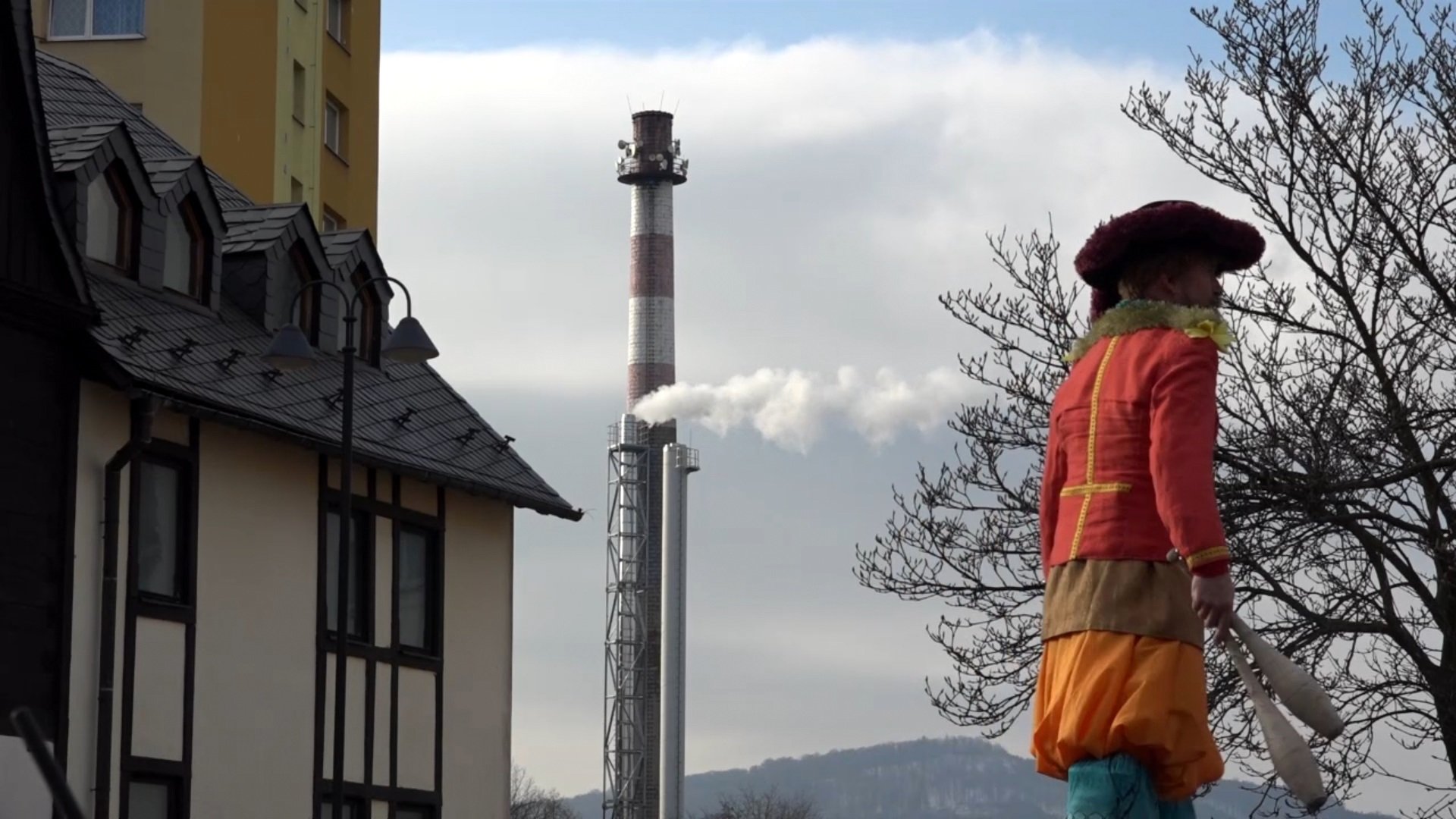
Tomáš Kajánek: Dedications (2021)
Barbora Kropáčková: Blind Spot (2020)
Jan Kubeš: Czech Exit (2010)
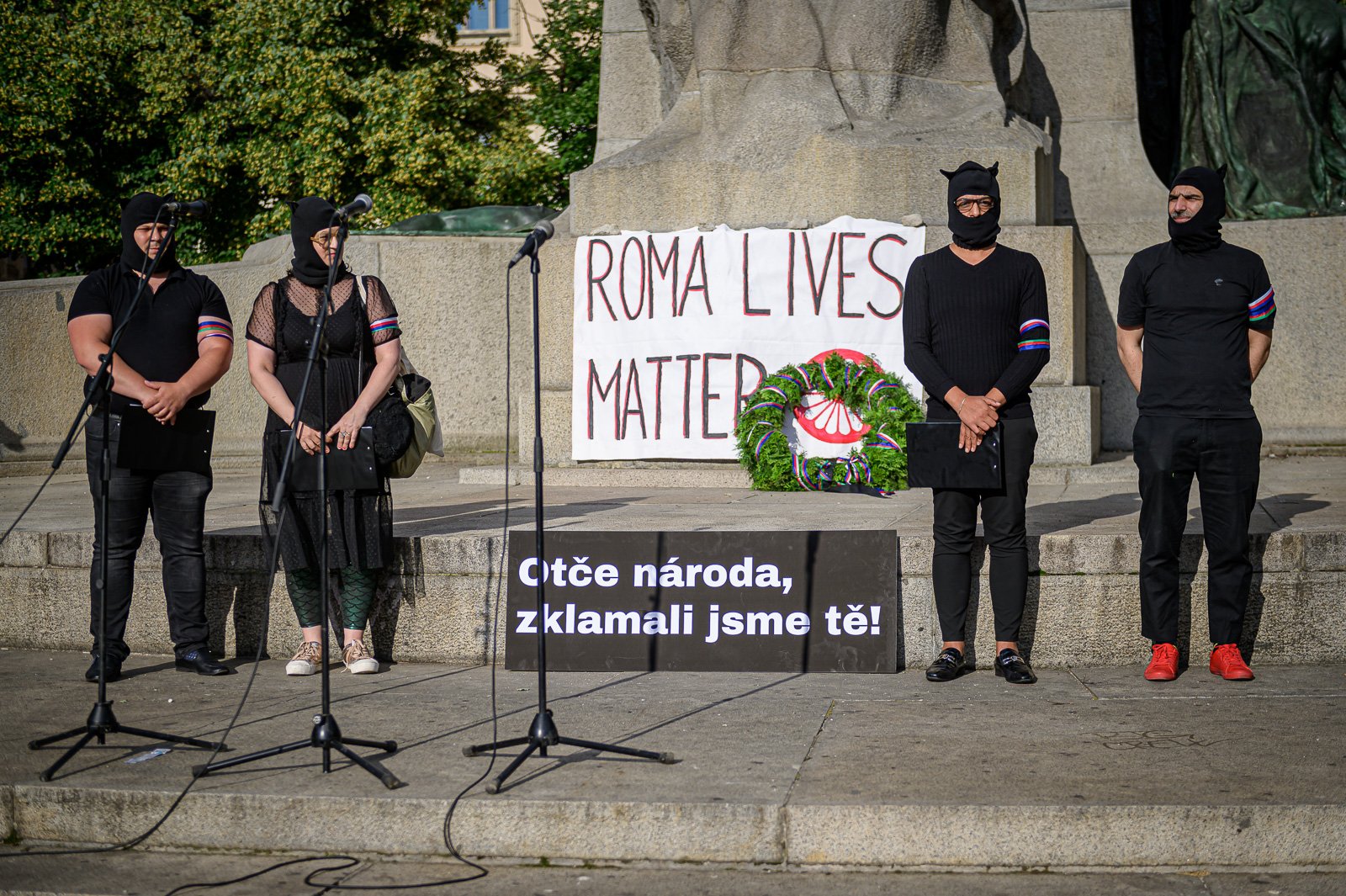
Tamara Moyzes, Roman Kale Panthera: Father of the nation, we disappointed Stanislav Tomáš! (2021)
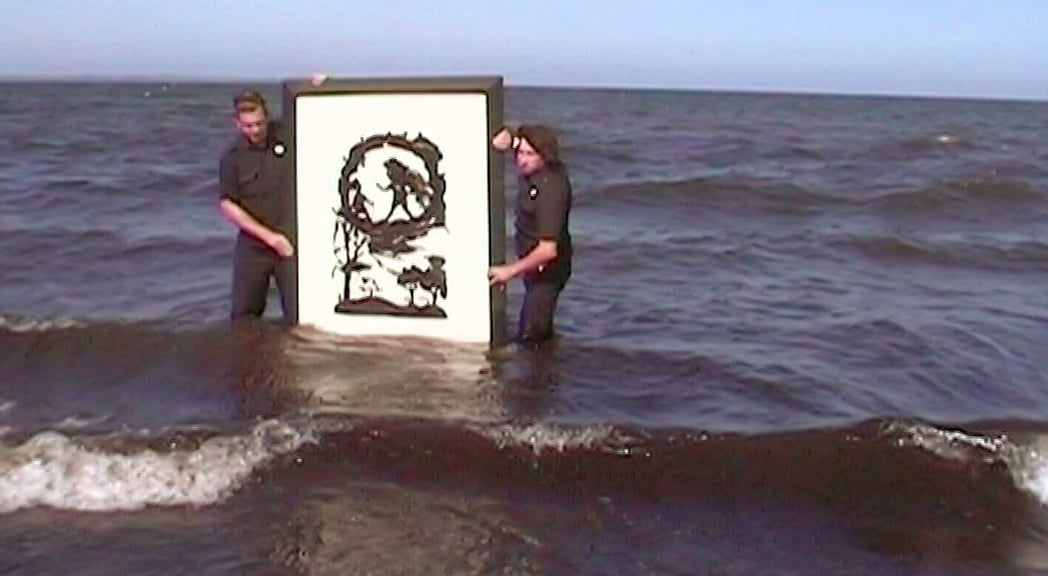
Rafani: Balt (2003), Demonstration of Democracy (2002)
Creative team for Fotograf Festival, NFA and Artyčok.TV: Alžběta Bačíková, Lujza Kotočová, Markéta Mansfieldová, Sylva Poláková.
Tomáš Kajánek: Dedications (2021)
Absences in the video archive: Memory, migration, and nationalism
In an understanding of European ethnology that is tied to a constructivist and participant-centred perspective, the political is not limited to state institutions, structures, and decision-making processes but becomes a sphere of activity for non-state actors as well – be they artistic, civil-society, or pop-cultural. This is not to say that this “politicking” is explicitly visible to all, inherently subversive, and directed against hegemonic structures. Far more so it is inscribed into bodies, objects, and everyday practices through experiences and discursive influences.[1] Based on this cultural and hegemonic-theoretical perspective, political action is intrinsic to all cultural forms of expression. In art, this is particularly true of European expressive art from the 1960s onward, which explicitly considered itself political; in the 1970s and 1980s it also functioned in Central and Eastern Europe as a reaction to totalitarian regimes and their repressive apparatuses.[2] It also quite clearly employed audiovisual media as a means of overcoming the ephemerality of live performance and for its archiving. Let us think, in particular, of the works of Tomáš Ruller (e.g., 8. 8. 1988) and his conflicts with the communist regime.
Video art and ethnography
European ethnology sees itself, in the tradition of cultural studies, as a political science that deals with social inequality. Therefore, video art and ethnology – or rather ethnography, as a central methodological and knowledge-guiding approach in European ethnology – have more in common than it seems at first glance: both constitute a particular form of experiencing, of acquiring and creating knowledge. Both are at once a representation and interpretation of the world; both make social problems visible; both demythicise and demystify, engage in social criticism, and expose unequal power relations; both seek, in the best-case scenario, to contribute to the elimination of social ills or at least to create a space to reflect on them. This year’s collaborative project between Artyčok.TV, the National Film Archive, the Fotograf Festival, and researchers focused on the themes of cultural memory, migration, and nationalism – that is, the fields in which struggles over cultural meanings and interpretations of the past take place, where images of the self and images of others or collective identities are created.
Collective and national memory
Against the backdrop of an ethnological-cultural-anthropological interest in research and knowledge, we have selected sixteen of the more than fifty films made between 2002 and 2021 that deal in their own artistic way with issues of national identity and thus also national symbols, ethnic boundaries, historical images, and sites of memory. According to French historian Pierre Nora, sites of memory – “lieux de mémoire” – are symbolic places of remembering or forgetting and carriers of memory (in Nora’s case, national memory).[3] Here it is less about the actual historical event, story, or figure as such than it is about its significance for a given community, its self-image, and the formation of its identity in the present.[4] In addition to normative national memory as defined by Nora, there is an entire range of sub-memories – oftentimes the memories of subordinate groups, which are produced by civil society actors, activists, intellectuals, and artists and can develop anti-hegemonic forces. These parties do so, for example, by referring in their texts, demonstrations, or art to gaps in the public culture of remembering – obviously with regard to the “not remembering” of groups of the population branded as ethnically foreign – or by questioning the politics of national identity and deconstructing state symbols and national stereotypes in order to make activist and artistic artefacts of cultural performance that are relevant to ethnological-cultural-anthropological research on memory as well. On the one hand, they are important sources and contemporary documents which attest to the way history, collective memories, and the construction of national identity are reflected in art in a particular temporal-spatial-social context. On the other hand, artistic forms of expression such as video art are themselves a medium and a cultural practice that in a certain way creates cultural (memory) meanings.
The sixteen films selected from the archive based on the research can be labelled with the following terms: 1) national symbols and collective (non-)remembrance; 2) national identity between racist othering and ethnonationalism; 3) migration and gaps in memory.
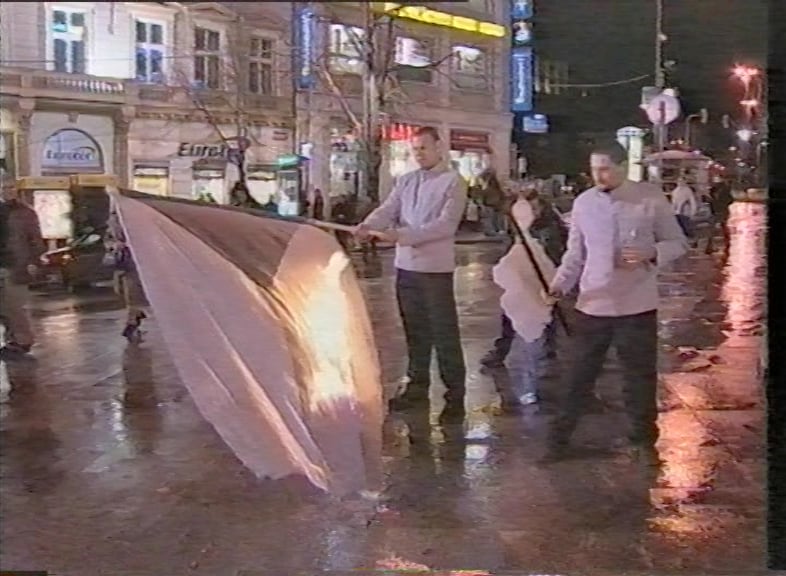
Rafani: Demonstrace Demokracie (2002)
National symbols and collective (non-)remembrance
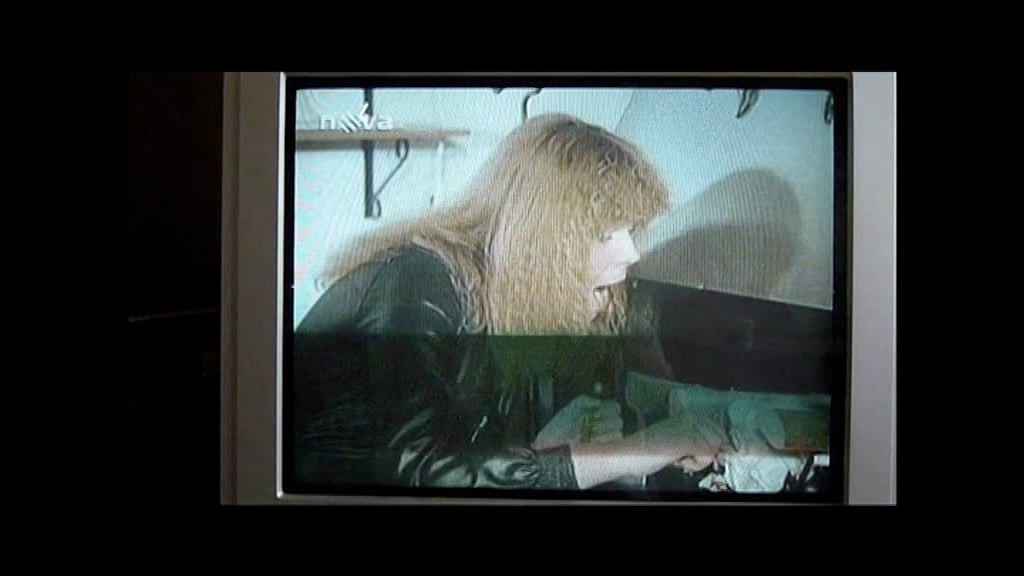
Demonstrace demokracie (A demonstration of democracy) is a 2002 film by the art collective Rafani in which, on the eve of a national holiday commemorating the founding of the republic on 28 October 1918, artists publicly burn a stolen, black-and-white replica of the Czech national flag as if in some kind of ritual act and are subsequently arrested by the police. The deconstruction and burning of the state symbol can be read as a protest against the political culture of a country that is openly threatening democracy and breeding nationalism. Another view of the achievements of the democracy regained after 1989 is presented in the film Jiná perspektiva (A different perspective) by Barbara Hlaváčová, Kateřina Kaclíková, Tadeáš Polák, and Tereza Reichová. Based on footage taken on the streets of Prague on the anniversary of the Velvet Revolution in 2017, the film reveals that many people have no interest whatsoever in the events of 17 November 1989. On the contrary, the interviews with passers-by confirm the thesis of French historian Muriel Blaive: “The 1989 Revolution [is] a Non-Lieu de Mémoire in the Czech Republic”[5] – an event to which little or no national identity-forming significance is attached. Nevertheless, research shows that other perspectives on “November” also exist: civil society engaging in events such as the Velvet Festival, Korzo Národní, or the Freedom Festival and occupying public (commemorative) space on 17 November in order to protest against the political culture and the dismantling of democratic structures, against failed immigration and remembrance policies, against social injustice, for human rights, and against racism and discrimination against minorities.[6]
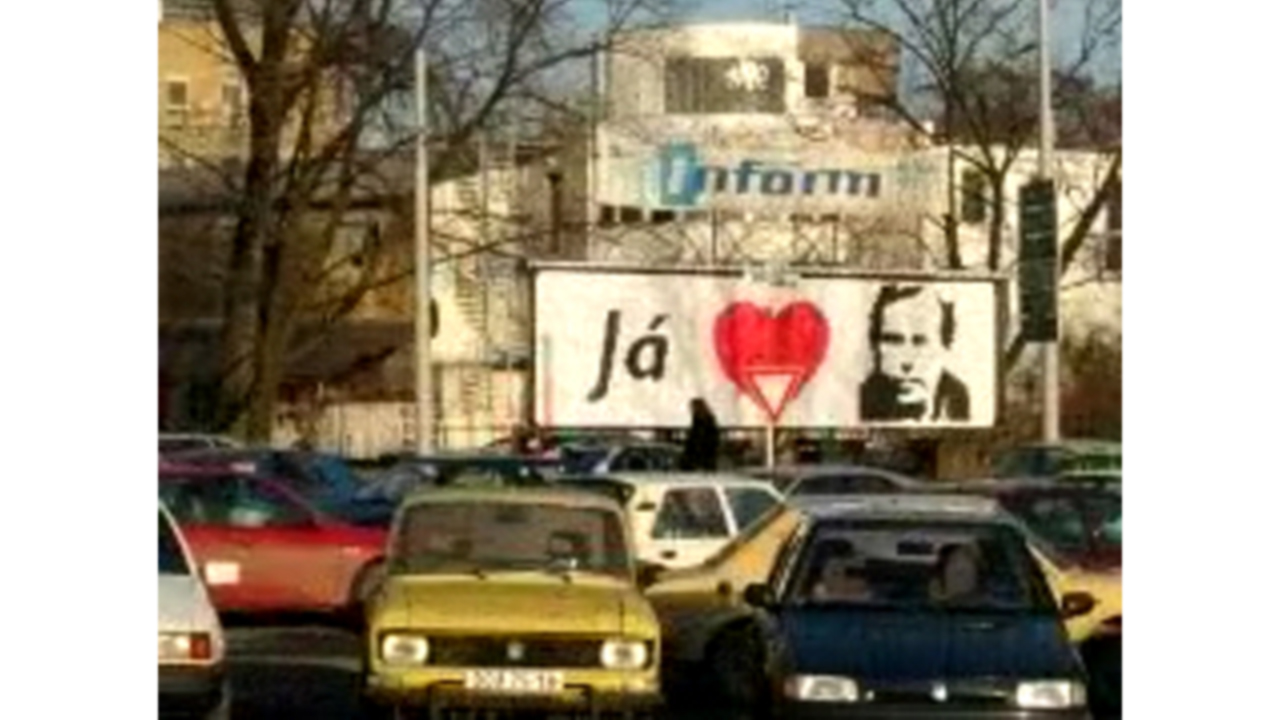
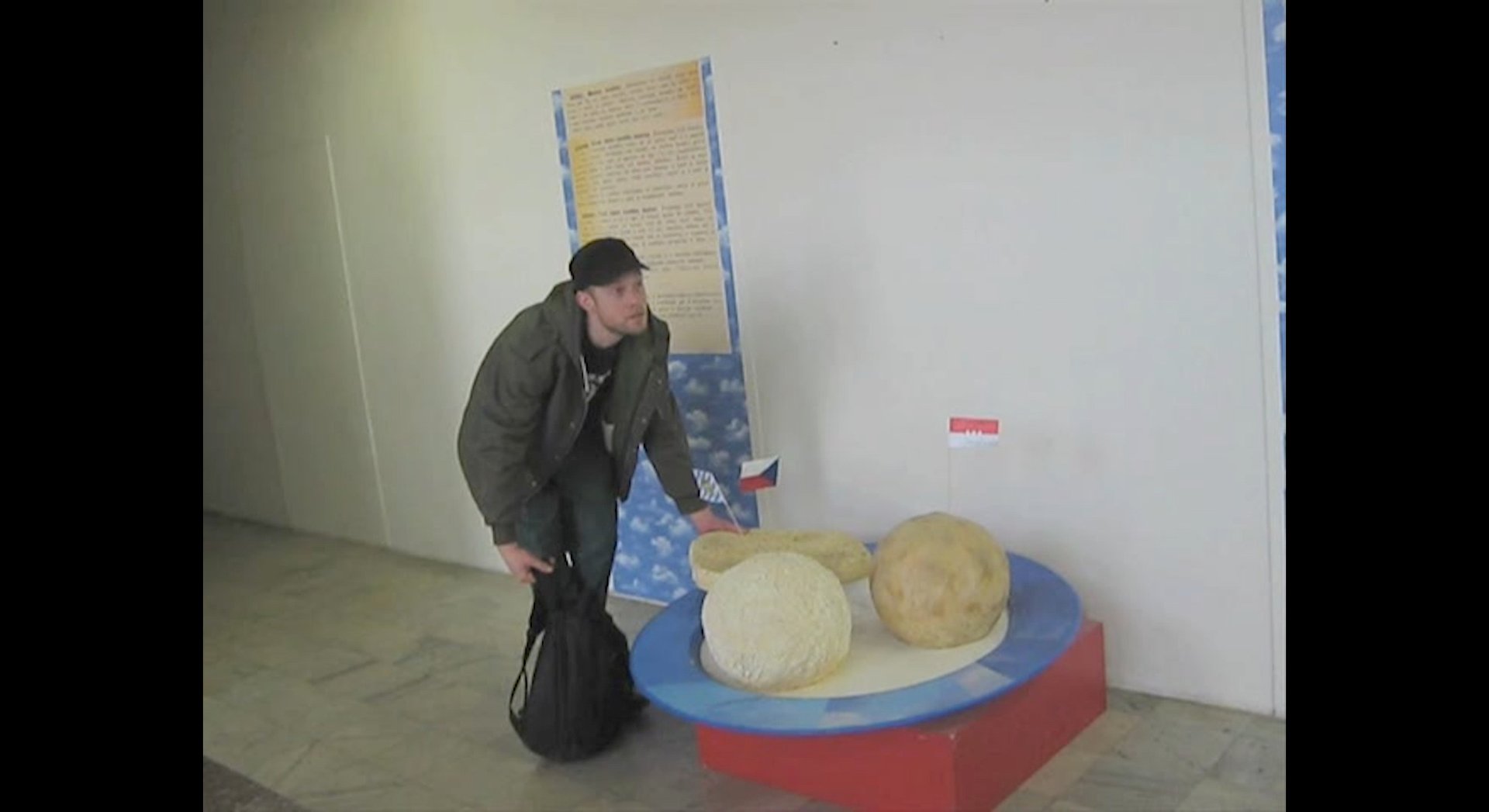
The ambivalence between remembering and not remembering, between democracy and European awareness on the one hand and nationalism and Euroscepticism on the other, is also symbolised by the two films Digitalmania (Jan Mikulčík, 2003) and Czech Exit (Jan Kubeš, 2010), which put “the two Václavs” on the pop-culture stage. Václav Havel and Václav Klause are two former presidents who are complete opposites and who represent different political cultures, and so the recollections of them in the two films also could not be more different: Mikulčík presents us with a fond reminiscence of Havel, the European, peacemaker, and democrat, while Kubeš’s film recalls Klaus the Eurosceptic and – in the eyes of many – nationalist. The final film of this thematic block is Ivars Gravlejs’s My knedlík (My dumpling, 2010), in which, at an exhibition about Czech-German relations which features a display of Czech, Bavarian, and Thuringian dumplings, the artist swipes the Czech example and makes off like a thief. This performance could be interpreted as an ironic play on the national self-stereotype of the “small Czech nation” as a plaything of the superpowers or “the small, simple Czechs in contrast to German or Austrian supremacy.”[7] The concept of the “small nation” is based on a naturalised, essentialist notion and describes so-called “non-dominant ethnic groups” in the context of larger states and empires. Unlike “large nations”, they do not possess an aristocratic elite, a state, and a (linguistic) high culture.[8]
Skupina ETUARE a THC Crew, Digitalmania: "Pocta Václavu Havlovi" (2003)
Jan Kubeš: Czech Exit (2010)
Ivars Gravlejs: My knedlík (2010)
National identity between racist othering and ethnonationalism
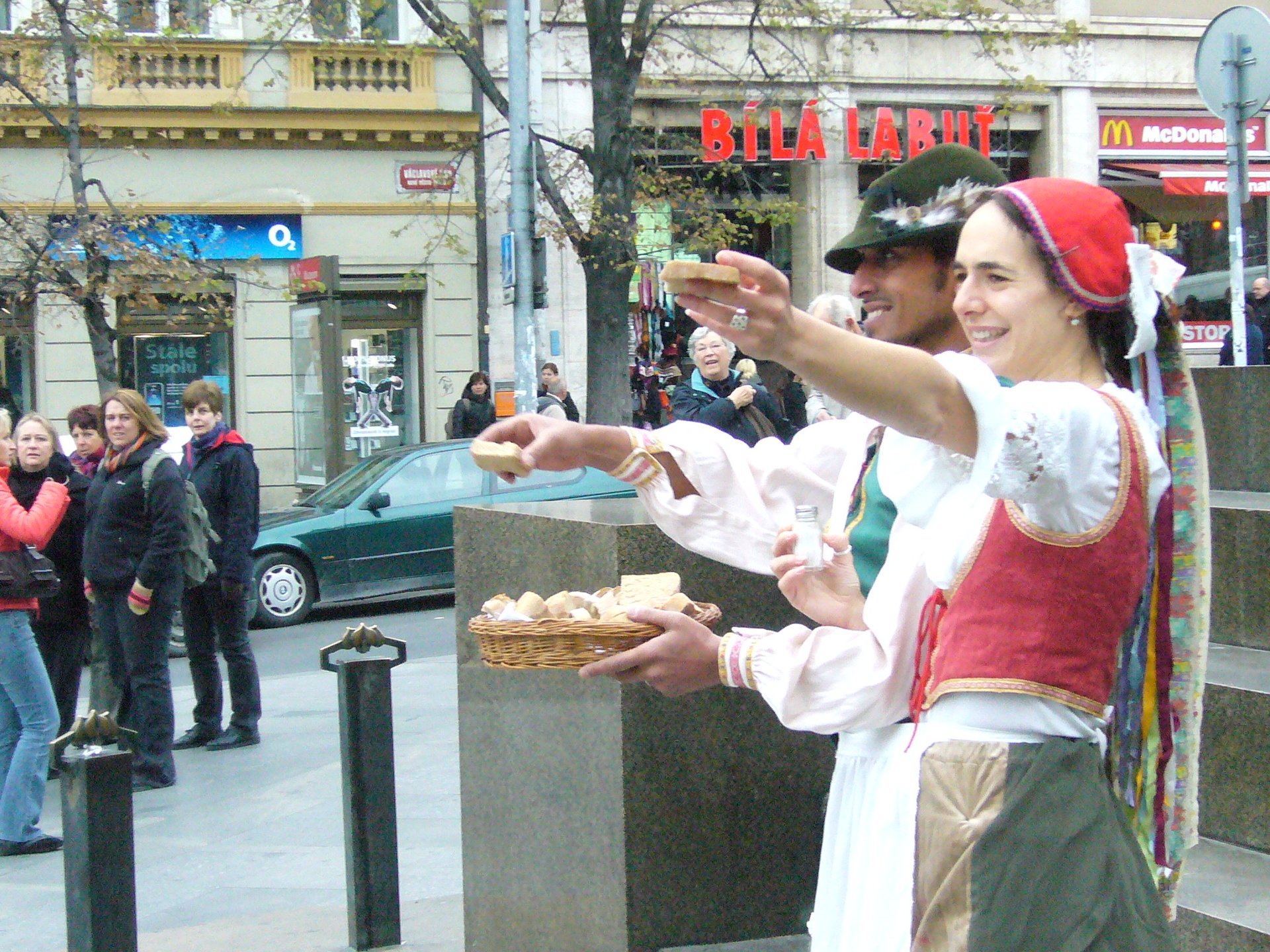
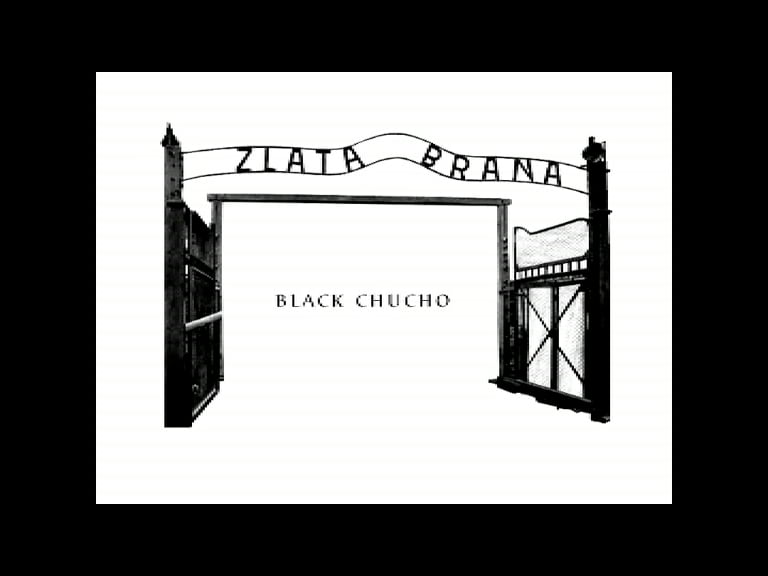
The following films deal with the theme of national identity in its problematic, even dangerous form. In Welcome CZ (2007), Darina Alster and Roma activist David Tišer provoke local residents by welcoming them as guests in the Czech Republic with bread and salt while dressed in the national traditional folk costume. Some of the “guests” are annoyed but still take the offered bread, while others deem the pair ethnically foreign on the basis of their non-white skin colour and thus not members of the Czech nation. In the case of two such “guests”, this welcoming gesture with bread and salt even elicits racist insults. Radovan Čerevka’s 2007 video Black Chucho also addresses racist stereotypes and their carrying-over to the present. A sequence of images of Nazi symbols in the public space, such as swastikas graffitied on walls and buildings, is accompanied by the 1970s children’s song “Černoch Čučo”. The combination of a seemingly innocuous, banal-sounding song from childhood and Nazi symbolism that often goes unnoticed in today’s everyday life points to a phenomenon that cultural studies labels banal nationalism:[9] a type of everyday nationalism – and sometimes also racism, as in the case of Black Chucho – which is not always visible at first glance and which appears harmless, insignificant, and far from dangerous. The fact that this is a faulty conclusion is pointed out by Tamara Moyzes in her video František Palacký, father of our nation, we have disappointed Stanislav Tomáš! (2021), in which activists from the group Romane Kale Panthera (the Romani Black Panthers) demonstrate in front of a monument to František Palacký to commemorate the death of Stanislav Tomáš, who died in the town of Teplice as a result of police violence that was most likely racially motivated. In the context of issues of national identity and the building of sites of memory, the activists’ choice of location for this cultural act of commemoration proves interesting: in front of a monument to the Czech national revivalist and co-founder of the publishing house Matice česká, František Palacký – “father of the nation”. Palacký defined the Czech nation on the basis of cultural criteria: language, history, culture. His national historiography, History of the Czech Nation in Bohemia and Moravia, decisively shaped and promoted Czech nationalism, which is still active today. The commemorative act here functions as both an accusation and a demand: not only that Roma lives matter, but that Roma are a part of the Czech nation.
Darina Alster: Welcome CZ (2007)
Radovan Čerevka: Black Chucho (2007)
Tamara Moyzes, Romane Kale Panthera: Otče národa, zklamali jsme Stanislava Tomáše! (2021)
Migration and gaps in memory
The final block takes a look at the theme of national identity from a historical perspective and is dedicated to the history of German-Czech migration in the eighteenth century and the period immediately following the Second World War. The videos reflect on issues related to the culture of remembrance and national, ethnic, and state affiliation in the context of forced migration, multiethnicity, and nationalism. Barbora Kropáčková’s work Blind Spot (2020) deals with the gaps in memory regarding the expulsion of Germans from the Sudetenland, which is a topic connected to her own family history. The film exposes the abandoned, in many places devastated landscape where Germans once lived. Along with Brno, Ústí nad Labem is the region most associated with the expulsion of Germans, and this history still receives little attention in Czech memory and politics. Kropáčková captures these empty sites of memory in depressing images: glass, shards, graves, and factory ruins as tangible traces of the Czech-German past, the socialism built on these remains, empty buildings with signs indicating unemployment, poverty, and emigration following the withdrawal of capitalist structures, a blighted environment, and children – most likely Roma – spending their time in dilapidated buildings and junk-strewn courtyards.
Blind Spot is followed by another film by Rafani: Balt(The Baltic) from 2003. The video tells the story of the expulsion of the Sudeten Germans through cutouts that resemble illustrations from a children’s book. Below the pictures are slogans such as “Be tough on Germans”, but they are only seen for a very brief moment before being submerged into the Baltic Sea. It is a story that does not want to be remembered, sinks into oblivion, and should not become a part of the national memory.
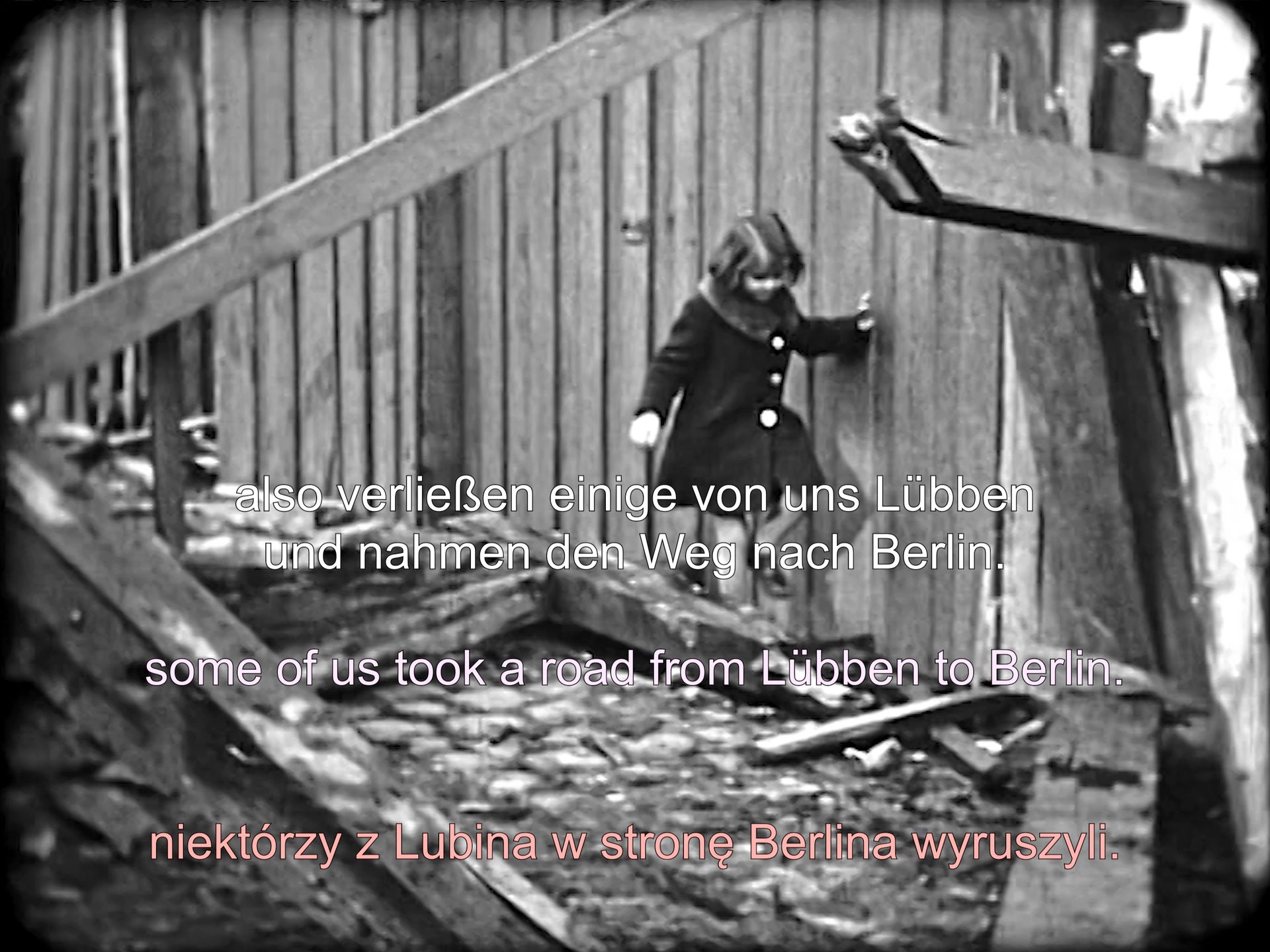
Tomáš Kajánek’s 2021 film Dedications is about an entirely different story of migration – namely the emigration of Czech protestants to Berlin in the eighteenth century. Dedications compellingly shows the role that language plays in the construction of history, memory, and identity. The documentary is narrated in Czech, based on biographical notes from the eighteenth century, while the subtitles have a different source: legal files and a literary text translated into German, English, and Polish using Google Translate. As a result, the memories of flight and migration, the experience of expulsion, the feelings of hunger and unwelcomeness are conveyed in full and in a language borrowed from the eighteenth-century literary source only to their own national – meaning Czech – community, while the memories conveyed in the mostly English and German translation resemble a rather terse and fragmentary account. Depending on the language, the view of the migration experience changes, and thus for non-Czech-speaking viewers, the contemporary film-literary documentary remains incomplete and often inaccurate.
Research in the film archive has brought to light videos that critically examine the categories of national identity and gaps in the national memory. Through the artistic deconstruction of national symbols, sites of memory, and stereotypes, it is possible to expose the nationalisms and racisms that spring from these gaps, and these films thus contribute to filling them in.
Rafani: Balt (2003)
Barbora Kropáčková: Slepá skvrna (2020)
Tomáš Kajánek: Dedications (2021)
Literature and Sources
[1] Fenske, Michaela (2010): Alltag als Politik – Politik im Alltag. Dimensionen des Politischen in Vergangenheit und Gegenwart. Berlin et al.; Hall, Stuart (1981): Notes on Deconstructing “The Popular”. In: Raphael Samuel (ed.): People’s History and Socialist Theory. London, p. 227–249.
[2] Heinrich, Hanna (2020): Ästhetik der Autonomie: Philosophie der Performance-Kunst. Bielefeld.
[3] Nora, Pierre (1990): Zwischen Geschichte und Gedächtnis. Berlin, p. 26.
[4] Assmann, Jan (1992): Das Kulturelle Gedächtnis. Schrift, Erinnerung und politische Identität in frühen Hochkulturen. Munich; Olick, Jeffrey K. (1999): Collective Memory: The Two Cultures. In: Sociological Theory 17, p. 333–348.
[5] Blaive, Muriel (2009): The 1989 Revolution as a Non-Lieu de Mémoire in the Czech Republic. In: Gjuričová, Adéla (Hg.): Elektronický sborník z konference “1989–2009”: Společnost. Dějiny. Politika. Prague. https://www.usd.cas.cz/wp-content/uploads/Sbornik_konference-1989_2009.pdf [28.11.2022].
[6] Spiritova, Marketa (2021): Curating Socialism? Curating Democracy! Die (Re-)Inszenierung der Zivilgesellschaft nach 1989 in Tschechien. In: Phillipp Schorch, Daniel Habit (Hg.): Curating (Post)Socialist Environments. Bielefeld, p. 309–330; Spiritova, Marketa (2020): Jubiläen zwischen Erinnerung, Karneval und Protest: Der Prager Samtene Karneval als urbanes Phänomen des Liminoiden. In: Bayerisches Jahrbuch für Volkskunde, p. 17‒35.
[7] Holý, Ladislav (2001): Malý český člověk a skvělý český národ. Národní identita a postkomunistická transformace společnosti. Prague.
[8] Hroch, Miroslav (2008): Die historischen Bedingungen des „Nationalismus“ in den mittel- und osteuropäischen Ländern. In: Jahn, Egbert (Hg.): Nationalismus im spät- und postkommunistischen Europa. Bd. 1: Der gescheiterte Nationalismus der multi- und teilnationalen Staaten. Baden-Baden, p. 99–112, here: 87.
[9] Billig, Michael (1995): Banal Nationalism. London.