
01:19:33
The blurred border between labor and leisure time has made the topic of work topical again. There is permanent work, (self)precarization, burnout… Jana Kapelová views labor through the prism of personal fulfillment. She is interested in the strategies of the individual but (largely) non-reflected defiance towards work-related frustration, towards routine and upsetting aspects of labor and the resulting alienation. On the other hand, she encourages reflection which could lead to an undermining of the established way of thinking or overcoming passive resignation. Naturally, her interest has been extended by the topic of education.
At her exhibition entitled Aquarium Paradox, Jana Kapelová works with the traditional concept of the educational system which she correlates with the perception of labor, learning the work ethic and adapting to the hierarchical structure of society. Her deliberations on education raise questions regarding the extent and way in which the negative elements of the system of upbringing and education are imprinted on our personalities and the impact they have on our attitudes and decision-making in adulthood. Why do we do work that we don’t enjoy and remain in jobs that are frustrating?
The term school comes from the Greek word σχολή (skholé) which means leisure time, relaxation, free time spent by reading or discussion. The term discipline has its origin in the Latin words disciplīna, with the original meaning learning, educating, upbringing and discipulus – pupil, apprentice. However, the basis and continuously applied principles of our traditional system of teaching were laid by the educational reform of Maria Theresa, and her model of compulsory school attendance was inspired by Prussian military schooling. This parallel with another phenomenon of the 18thcentury, the industrial revolution, which, on the contrary, introduced the system of wage labor, is crucial.
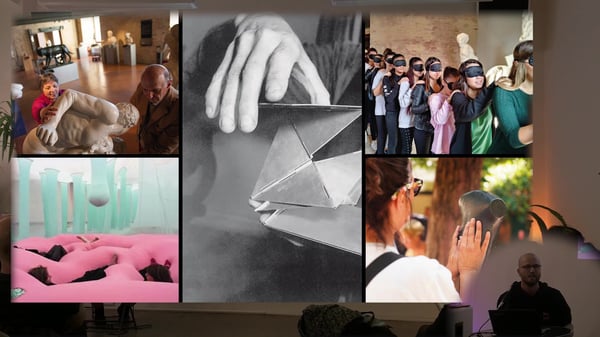
Jana Kapelová’s project for Etc. Gallery employs the format of a performative lecture in which she quotes and paraphrases articles and books on upbringing, psychology, pedagogy and cognitive sciences. But memes are also an important element here – not only internet communication memes which in their viral fashion help to disseminate generally shared experiences and emotions, but especially those memes understood in a wider sense as cultural habits or ways of thinking loosely replicated from person to person. In this sense, Kapelová’s deliberations on education and labor are also based on the concept of the technology of ideas of psychologist Barry Schwartz. Thus, if the system of thinking is the essence of the problem, we must try to change it; this is impossible without striving to know oneself, which will lead to the emancipating perception of personal freedom and without transforming our 244 year old educational system.
Eliška Mazalanová
| artists | Jana Kapelová |
| curators | Eliška Mazalanová |
| place | etc. galerie |
| tags | |
| cast | Jana Kapelová |
| camera | Giulio Zannol |
| sound | Giulio Zannol |
| editing | Giulio Zannol |
| interview | Giulio Zannol |
| translation | Deana Kolenčíková |
| category | Reports |
| published | 7. 12. 2018 |
| language | Česky / English |
| embed |  |


