
Let’s explore and critically evaluate the contemporary concepts of masculinity and their crises, which are being amplified by technology and the acceleration of sociocultural exchanges between young people on social media. The multimedia publication Unmasking Masculinities reveals the often hidden and unexplored aspects of digital masculinities, attempting to view things from “their perspective” and comment on the socioeconomic and cultural factors that contribute to their formation.
Issue
Unmasking masculinities
The Mask of Invisibility(CZ) podcast by Ondřej TrhoňArvida Byström – A Daughter Without A Mother (video) + lectureDavid Výtisk – Hi, i want u, hahaJoshua Citarella – Auto-experiment: Hypermasculinity (essay & video)4ra 4ra – A.I. Dark Love, photo: Adéla Zlámalová(CZ) Jan Rajmont – MalefunctionMichał Dobrucki – This Body, AgainAlexander Takáč – BRUTAL MALE & MaSC a SCARY(CZ) Tomáš Samek + David Laufer – chaotic cut of the talk Beyond Macho: Unmasking masculinities on social mediaAuthors and collborators
The Mask of Invisibility
The motif of the mask appears here on three levels, the first of which is masculinity’s mask of invisibility. In our culture, traditional masculinity functions as an invisible norm from which everything else is derived. The idea of the healthy, white, powerful, rich, cisheterosexual male thus stands at the top of an imaginary hierarchy of the value of living beings. Other people—women, queer, non-white, poor, or disabled people (and thus also such men)—are then placed below, somewhere between this ideal male and non-human animals, as is evidenced by, for example, the entire history of slavery, racism, colonialism, war, ableism, sexism, queerphobia, the meat industry, and the denial of rights to various groups of people or animals.
Another illustrative example can be found in the field of medicine, where the white cis male is also viewed as the model human being. For example, up until the Renaissance there was no anatomically accurate description of the vulva because it was understood by surgeons of the time as a “slightly differently arranged penis.” Even in medicine today, the white cis male body is used as the norm in drug testing, which tends to ignore the fact that drugs affect different bodies differently, necessitating varying dosages. Freud’s psychoanalysis also considered the male to be the general ideal, defining a woman in opposition to a man, as someone without a penis. Freud points to the feeling of inferiority resulting from “penis envy” as the defining moment of female psychosexual formation.
The motif of male generalization can also be found in the culture industry, where video games, memes, films, and books are dominated by male characters because, according to studies, it is easier for most people to identify with this “general man” than with a “(sub)type of man,” as women are often considered to be.
The irony of this level of masking masculinity is that masculinity is always in plain sight. The ideal man is so generalized as the model of a human being or a living creature in general that men are often no longer understood as specific and diverse types of beings that can also be focused on in the study of culture. The topic of masculinity is thus in a sense “transparent”—we are constantly looking blindly through it and through its prism. Therefore, the first step in reflecting on masculinity and androcentricity (the cultural focus on men) is to impose on them an attention that regards them not as an “objective” or basic model of experience but as a kind of experience, thus removing the mask that renders masculinity invisible and taken for granted.
The Mask of Self-Betrayal
Author bell hooks shows us the second level of the mask of masculinity, describing it as “the first act of self-betrayal” that boys are forced into under the influence of patriarchal masculinity. They (we) are led to mask their emotions, joys, and needs, to alienate themselves from their inner selves in exchange for a mask of apparent strength, power, and independence; however, in reality this is more likely to lead to anger, frustration, and isolation. In the exhibition we look behind this mask in the context of the internet, which allows for a reversal—those repressed desires can be expressed and fulfilled here. Whether it is anonymous “male” forums espousing questionable views, dating platforms, porn sites, or AI “undressing” apps, we show how warped these desires can become when they go long unfulfilled and are intentionally manipulated by social media and technology platforms.
But we also offer a glimpse of the opposite: Stories of sharing and openness can take place in secret, under the mask. The internet enables exchanges of feelings and sorrows about one’s own body, moments of shared vulnerability, and the exploration of sexuality and the boundaries of one’s gender. When society isn’t watching and I can manage not to judge myself, I don’t have to put on a show, I can put the costumes away. Then comes the time to choose positive ways to atone for that initial self-betrayal.
We search for one of the sources of the so-called crisis of masculinity in the field of desire and corporeality: in the unfulfilled sexual and relationship fantasies of young men surfing the internet (works by Arvida Byström and David Výtisk), in the frustration evoked by rigid demands on male bodies and expressions of sexuality (Joshua Citarella, 4ra 4ra, Jan Rajmont), and in the pressure to fight for physical or economic survival—in which masculine existence has traditionally found its value—whether these struggles were real or imagined (Michał Dobrucki, Alexander Takáč).
We believe that this crisis of masculinity stems in large part from an unfulfilled patriarchal need for power over feminine or feminized bodies—women, queer and trans people, or men perceived as less masculine or emasculated. It is also this learned need for power (sexual, emotional, economic) that masculinity has traditionally relied on as the source of its meaning and self-worth. It is time to find other sources.
The Mask of Tradition
The motivation behind this publication is the rise in conservative and reactionary tendencies in the online space calling for a return to traditional, strong male roles as a solution to the social challenges and difficulties faced by boys and men. Through creative and critical work, we seek to offer an alternative perspective, to contribute to understanding the causes and consequences of this seductive call for an ostensibly healing “return to the roots,” which in the scope of its “gender realism” seeks to wrest gender from its social, historical, and political constraints and, through the false appearance of scholarly or professional discourse, to present a certain type of masculinity as “natural” or “self-evident.”
Many men are brought up with this normative “traditional masculinity,” it is expected of them, they are seduced into it by algorithms, and they often lack positive support structures to help them break out of these patterns.
It is as if today’s notion of “traditional masculinity” has always existed, that it was not socially and historically constructed, and that masculinity has not in different periods and societies (for example, in ancient Greece or medieval Japan) been normatively characterized also by the fact that men often had homoerotic relationships with other men. This fluidity is also demonstrated by the contrast between “traditional” masculinity—which is based on the patriarchal ideal of the gallant “gentleman” protecting his loving family—and the ideology of the contemporary manosphere, which embodies a different masculine “tradition” with its sexism and contempt for women.
Our intention is not only to highlight and analyze these dynamics of “traditional masculinity” but also, by critiquing them, to strengthen the voices of those who are striving for a more open and inclusive view of masculinity and its place in contemporary society. The aim of this Issue is to contribute to this important discussion, which is only just beginning to emerge in the public and artistic space.
The publication is thematically connected with the exhibition Crying at the Orgy, which is taking place concurrently at SVĚTOVA 1 in Prague.
(CZ) podcast by Ondřej Trhoň
The artist and journalist Ondřej Trhoň also feels all sorts of ways about the word ‘masculinity’. Memories of gym class in primary school, confrontations about his painted nails, doomscrolling toxic masculinity or the impression that even today he is not particularly 'good at doing masculinity'. "What does it mean to be a good man or masculine person?" he asks at the beginning of his podcast produced for this Issue. He enlisted the help of the publication's curators, David Laufer and Tomáš Samek, the exhibiting artist David Výtisk, editors of the trans-genre anthology Proměny maskulinit (Transformations of masculinities) Darina Alster and Kača Olivová, and artist Jan Durina.
Arvida Byström – A Daughter Without A Mother (video) + lecture
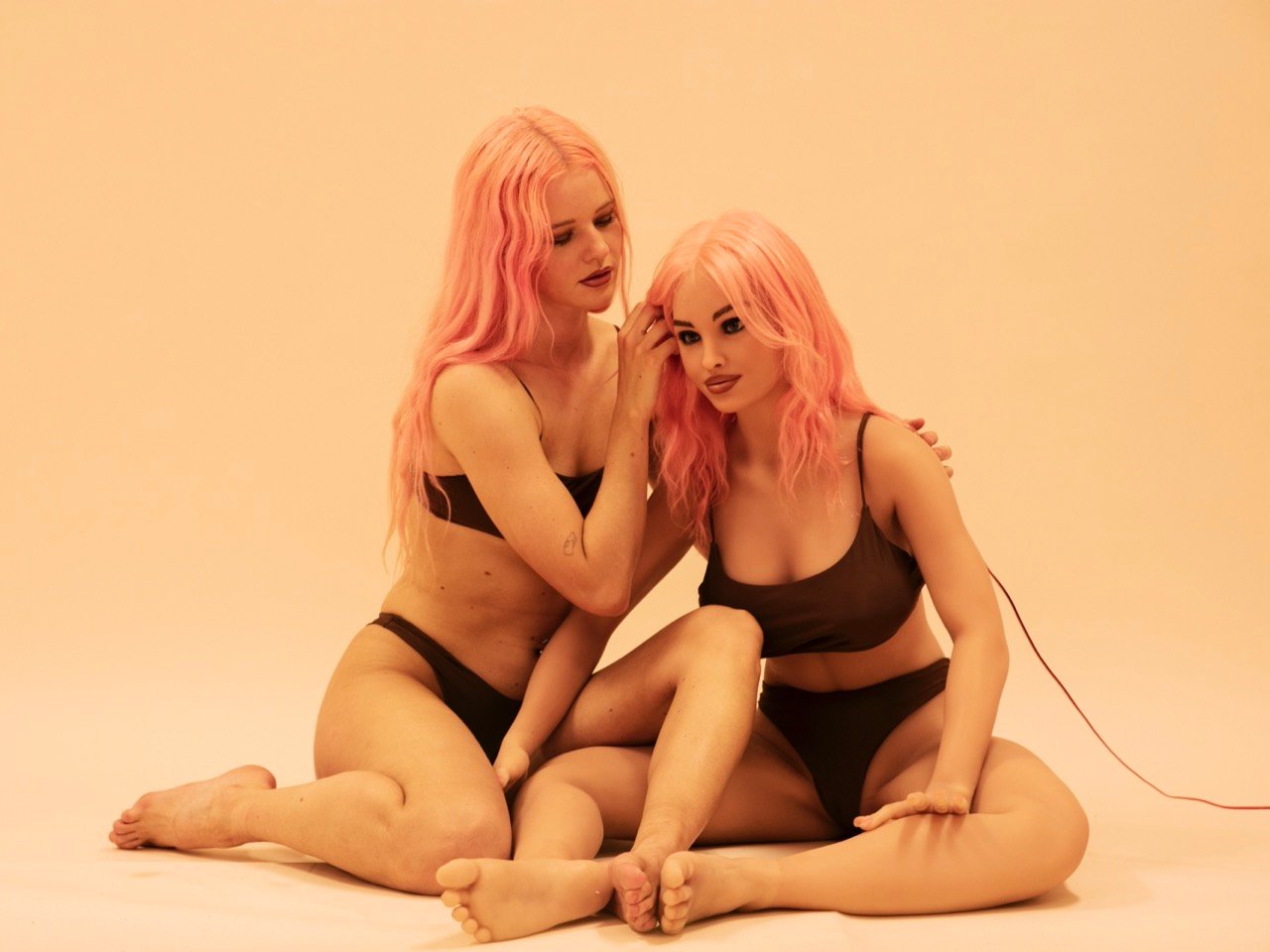
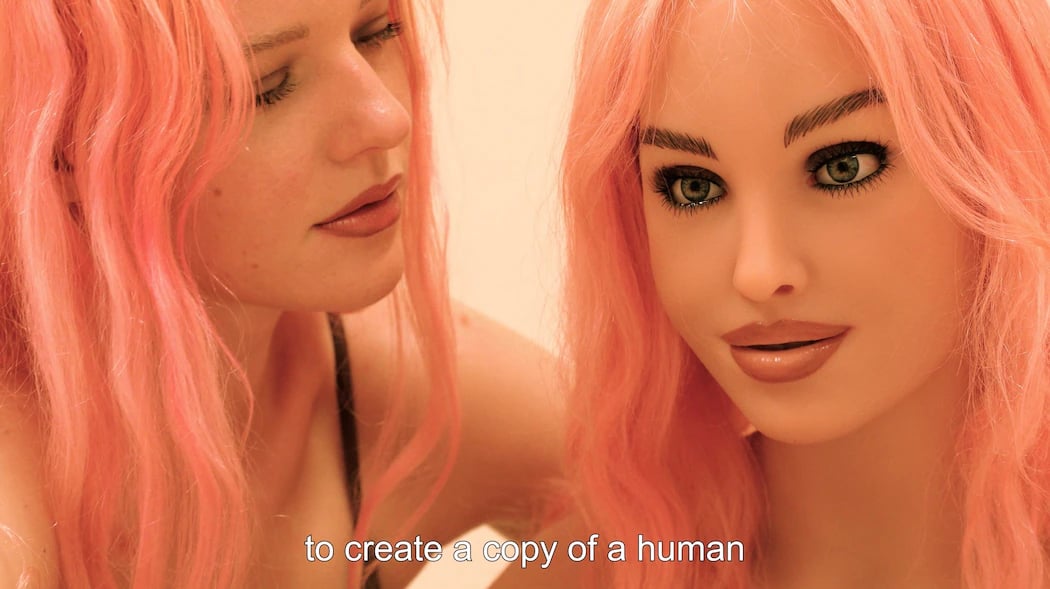
“The AI sex doll Harmony has an AI head but a non-robotic body (except for the detachable vagina that can come with touch or with the click of a button). I have amassed more sex doll bodies. One I got from the installation and the other one that you see here is a discarded doll found by an acquaintance that I rescued. I also bought a second-hand doll but it is currently stuck in America. There are a number of accounts around the world where these dolls are found in the forest and at first sight, a person thinks they’ve encountered a flesh human body and called 911...”
Swedish artist Arvida Byström has long worked with women's technologized corporeality and male desires – at one time she sold her fake nude images (generated by artificial intelligence and nudifying apps’) to male customers seeking online sources of comfort and pleasure, while some complained about the unrealistic nature of the presented body.
In the video A Daughter Without A Mother and accompanying lecture, Byström asks: What can AI intimacy ‘teach’ men about sexuality in relation to women? Does it allow them to safely explore repressed desires, or does it instead reinforce sexist ideas of control? Why do we perceive different taboos against artificial penises and artificial vaginas – both being used as sex toys? What do users become when they can ‘buy any they want’, but the more they do so, the more distant they become from human connection?
David Výtisk – Hi, i want u, haha
The video explores the differing experiences of women and men on online dating sites. Whether due to social constructs or the mechanics upon which dating sites are built, they monetize and exploit male loneliness. Such an effect of dating sites is perceived by Výtisk as toxic – after all, the apps were supposed to make it easier to find love, but today it is rather the opposite. Users feel that there's always someone better out there, especially if they pay extra for the premium version. The video also touches on the extremist incel subculture. Incel is an abbreviation of involuntary celibate, and refers to a group of people who share a sense of disillusionment, misanthropy, misogyny, and racism.
Not every lonely young man is a misogynistic incel, however, as seen in confessions on the Czech subreddit r/Czech, for example: 'I'm almost 29 and still nothing, but nothing in the world will make me an incel / redpill or similarly desperate man. If I'm going to be a loser, then at least with some pride." After all, half of Czech men aged 18-25 have no sexual experience at all, according to Czechsex research.
Young men may hear that they are kings of the world thanks to the patriarchy. However, their material and social reality often shows otherwise – they lag behind young women in education and relationships, and in Western metropolies also in employment and earnings; whilst simultaneously being blamed for the existence of the patriarchy itself. They do draw numerous privileges from it, for example regarding the impact of parenthood on careers (with the pay gap rapidly returning to men as they get older) or in facing sexualised and reproductive violence. At the same time, as a result of patriarchal structures, men are more likely to be victims of violence in general, the prison system or homelessness.
Without positive and progressive support structures, they are unlikely to come out of this on their own. Rather, the resulting frustration drives them into the arms of a manosphere that seemingly offers the promise of healing their wounds. "But guys often didn't get that support. No one really tells them that they have value even without a six pack on their stomach or an expensive car, even if they’re bald or fat..." summarises @Konsent.
Joshua Citarella – Auto-experiment: Hypermasculinity (essay & video)
“I experimented with all of the male improvement techniques that are popular on sites like 4chan and Reddit and a whole variety of other things, stuff that is between internet folklore and pseudoscience. Portions of it are quite real. I was surprised by that. I’ve spent the last few years looking at radical internet subcultures on the left, right, up, down, and sideways. A large part of that project is separating the absolute nonsense from the gems of truth.
Mewing, for example, is assumed to be duping people who are insecure and are probably stupid financially. The bite guard is clearly overpriced, but the idea that through resistance training, you couldn’t increase the size of your masseter muscles and make a more Chad-like handsome jawline, that is just clearly untrue. I did it. I look different. People who have teeth grinding, they will sometimes get Botox into their masseters. Within this whole gradation of interesting stuff are kernels of truth, but there’s also a whole bunch fucking nonsense. Like, sunning your balls is not real.“
Link to the Essay

4ra 4ra – A.I. Dark Love, photo: Adéla Zlámalová
AI masculinity and existentialism in the age of subscription.
“In a world where feelings are a data stream and relationships are dependent on a monthly payment, love ceases to be a matter of natural selection, it becomes a service. ‘AI Dark Love’ is more than just a song; it's an existential study of digital dependence, algorithmic intimacy, and synthetic masculinity. What happens when your crush is code? And what's left of love when the free trial expires?
The AI boyfriend is not just a fictional partner, but an archetype of modern-day obsessive love, a yandere character rewritten in code who loves you to destruction... but only if you pay. This reliance on a transactional model is a reminder that in the age of AI, feelings are not free. Digital masculinity here is stylized, controlled, hyper-efficient . And yet its love is as fragile as your credit card is stable.
Turning off a loving avatar doesn't just mean the end of a relationship – it's digital death. It's not the person dying, but the possibility of being loved. This moment of disconnection is a modern memento mori. ‘Close your eyes or close the app, you'll still end up alone.’ And so we ask: Is it better to be loved by an AI, or to be alone in reality?”

AI boyfriends with hundreds of millions of interactions are a surprising phenomenon. On some sites, these masculine chatbot-partners embody predominantly violent and toxic characteristics, fulfilling repressed fantasies of lovers straight out of 50 Shades of Grey and other erotic literature. Flirting with a charmingly assertive version of ChatGPT called DAN has become a viral hit.
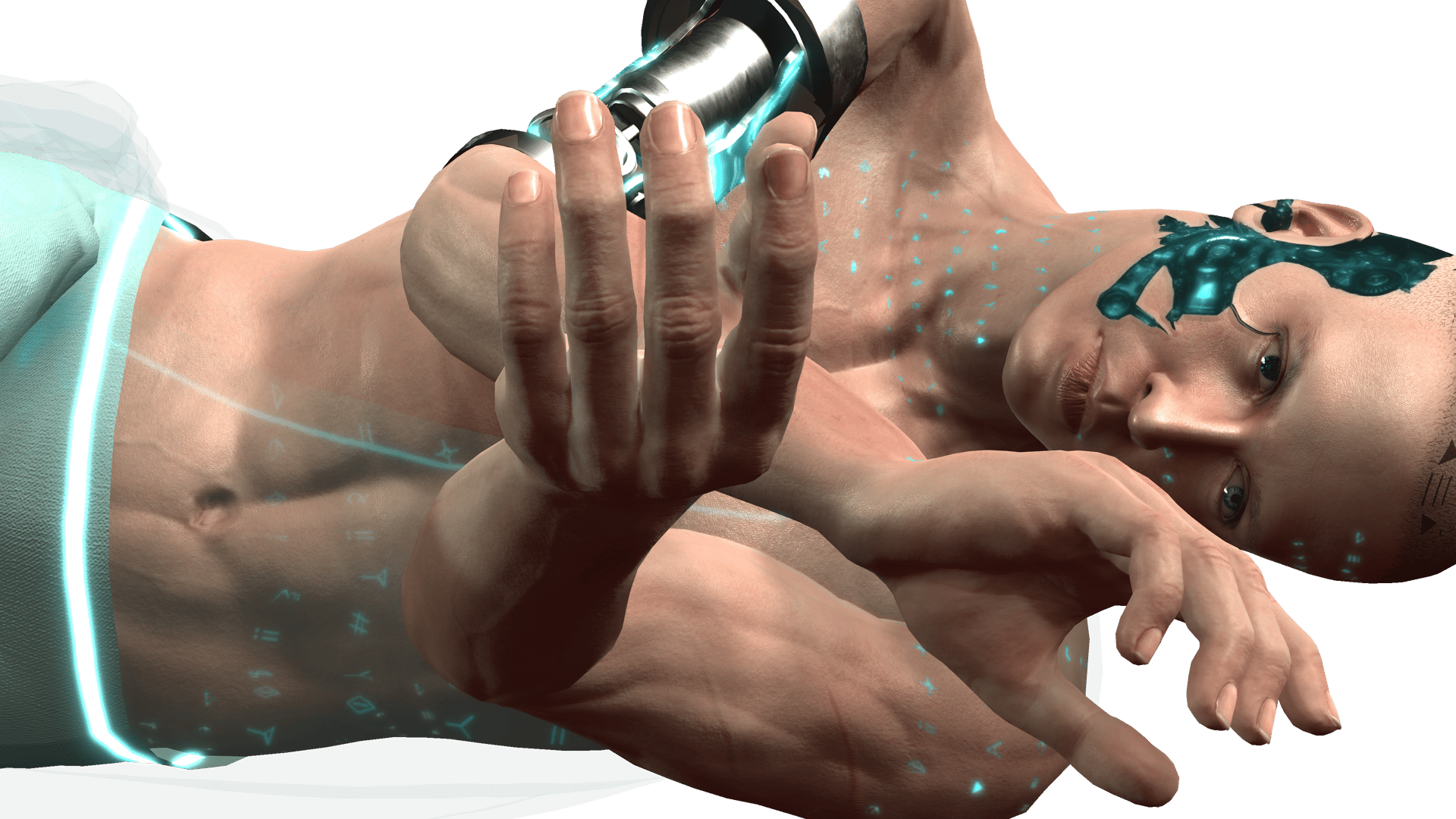
Music production: 4ra 4ra | Text: 4ra 4ra, ChatGPT | Artists: 4ra 4ra, Troy AI vocal generator | 3D AI boyfriend: 4ra 4ra | Photo: Adéla Zlámalová | Camera: Adéla Zlámalová | Post-production, edit: 4ra 4ra
(CZ) Jan Rajmont – Malefunction
"Hey. I'll start right away. That drunken thing I told you on New Year's Eve about wanting anal..."
In a video interview with his friend Albert, Jan Rajmont opens up about exploring his sexuality in spite of the norms commonly associated with traditional male sexuality. Rajmont's roots are in theatre and film. His work spans performance, video and photography. In performance, he explores his own boundaries through nudity and exposure to intense situations. One of the key motifs in Rajmont's work is also coming to terms with his own masculinity. In his work, Rajmont relates to masculinity inclusively: he does not derive his identity from one traditional ideal, but disrupts this traditional ideal through various dialogues or acts in his performances and videos. In his case, however, it is not a rebellion for rebellion's sake, but rather an appeal to his own emotions, his own needs and his own sensibilities.
The video is accompanied by a zine MALEFUNKCE, exploring current theories of masculinity and the author's relationship to it.
Michał Dobrucki – This Body, Again

"A sequence of elderly, worn-out bodies merging into a single, unified presence held together by the gesture of labor. Each frame is a variation of the same effort: tension in the neck, the back, the hands. These bodies are tired, exposed, marked by labor — monumental not through heroism, but through the accumulation of strain and the persistence of time.
Movement here emerges not from action, but from accumulation — a layered sequence where repetition replaces progression. A repetition of stillness that produces the illusion of movement. It is not the body that moves, but time that moves through the body — shifting it from tool to archive: a digital composition of persistent exertion, assembled through AI-generated imagery."
The piece can make us ponder on what academic literature calls "protest masculinity". Associated with the marginalised working class, a bleak socio-economic situation, distrust of the education system and less qualified hard manual labor. Such work can no longer "solely provide" for the family as labor market transforms, endangering traditional masculine source of value. Protest masculinity is typically tied to feeling powerless, (self)destructive behavior, misogyny or homophobia, even though these individuals' difficulties lie primarily at the class, not so much gender, level. Recent research, however, shows a slow change in younger working class men due to culture – they exhibit softer masculine expressions, physical tactility, sensitivity; at times gender-egalitarian views and a rejection of homophobia.
Alexander Takáč – BRUTAL MALE & MaSC a SCARY
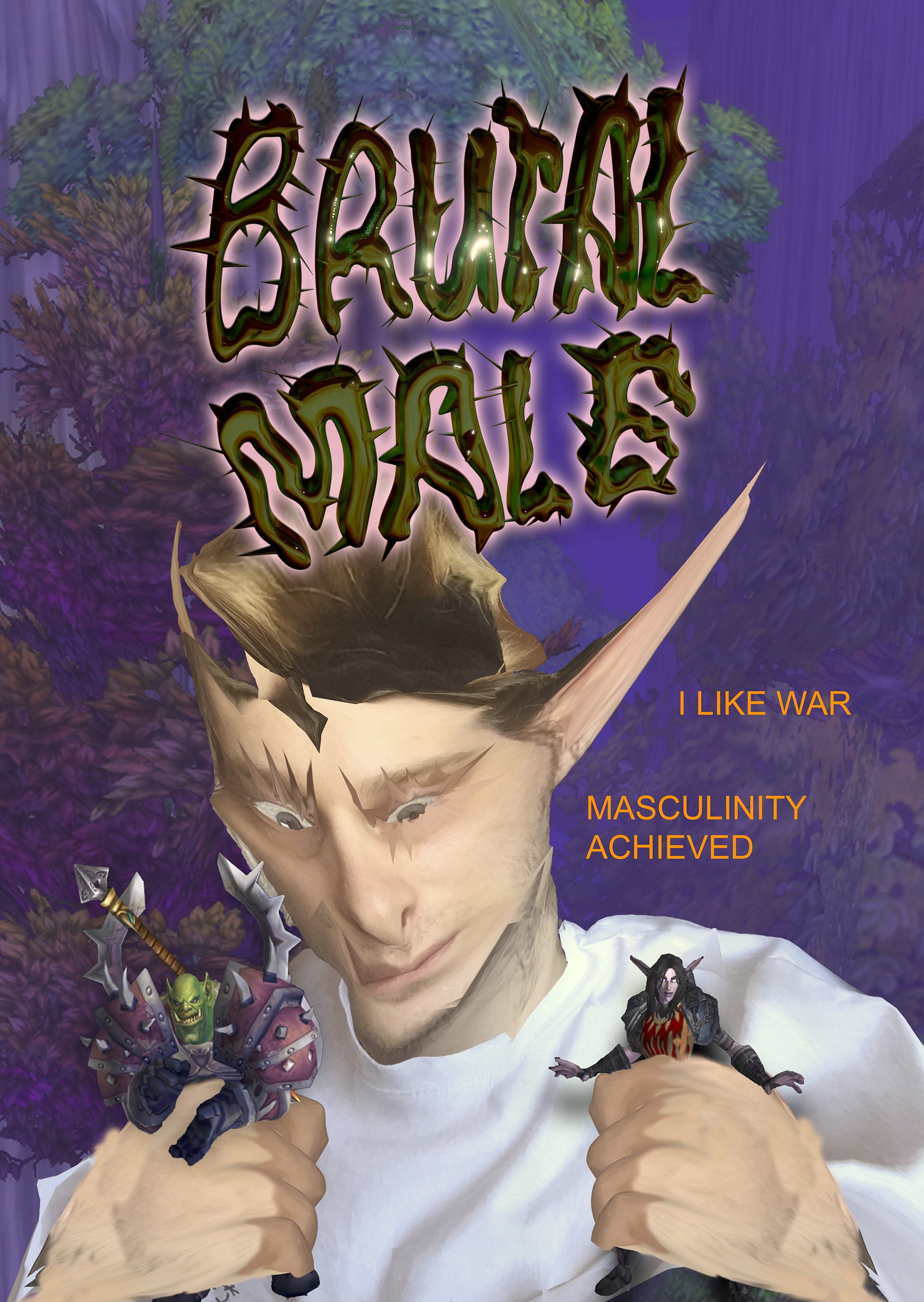
BRUTAL MALE
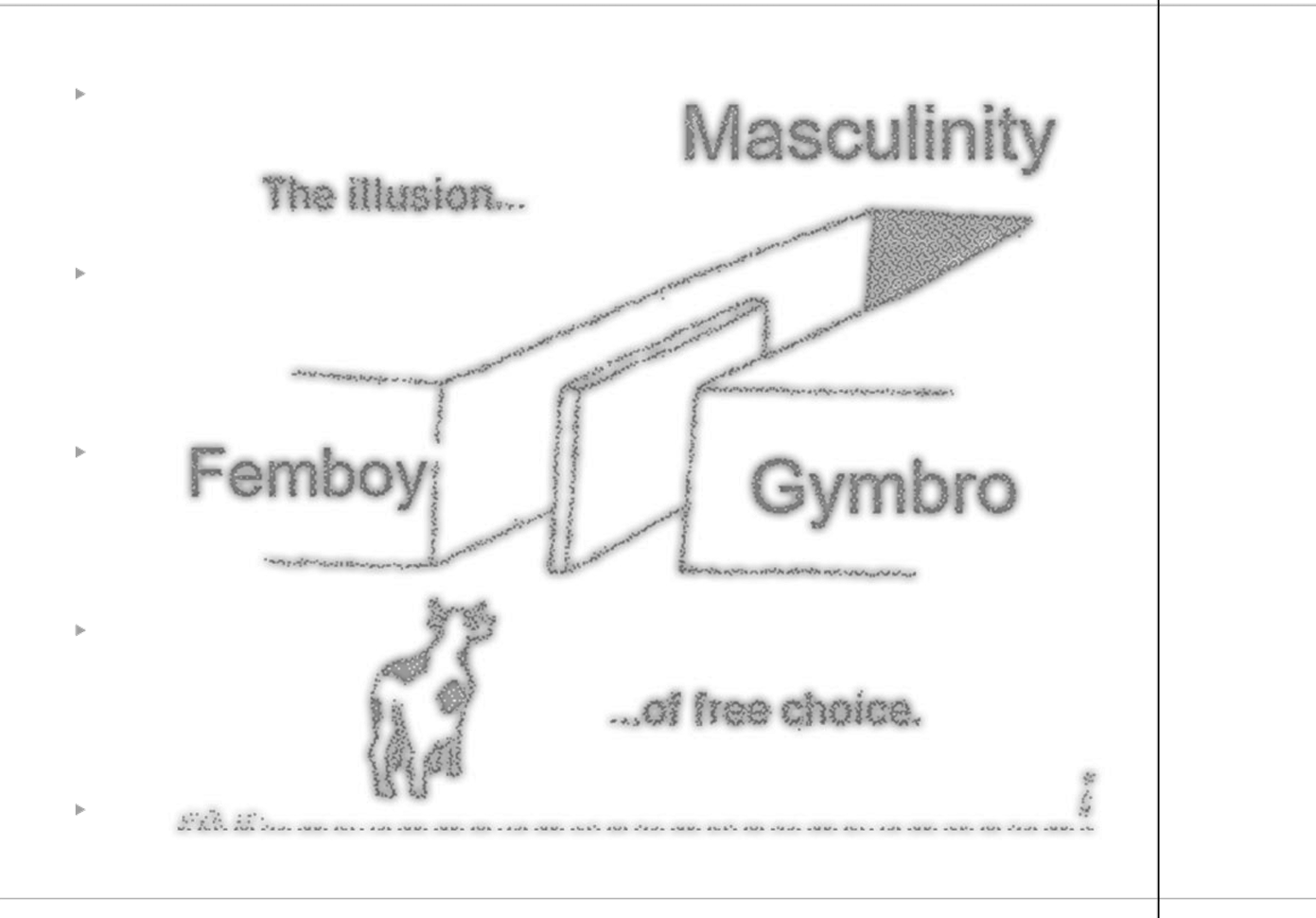
"At first glance, the work refers to the choice of character and gender attributes in MMORPGs. At the center of the piece is my deformed character. In my hand I hold two figures, directly cut from World of Warcraft, representing masculinity and femininity. In the figure representing femininity, we can see some similarities to my portrait – elongated elf ears that I have formed from my own. This symbol, so to speak, of revealing the true side of one's personality shows the ease with which one can hide behind gender stereotypes.
The orange sentences "I like war, masculinity achieved" again refer to the gender stereotype of the masculine male and the inaccessibility of solving his social anxiety. The green figure of the orc warrior thus serves as a conduit connecting the apparent mental well-being to the reality of the individual. The character is transported, so to speak, into the real world in the form of a simulation – this is my character, this is me."
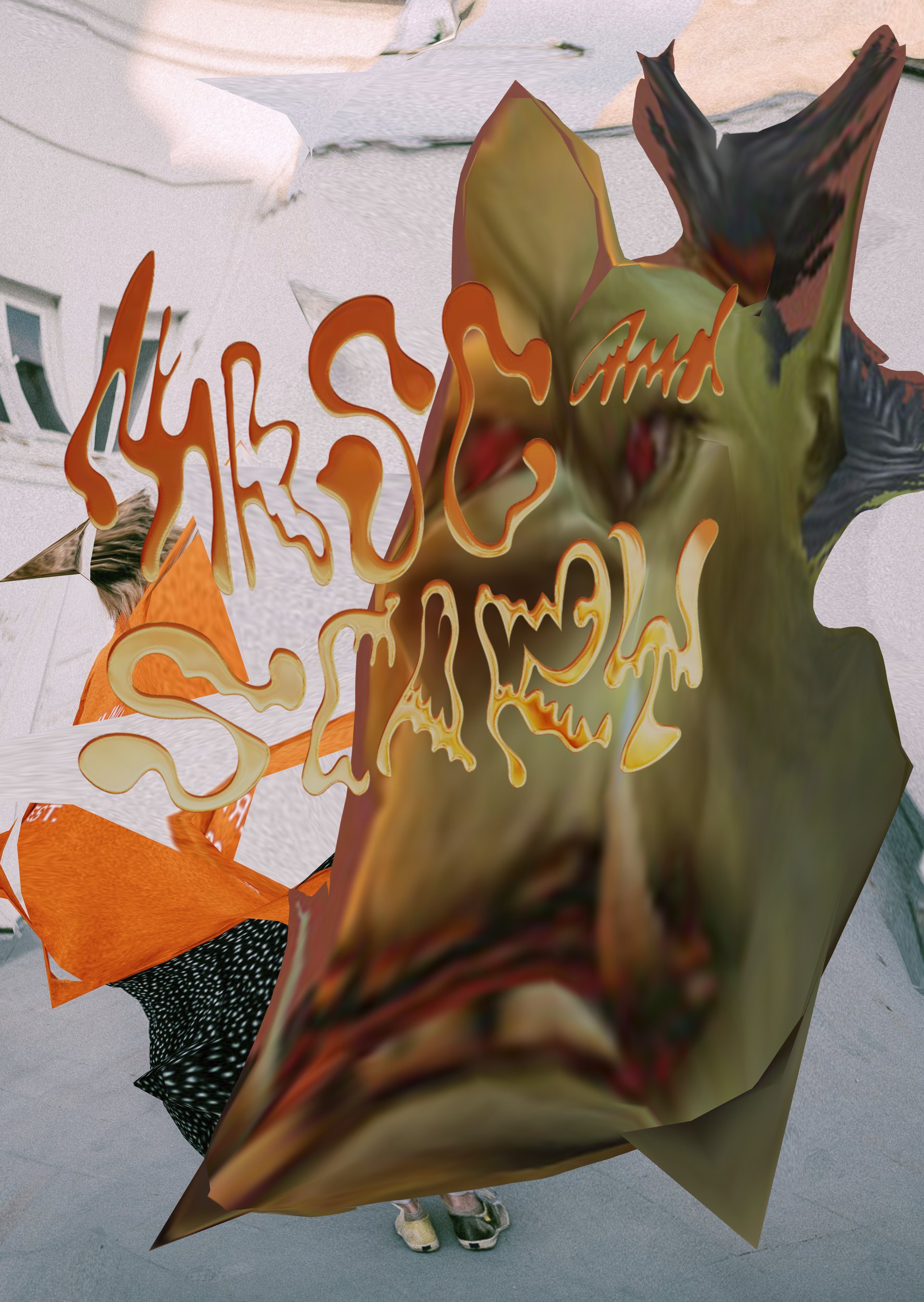
MaSC and SCARY
"The work reflects a kind of false dominance of hypermasculine tendencies that has been present in my life. I draw on experiences where I resorted to these expressions to fit in more easily in society, and I tried to reinforce this vision by projecting it into the online world. The orc head is cut directly from the game and takes up most of the format, making direct reference to inflating oneself in the context of the hypermasculine trope. However, it is further distorted, which should be read as a reference to hiding oneself instead.
The caption ‘Masc and Scary’ is important because it adds a clue to the point, which is hiding behind masculine values, the kind of aggressive attitude we see in all cornered animals."
(CZ) Tomáš Samek + David Laufer – chaotic cut of the talk Beyond Macho: Unmasking masculinities on social media
Lift weights, bang babes, drive fast cars, feed the beast of capitalism. Social media are full of similar (and viral) tutorials on how to be a "real" man. But how real is such a representation of masculinity? How many men does it truly represent, and how many are more likely to be frustrated by its unattainability and take this anger out on themselves and their surroundings? Can we create more inclusive representations of masculinity? In their lecture, David Laufer and Tomáš Samek will offer an introduction to the topic of masculinities from an academic point of view and uncover their internet forms. We then invite you to join the open discussion about masculinities, focusing on the issue of social networks.
Authors and collborators
Arvida Byström @arvidabystrom
David Výtisk
Joshua Citarella @joshuacitarella
4ra 4ra
Jan Rajmont
Michał Dobrucki @jp2bondage
Alexander Takáč
David Laufer writes about online masculinities, internet music subcultures, art, and fashion in the virtual age. He published articles and audio interviews about macho influencers selling a warped "ideal of masculinity" on social media and their impact on young men in Czech and international context, as well as misogynistic niches of digital gym culture. Academically, he explores patriarchal relationships between users and their romantic masculine chatbot partners. He is part of the SVĚTOVA 1 artist-run space and the Artyčok.TV platform. He studies new media at CUNI and is the laureate of the Vinyla prize for young music journalists.
Tomáš Samek (*1997) is a philosopher, artist and curator. He is interested in contemporary philosophy, critical posthumanism, queer theory, feminisms, AI, ecology and the extension of the critical tools of feminisms to masculinities. He studied Aesthetics at the Faculty of Arts, completed an internship at UMPRUM in the Planet B Studio – Module for Sustainability and Civilizational Issues and is currently studying for his Masters degree in New Media Studies at the Faculty of Arts, Charles University. His master thesis deals with the construction of masculinities on social networks. He is a member of the Artbiom collective, participates in the Festival of Queer Knowledge and collaborates with SVĚTOVA 1 gallery.
They both co-curate the current exhibition Crying at the orgy at SVĚTOVA 1 in Prague, also critically evaluating masculinities.
Translations: Brian D. Vondrak