Reports

Visible Solutions LLC

This is the stage that a collective of three young artists, Karel Koplimets, Taaniel Raudsepp and Sigrid Viir, enter with an unexpected angle in 2009. (1) In collaboration, they form a creative industries unit called Visible Solutions LLC, soon in the commercial register as an enterprise with full legal status. As a starting point, the shareholders of this artwork-enterprise declare, “Visible Solutions LLC is an art project, an artwork-enterprise that operates in the fields of art and the economy, combining aspects of both fields, and is constantly seeking new methods to create symbolic and economic capital and methods for converting one into the other.” (2)In April 2010, Visible Solutions temporarily closes Hobusepea Gallery and opens an office there to promote their products. As evident from the attitude and how the artists represent themselves as entrepreneurs, even during their first endeavour, it is not a parody or conventionally ironic gesture aimed at the creative industries, it is rather something much more elaborate – a simulation, a mimicry, an interactive translation between contexts in art and in business, a self-colonization.
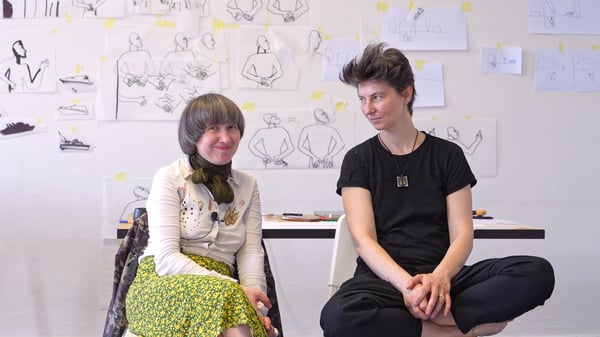
artistsTaaniel Raudsepp, Karel Koplimets, Sigrid Viir
place_Neurčené místo
tags
castTaaniel Raudsepp, Karel Koplimets, Sigrid Viir
cameraEva Jiřička
soundEva Jiřička
editingEva Jiřička
interviewEva Jiřička
categoryReports
published8. 1. 2013
languageČesky / English
embedlink icon
arrow down
related
Visible Solutions LLC
Kader Attia deals with colonial and post-colonial history and sensitively unfolds the complicated and “imbalanced” relationships between the Western and non-Western world and their mutual cultural, political, social, and technological exchange. One of his interests is architecture and the setting it creates with its spatial and political dimension. Using modern architecture as a critical example of an – often – malfunctioning living environment is an occurring subject of Attia’s work.
The author considers the video as a part of the decolonisation process within the framework of the history of Czechoslovak cinema. His conceptual method of work is based on the deconstruction and re-interpretation of original scenes from Czechoslovak films, e.g. Křik (Jaromil Jireš, 1963), Jak básníci přicházejí o iluze (Dušan Klein, 1984) and Dědictví aneb Kurvahošigutntag (Věra Chytilová, 1992). All these films feature stereotyped black characters.