Ondřej Trhoň: podcast
Ocean-Archive.org is a digital organism for a living Ocean
Ocean-Archive.org is a digital organism for a living Ocean, where the methodology incubated by TBA21–Academy manifests. This online platform ventures beyond traditional archival practices, delving into the possibilities of storytelling and transdisciplinary collaboration. The aim of Ocean-Archive.org is to bring together the multitude of voices and journeys around the Ocean and connect those striving to nurture and protect it. This sensitivity to the oceanic elaborates a critical ocean literacy that surpasses a factual comprehension of the mutual influence between us and the Ocean, moving deeper into thinking through the Ocean.
This online exhibition presents fragments from Ocean-Archive.org, exploring how digital imaginaries, artistic interventions, and scientific knowledge intersect to challenge and redefine our relationship with the Ocean. Through digital, speculative, and embodied engagements, it presents an alternative oceanic archive—one that resists extractivist logic and instead fosters collaboration, coexistence, and multispecies imaginaries.
Chus Martínez: Ocean as an Art Space
In Ocean as an Art Space, curator Chus Martínez explores the Ocean not only as a physical environment but as a methodological and epistemological space for artistic practice and ecological reflection. Through questions of care, commons, and more-than-human relations, the lecture invites us to reconsider the Ocean as a living entity and a site of entangled social and environmental urgencies. Emphasizing the power of listening, response, and co-existence, Martínez positions art as a vessel for change—one capable of translating the Ocean’s complexity into practices of care and resistance. Against the backdrop of deep-sea exploitation, this lecture charts a course toward oceanic thinking that centers interconnectedness, vulnerability, and the radical potential of art in imagining collective futures.
Isabelle Carbonell: Polyps are Pluriverse
Isabelle Carbonell: Polyps are Pluriverse at Ocean Archive
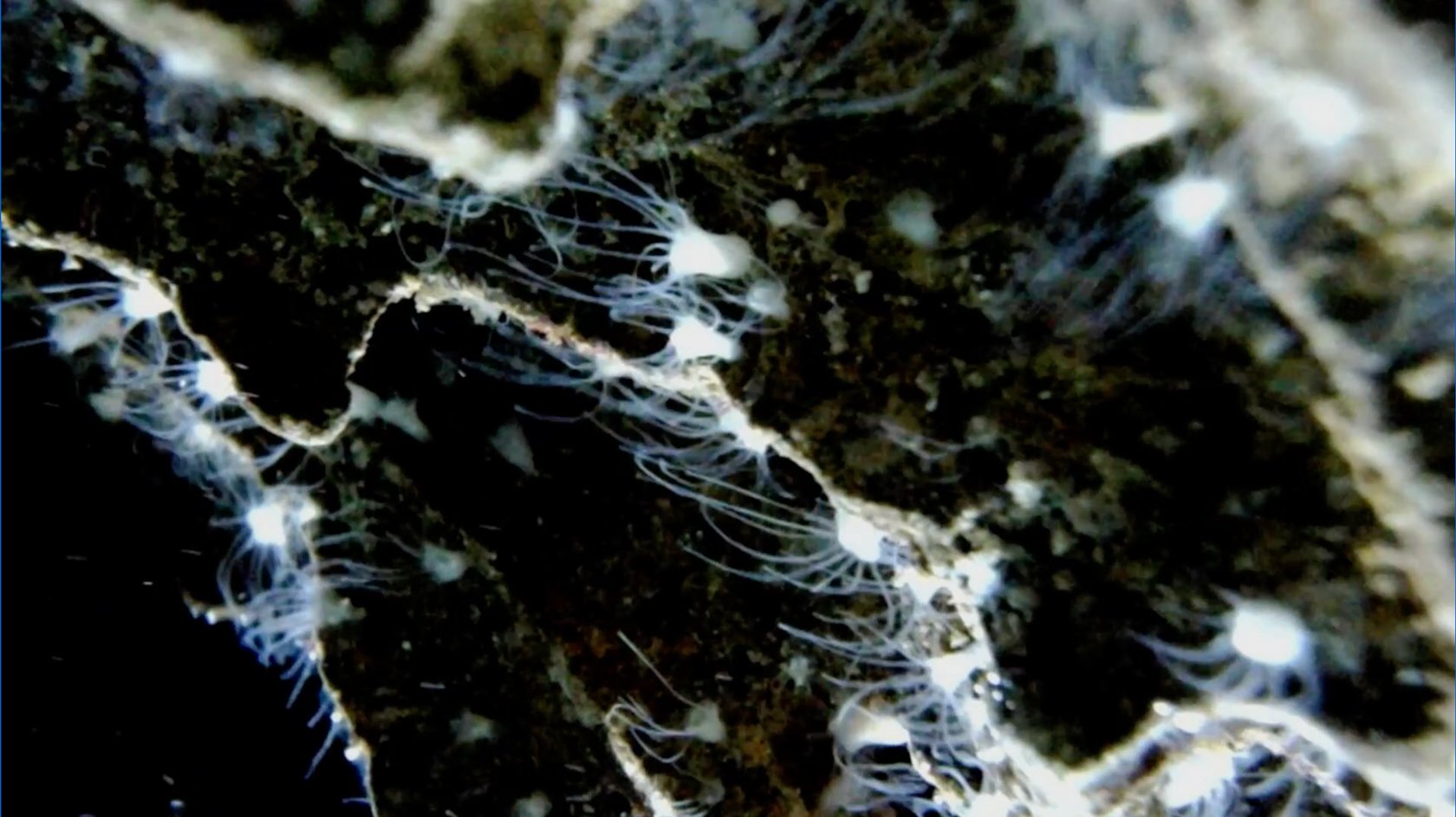
In Polyps are Pluriverse, Isabelle Carbonell weaves together a portal linking underwater geographies, deep time, and speculative futures. By scaling down to the world of polyps inhabiting a natural gas platform in the Adriatic Sea, the work attunes us to the delicate interdependencies that sustain marine life.
Mae Lubetkin: More-than-Data
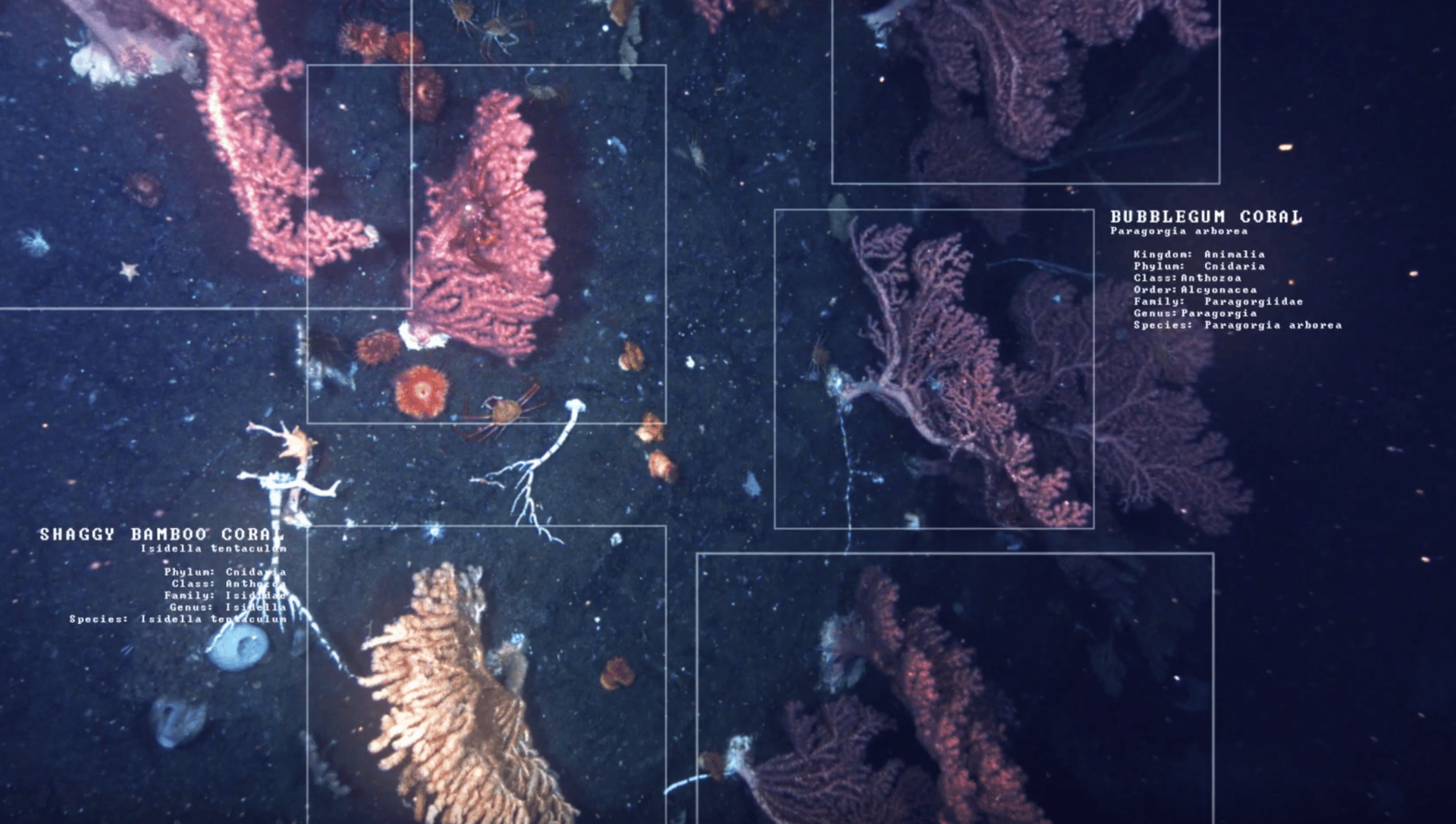
(© Monterey Bay Aquarium Research Institute, 2021)
Mae Lubetkin: More-than-Data essay
In More-than-Data, Mae Lubetkin proposes a framework for rethinking oceanic data not as neutral representations but as partial, politicized traces of other-than-human worlds. Drawing from decolonial theory, data activism, and transmedia art practice, the essay critiques dominant techno-scientific narratives and extractive digital imaginaries of the ocean. Lubetkin introduces the concept of “more-than-data” as a method of submersion, speculation, and solidarity, urging scientists, artists, and communities to engage ocean data as relational, narrative, and ethically entangled material. Through the Seafloor Futures project, Lubetkin experiments with dissolving databases and 3D digital environments to imagine future ocean worlds shaped by kinship, resistance, and multispecies justice. More-than-Data invites a shift from datafication to co-making, reclaiming data's cultural and affective dimensions in service of ecological care and decolonial possibility.
Mae Lubetkin: Seafloor Futures
Mae Lubetkin: Seafloor Futures Webproject
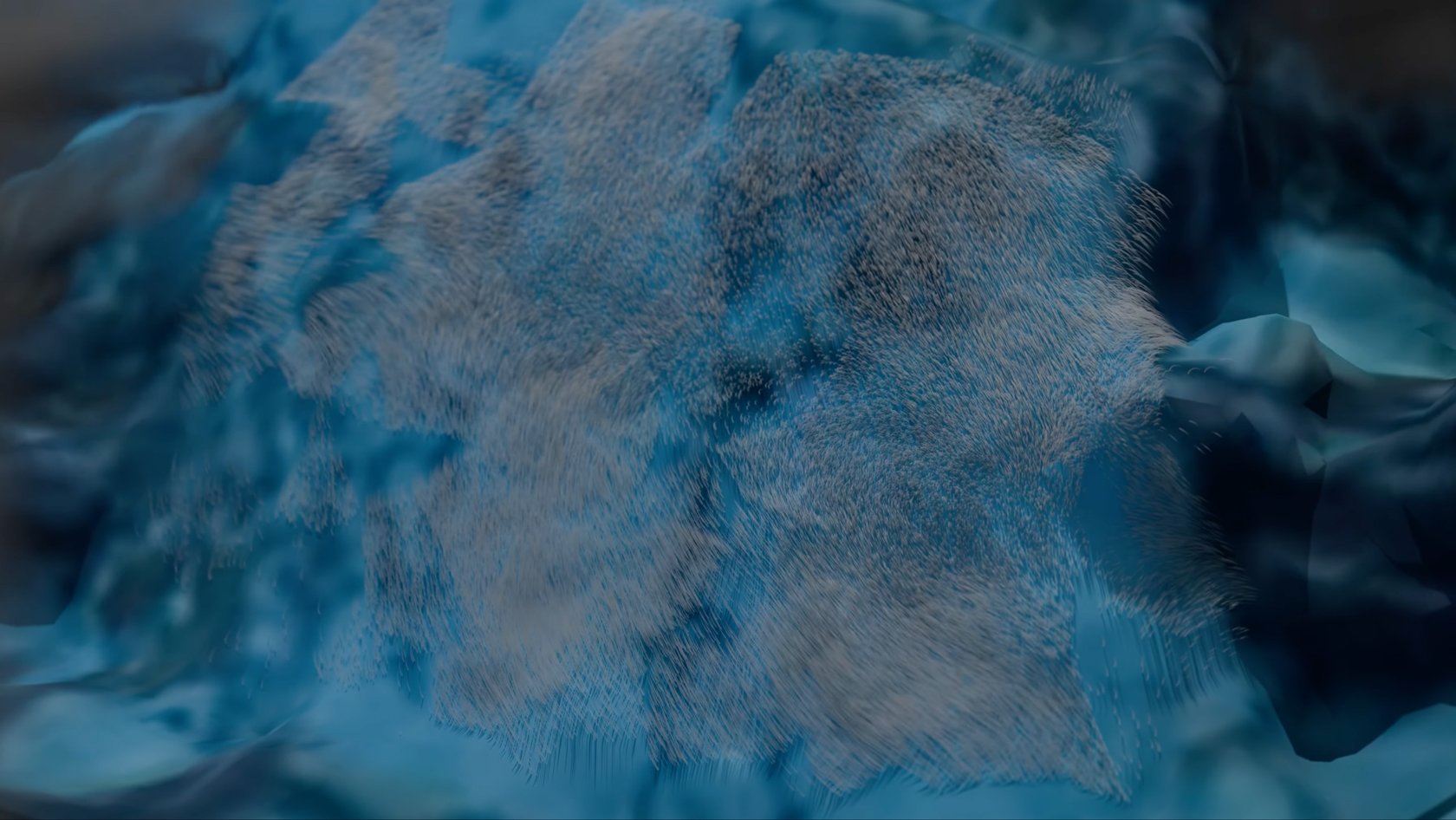
Seafloor Futures, a project by Mae Lubetkin, invites us to submerge ourselves in 3D models of deep-sea habitats to ask how 3D models, as predominant digital links to the deep ocean, can come alive and embody other-than-human lifeways or potential human impact.
Will Benedict: All bleeding stops eventually
Will Benedict’s video series was originally created for DIS.ART in collaboration with Chus Martínez on the occasion of the launch of Ocean-Archive.org in 2019. Benedict’s anthropomorphized subjects deliver a critique of The Intergovernmental Panel on Climate Change's ‘Special Report on the Ocean and Cryosphere in a Changing Climate’ through a humorous yet unsettling embodiment highlighting the work's central message for all humans: If we are unable to identify with the Ocean, then we are really only trying to save ourselves.
Pantea
Pantea’s artistic research delves into the liminal spaces of wetlands, where ecological and cultural narratives converge. Through intertwined conversations, the work proposes to rethink how we relate to wetland ecologies, acknowledging their histories, resilience, and vulnerability.
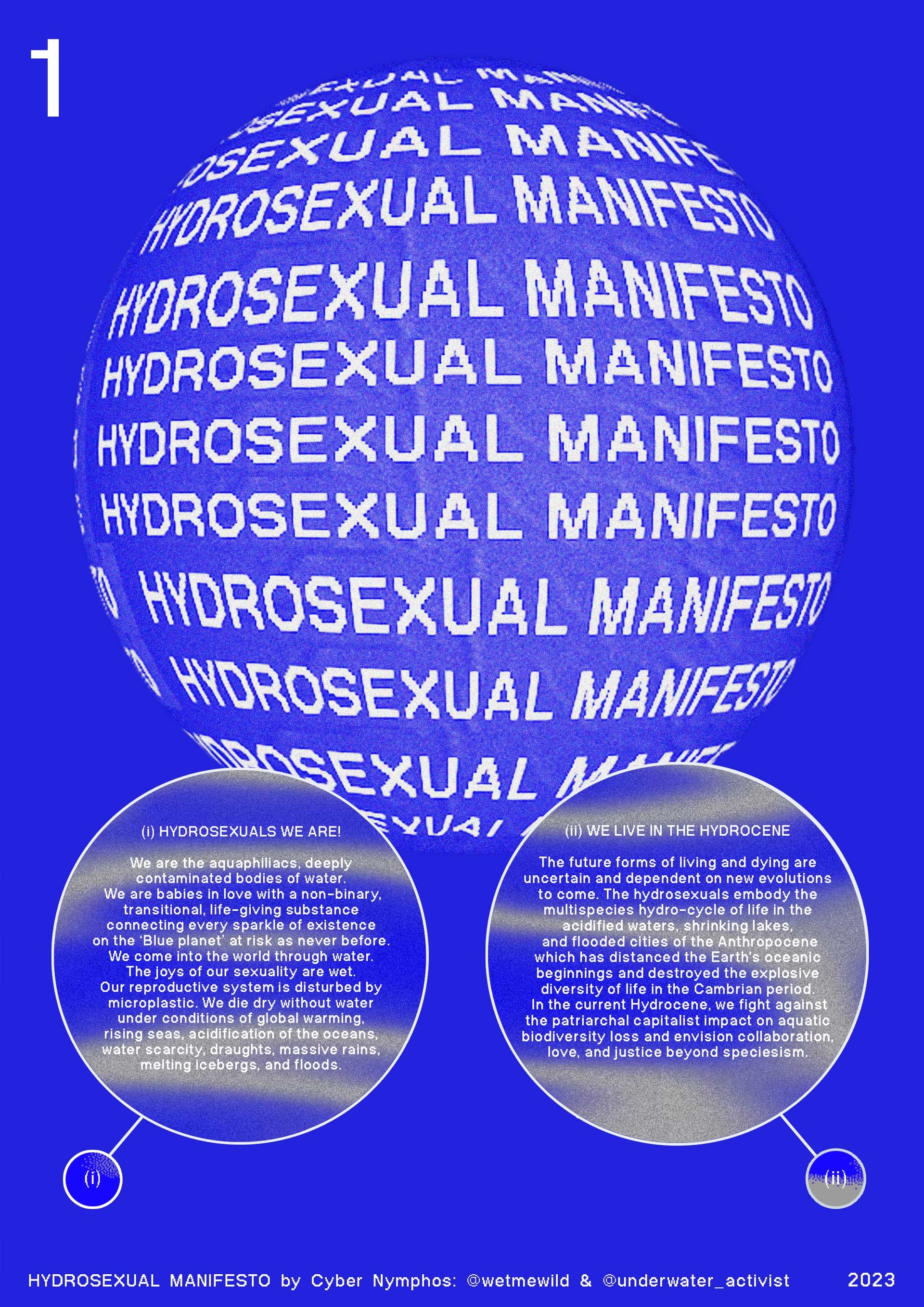
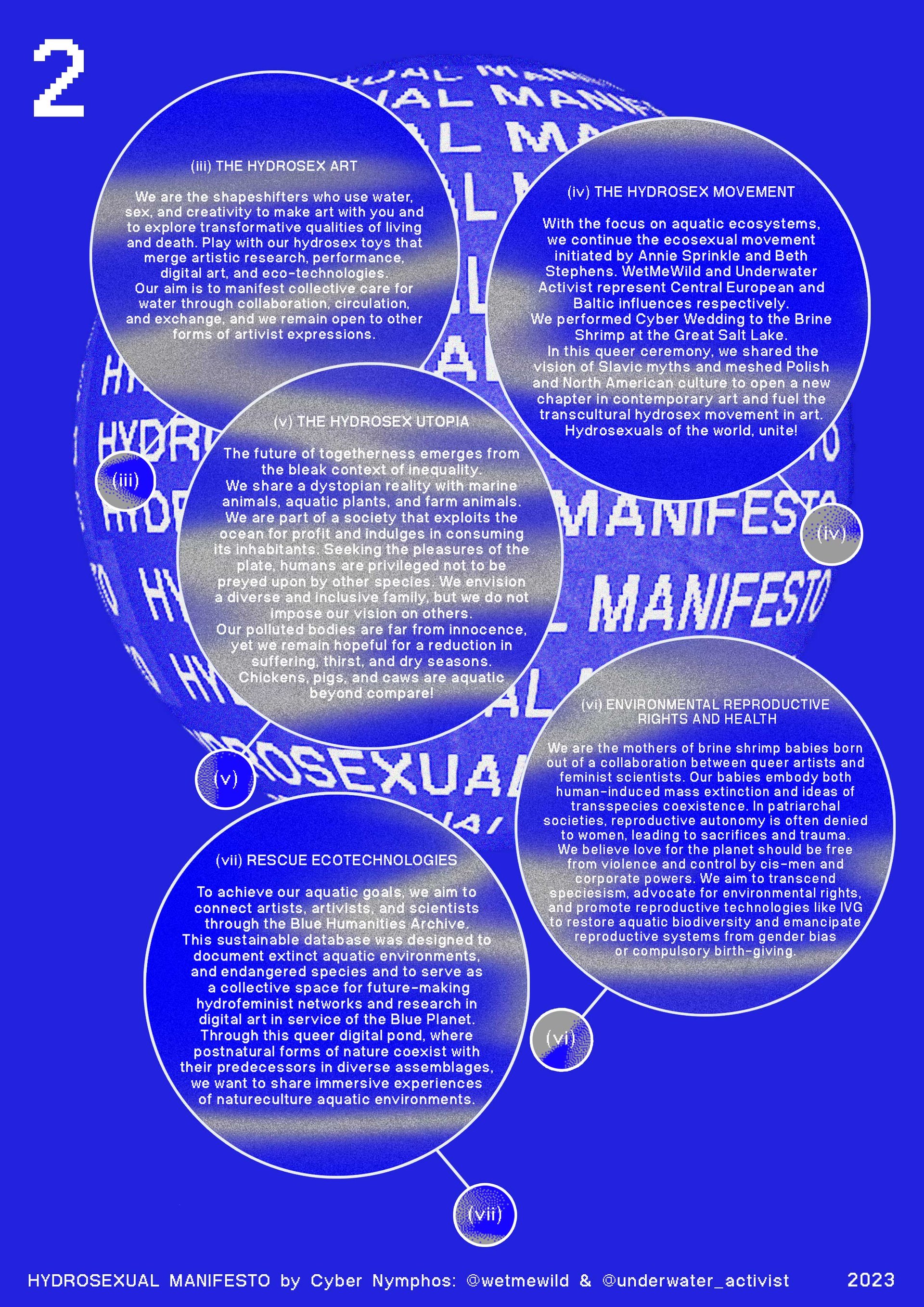
CYBER NYMPHS (Justyna Górowska a Ewelina Jarosz): Hydrosexual Manifesto
In 2023, the Polish research duo CYBER NYMPHS (Justyna Górowska and Ewelina Jarosz) launched a hydrosexual movement in art at the conference “Deep Sea Babies. Navigating Between Utopias and Dystopias for the Blue Planet” in Krakow. Read their manifesto, or experience it in contact with bodies of water around you.
Katarina Rakušček: Feral Ocean
Katarina Rakušček’s essay Feral Ocean brings an oceanic perspective to the idea of ferality as a posthuman feminist figuration.
Aleksandra Czerniak, Beatrice Forchini, Fiona Middleton: Archival Wave
Archival wave ~ a manual for animating Ocean-Archive.org
The archive: a collection or accumulation of records; of data or items; telling about a place, a space, a time, a people. This oceanic archive of ours meets such a definition, and consulting it feels like a journey. We set out with a handful of three guiding impulses and fed them to the archive; from inside a net of metadata, loosely nested and tumbled together like waves, some items jumped out and told us stories.
Francesca Thyssen-Bornemisza: Sounds Too Many
Sounds Too Many by Francesca Thyssen-Bornemisza is an immersive lecture-performance project that focuses on sound pollution. The presented sound collection takes the listener on a journey from ambient soundscapes of healthy ecosystems to the harrowing sounds of underwater nuclear bomb testing.
Reading lists
FICTION, POETRY & ESSAYS
- Herman Melville. Moby Dick (1851) is a classic novel grappling with obsession, nature’s power, and the symbolic dimensions of the ocean.
- Ernest Hemingway. The Old Man and the Sea (1952) captures the intimate and sometimes mystical struggle between human endurance and the vast, unpredictable sea.
- Rachel Carson. The Sea Trilogy (1941–1955) is a collection in which the pioneering environmentalist explores the wonders of the Earth's ocean - a classic of American science and nature writing.
- Joan Sloncewski. A Door Into Ocean (1986) is a feminist science fiction novel, discussing the themes of ecofeminism and non-violent revolution.
- Rita Wong. Undercurrent (Gibsons BC: Nightwood Editions, 2015) explores a variety of poetic forms, anecdotes, allusion, and visual elements, to remind humanity that we are water bodies, and we need and deserve better ways of honoring this.
- Sy Montgomery. The Soul of an Octopus (2015) offers an immersive exploration of the emotional and physical lives of octopuses.
- Alexis Pauline Gumbs. Undrowned: Black Feminist Lessons from Marine Mammals (AK Press, 2020) is a book-length meditation for social movements and our whole species based on the subversive and transformative guidance of marine mammals.
- Sabrina Imbler. How Far the Light Reaches (My Life in Ten Marine Creatures) (2022) is a fascinating tour of creatures from the surface to the deepest ocean floor that invites us to discover how some of the most radical models of family, community, and care can be found in the sea.
THEORY
- Édouard Glissant. Poetics of Relation (1990)
- Linda Tuhiwai Smith. Decolonizing Methodologies (1999)
- Stacy Alaimo. Bodily Natures: Science, Environment, and the Material Self (2010)
- Cristina Sharpe. In the Wake: On Blackness and Being (2016)
- Astrida Neimanis. Bodies of Water: Posthuman Feminist Phenomenology (Bloomsbury, 2017)
- María Puig de la Bellacasa. Matters of Care: Speculative Ethics in More Than Human Worlds (2017)
- Melody Jue. Wild Blue Media: Thinking through Seawater (Duke University Press, 2020)
Authors and Collaborators
Michal Kučerák is a researcher, lecturer, and curator with a particular emphasis on art mediation and digital projects. He collaborates with a contemporary art foundation TBA21, where he contributes to their digital team, specializing in digital research and projects, specifically Ocean-Archive.org and Organismo (TBA21–Academy). He takes part in the collective that co-organizes a festival of socially engaged design and artistic practices, Uroboros. Additionally, he is pursuing his PhD studies at the Faculty of Fine Arts, University of Technology in Brno.
Petra Linhartová is currently working as a Director of Digital & Innovation at Thyssen-Bornemisza Art Contemporary TBA21, leading and delivering innovations and digital solutions that drive regenerative and transformative impact. Petra specializes in management and development of transdisciplinary art and environmentally-oriented projects that defy conventional categorization, and digital transformation in the field of art and culture. Besides digital ecosystems, she is fascinated by technology in relation to the environment, human creativity, and the connection between body and mind – whether through art, yoga, or speculative thinking about the future. Petra holds her MA in Marketing and Media Communication and in Arts Management, Education, and Policy Making from the Maastricht University.
Katarina Rakušček is a cultural worker and storyteller-in-the-making. She holds an MA in English Studies and Comparative Literature from the University of Ljubljana. With a background in cultural production, academia, and creative writing, she currently works as a strategist and editor at TBA21, devising new narratives for an institution at the intersection of contemporary art and environmental advocacy. She is also a climate fighter, aspiring DJ, devoted Trekkie, unskilled painter, and a believer in multitudes.
Editor of the publication: Janek Rous
Translation: Vít Bohal
Published on April 16th, 2025