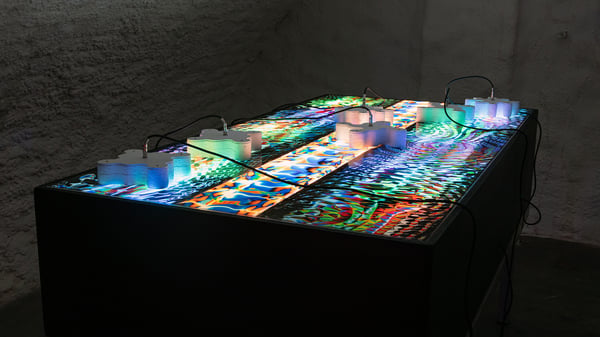
Tables serve various functions–eating, working, writing, and meeting. Activities at different types of tables, however share a common denominator – they are all codified bodily actions.
In order to recognize them, we must learn what functions a table serves. Relative activities take place on or above the table. A table can thus be also understood as a platform, which establishes socially acceptable bodily behavior.
What takes place on the table happens on its upper surface. It is this visible and accessible surface, which defines a table, and simultaneously suggests relationships among objects positioned on it. Although some objects are more valuable or useful than others, and though there are objects being used while others remain unused , it is important to realize that all objects on the table are commensurable, can form relations, change places and have the right to occupy the surface of the table. To sweep an object from the table can be translated as total disposal.