Profiles

Migrating Art Academies

The Migrating Art Academies (MigAA) project is an ongoing aggregate network of participating art academies, people and situations. Mindaugas Gapševičius talk about the progress of this dynamic experiment in arts education. As a radical departure from the traditional bricks-and-mortar learning process, MigAA released a cadre of graduate art students for series of mobile and located explorations that literally spanned Europe – from the beaches of Baltic Lithuania, to the Gironde Estuary in France, to the Tatras mountains of Slovakia, and elsewhere. With public manifestations in Linz, Austria at prestigious Ars Electronica Festival, in Berlin at the Collegium Hungaricum, in Royan, France, and numerous other places on the way, the students piloted their Media RVs (recreational vehicles) along the highways and byways of Europe. Along with their teachers and wide-ranging selection of artists, activists and workshop facilitators, they undertook a focused experience of creative engagement with each other and the public milieus around them.

artistsMindaugas Gapševičius
curatorsMindaugas Gapševičius
place_Neurčené místo
tags
castMindaugas Gapševičius
cameraJiří Havlíček
soundJiří Havlíček
editingJiří Havlíček
interviewJiří Havlíček
playlistsProfiles of the galleries and institutions
categoryProfiles
published16. 1. 2013
languageČesky / English
embedlink icon
arrow down
related
Migrating Art Academies
The project Bellevue di Monaco takes place in several buildings in the centre of Munich. The buildings were supposed to be demolished in order to build new luxury apartments there. However, the plan was thwarted by a group of activists and their guerilla reconstruction of one of the flats. Consequently, the migration crisis in 2015 incited the foundation of an official cooperative involving several hundred local residents who rented the houses and turned them into a multifunctional centre.
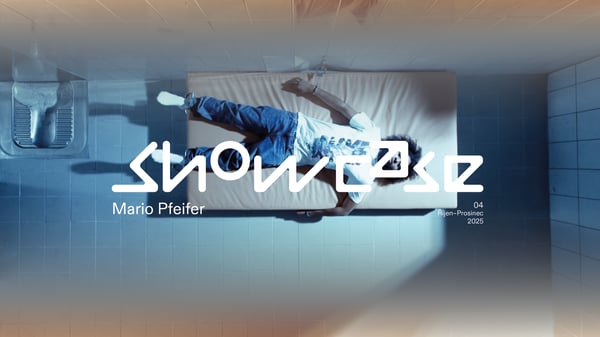
On January 7, 2005, Oury Jalloh, an asylum seeker from Sierra Leone, died in a German police cell as a result of a fire. The police version of the case states that it was probably an accident caused by the detainee himself, or suicide, in connection with the ignition of a mattress made of non-flammable material to which Oury Jalloh was handcuffed and shackled.