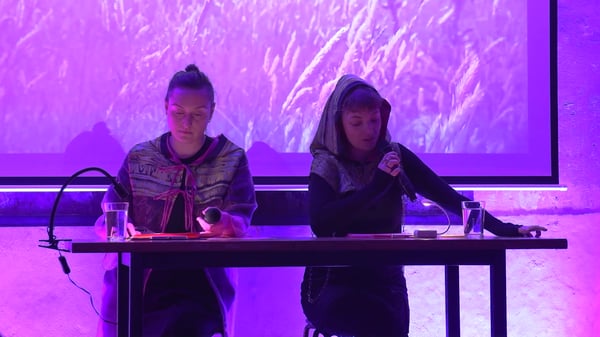
Michal Kindernay (1*978) doesn’t object to a use of names such as „research“ and „science“ when it comes to his activity at an art platform. He, on the contrary, sometimes likes to feel like a scientist revealing fragile, but fundamental relationship between nature and technologies. He leaves instruments he creates to be controled by surrounds (wind, noise, smog) which they are being exposed to. Aesthetic feeling of the artist is apparent in his audiovisual performances and installations. No text about Michal can lack a mention of his co-operation with Lenka Dolanová, Guy van Belle, Jan Žalio, Ivo Hos. The co-operation in different forms is determining for his work.
The aim of portraits of media artists Michal Cáb, Richard Loskot and Michal Kindernay is not only to present their current work (in a few moments they show their charisma as well) but also to show important features of contemporary audio-visual platform. By way of a focused work with technologies, their deconstruction and critique they survey the environment and systems they create or are a part of. With great facility (sometimes also accidentally) they reach a critique of the present society and the art work itself. An ability to co-operate, open software, nature, space, noise, God and wind make for it all.
Barbora Šedivá